

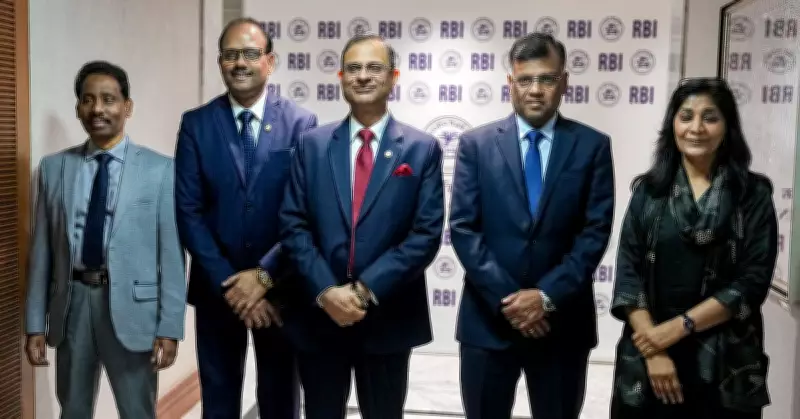
RBI Maintains Status Quo on Key Policy Rates
The Reserve Bank of India (RBI) has decided to keep the benchmark repo rate unchanged at 6.5% for the eighth consecutive time, as announced by the Monetary Policy Committee (MPC) following its latest meeting. This decision reflects the central bank's ongoing commitment to managing inflation while supporting economic stability.
Monetary Policy Committee's Unanimous Decision
The MPC, led by RBI Governor Shaktikanta Das, voted unanimously to hold the repo rate steady. In addition, the standing deposit facility (SDF) rate remains at 6.25%, and the marginal standing facility (MSF) rate and the Bank Rate are maintained at 6.75%. The committee emphasized that its current monetary stance is focused on withdrawing accommodation to ensure that inflation aligns with the target while fostering growth.
Inflation and Growth Outlook
The RBI has projected a retail inflation rate of 4.5% for the fiscal year 2024-25, with quarterly estimates of 4.9% in Q1, 3.8% in Q2, 4.6% in Q3, and 4.5% in Q4. Despite recent fluctuations in food prices, the overall inflation trajectory is expected to moderate, supported by favorable base effects and assumed normal monsoon conditions. On the growth front, the central bank forecasts a real GDP growth of 7.0% for 2024-25, indicating robust economic expansion driven by strong domestic demand and investment activity.

Key Factors Influencing the Decision
Inflation Control: The MPC highlighted that while headline inflation has eased, it remains above the 4% target, necessitating a cautious approach. Persistent food inflation, particularly in items like vegetables and pulses, continues to pose risks, though core inflation has shown signs of moderation.
Economic Resilience: India's economy has demonstrated resilience with high-frequency indicators pointing to sustained momentum in manufacturing, services, and private consumption. The RBI noted that the growth-inflation balance is favorable, but vigilance is required to address any emerging inflationary pressures.
Global Uncertainties: External factors such as geopolitical tensions and volatile global financial markets were considered, but the MPC expressed confidence in domestic macroeconomic fundamentals to withstand these challenges.
Implications for the Economy
The decision to keep rates unchanged is expected to provide stability to borrowers, as lending rates are likely to remain steady in the near term. This supports consumer spending and business investments, contributing to economic growth. However, the RBI has signaled that it will remain data-dependent, ready to adjust policies if inflation risks intensify or growth falters.
In summary, the RBI's move underscores a balanced approach to monetary policy, prioritizing inflation management without stifling economic recovery. Stakeholders, including businesses and consumers, can anticipate a period of relative interest rate stability as the central bank monitors evolving economic conditions.






