

RBI Maintains Status Quo on Repo Rate Amid Economic Headwinds
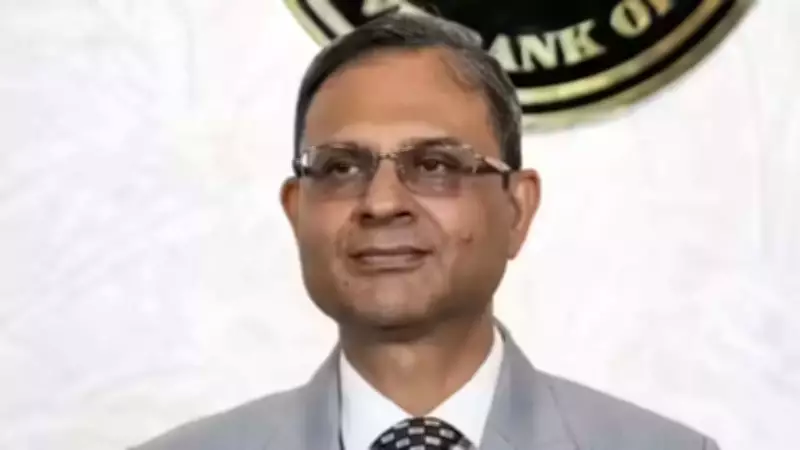
In a significant monetary policy announcement from Mumbai, the Reserve Bank of India (RBI) has opted to hold the policy repo rate steady at 5.25%. Sanjay Malhotra, the governor, revealed that the Monetary Policy Committee reached this decision unanimously, even as the central bank outlined a more cautious economic outlook characterized by weaker growth prospects and a firmer inflation trajectory for the fiscal year 2026.
Revised Economic Projections Signal Caution
The RBI has adjusted its forecasts, now projecting real GDP growth at 6.9% for the year. This growth is expected to unfold quarterly: 6.8% in Q1, 6.7% in Q2, 7.0% in Q3, and 7.2% in Q4. In contrast, inflation is anticipated to run higher, with the Consumer Price Index (CPI) estimated at 4.6% annually. The quarterly breakdown shows CPI at 4.0% in Q1, 4.4% in Q2, 5.2% in Q3, and 4.7% in Q4, indicating persistent price pressures.
Multiple Risks Cloud the Economic Horizon
Governor Malhotra highlighted several factors contributing to this shift in outlook. Elevated crude oil prices pose a dual threat by potentially increasing imported inflation and widening the current account deficit. Additionally, disruptions in energy markets, fertilizers, and other commodities could adversely impact key sectors such as industry, agriculture, and services, thereby reducing domestic output.

The list of concerns extends further. Malhotra warned that heightened global uncertainty, increased risk aversion, and safe-haven demand might impact domestic liquidity conditions, economic activity, consumption, and investment. External demand may weaken, remittances could slow, and financial spillovers might tighten conditions and raise borrowing costs, adding to the economic challenges.
Downside Risks and Global Context
"Risks to the baseline projections are tilted to the downside, with uncertainty remaining elevated due to the ongoing West Asia conflict," Malhotra stated. He cautioned that further escalation, volatile global financial markets, and even weather shocks could weigh on growth. Globally, trade is set to slow in 2026 compared to 2025, dragged down by tariff-related uncertainties, the West Asia conflict, and elevated energy prices.
India is already feeling the effects, with merchandise exports contracting and imports surging, which has widened the trade deficit. While services exports and remittances may provide some cushion, keeping the current account deficit "moderate," rising energy prices and global uncertainty present upside risks to inflation and economic stability.
Resilience Amid Challenges
Despite these headwinds, Malhotra noted that India appears sturdier than in past crises and compared to some peers, thanks to stronger macroeconomic fundamentals. However, the rupee has depreciated, reflecting market dynamics. The RBI governor reiterated that the central bank does not target a specific exchange rate level but intervenes only to smooth excessive and disruptive volatility, leaving the exchange rate largely to market forces.
This policy stance underscores the RBI's focus on balancing growth support with inflation control, as it navigates a complex global and domestic economic landscape filled with uncertainties and risks.






