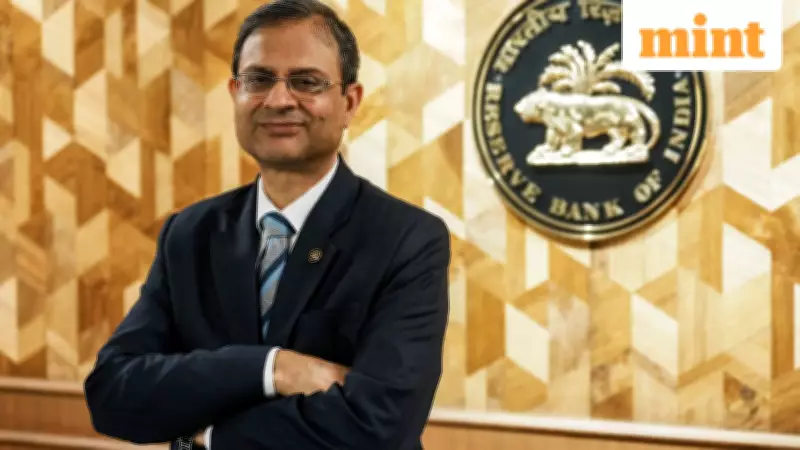
RBI Monetary Policy Committee Convenes Final FY26 Meeting Amid Crucial Economic Crossroads
The Reserve Bank of India's Monetary Policy Committee has commenced its concluding meeting for the financial year 2026, with the highly anticipated policy announcement scheduled for February 6. This gathering represents the final deliberation of the fiscal year, setting the stage for monetary policy direction as India navigates complex domestic and global economic currents.
Extended Rate-Cut Cycle Meets New Fiscal and Trade Realities
Financial markets are actively debating whether the central bank will implement another reduction in the repo rate or instead opt for a strategic pause to reassess evolving macroeconomic conditions. This policy review arrives at a particularly significant moment, coming just days after the Union Budget 2026 outlined substantial fiscal measures including a notable 12% increase in capital expenditure alongside a targeted fiscal deficit of 4.3%.
Simultaneously, the external economic environment shows promising signs of improvement. The United States has recently lowered tariffs on Indian goods to 18%, while the freshly signed India-European Union Free Trade Agreement is expected to substantially bolster trade flows and capital movement between these major economic regions.

Substantial Cumulative Easing Narrows Policy Space
Over the preceding twelve months, the Monetary Policy Committee has already delivered four separate rate reductions. The easing cycle commenced in February 2025 with a measured 0.25% cut, followed by another 0.25% reduction in April and a more substantial 0.5% decrease in June. After implementing pauses during the August and October meetings, the committee returned to easing with a further 0.25% cut in December.
With this substantial cumulative easing now in place, numerous economists contend that the Reserve Bank's capacity for additional rate reductions has considerably narrowed. The substantial monetary accommodation already provided creates a more complex decision-making environment for policymakers.
Analysts Shift Focus from Rates to Liquidity and Yield Management
Financial analysts increasingly suggest that this particular meeting may center less on the repo rate itself and more on how the central bank intends to manage liquidity conditions, bond yields, and broader financial stability. This focus becomes especially pertinent as the government prepares for an extensive borrowing program totaling approximately ₹17.2 trillion during the upcoming financial year 2027.
Sujan Hajra of Anand Rathi Group observes that while economic growth continues to receive support from public-sector spending initiatives and favorable trade developments, inflation dynamics present challenges for further monetary easing at this juncture.
"With GDP growth projected to moderate modestly, yet potential growth being sustained through continued public-sector capital expenditure and the positive impact from two major trade agreements, the monetary policy calculation remains delicately balanced," Hajra noted.
He further explained that a measured increase in retail inflation diminishes the immediate necessity for near-term rate reductions. Consequently, the central bank's attention may transition toward ensuring stability within bond markets and maintaining orderly liquidity conditions rather than adjusting the policy rate or its accompanying stance.
Improved External Environment Offers Supportive Backdrop
Echoing similar perspectives, analysts at Emkay highlighted that global uncertainties have somewhat diminished following the resolution of trade tensions between the United States and India. This development is expected to positively influence the current account balance, foreign portfolio investment flows, and the stability of the Indian rupee.
"Even as global macroeconomic narratives and market sentiments continue to fluctuate, the February 2026 Monetary Policy Committee encounters a more supportive external environment, aided significantly by the US-India trade resolution, which should contribute to stabilizing the current account position," the brokerage observed.

However, Emkay simultaneously cautioned that inflationary pressures could gradually intensify as favorable base effects begin to dissipate. The brokerage also identified concerns regarding weak monetary transmission despite substantial easing measures and sustained liquidity infusion throughout the financial system. Emkay anticipates system liquidity to increase substantially to approximately ₹2.4 trillion by the conclusion of March 2026, rising from about ₹200 billion at the end of December 2025, potentially reducing the requirement for additional Reserve Bank support measures.
Global Banking Perspective Anticipates Policy Pause
From an international banking standpoint, Wells Fargo expects the Reserve Bank to maintain interest rates firmly at current levels while shifting attention toward liquidity management tools and yield curve stabilization strategies.
"The February Reserve Bank monetary policy announcement is anticipated to deliver a pause on interest rates, with the repo rate likely remaining at 5.25% and the policy stance continuing in neutral territory," Wells Fargo projected.
Santanu Sengupta of Wells Fargo noted that following 125 basis points of cumulative easing, the central bank appears unlikely to hastily implement further reductions. Instead, the Reserve Bank may increasingly rely on open market operations, variable rate repos, and targeted liquidity measures to ensure government securities markets remain stable despite elevated borrowing requirements.
He further expects the central bank to continue moderating currency volatility through calibrated foreign exchange operations and swap arrangements, without targeting any specific rupee exchange rate level.
Converging Factors Suggest Repo Rate Stability
When considered collectively, several converging factors including the government's borrowing requirements outlined in the budget, improving international trade conditions, firming inflation indicators, and already elevated liquidity levels strongly suggest that February 6 may not bring another reduction in the repo rate. The monetary policy landscape appears to be transitioning toward a phase of stability and careful management of financial conditions rather than additional aggressive easing.
Disclaimer: The perspectives and recommendations presented above represent those of individual analysts or brokerage firms, and not of Mint. Investors are advised to consult with certified financial experts before making any investment decisions.