

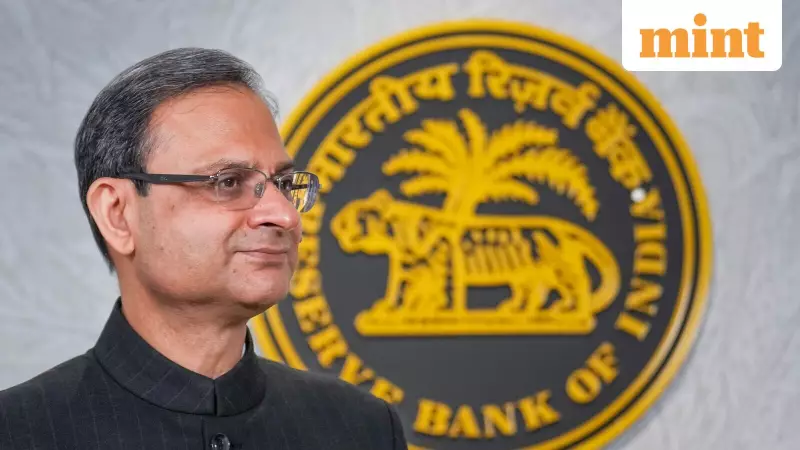
In a bold move to bolster economic growth, the Reserve Bank of India's Monetary Policy Committee (MPC) has unleashed a dual stimulus of a rate cut and massive liquidity infusion. This decision, taken during Governor Sanjay Malhotra's sixth and final MPC meeting of 2025, has sparked debate on whether the central bank is prioritizing growth at the potential cost of its price stability mandate.
A Baptism of Fire in Turbulent Times
The tenure of RBI's 26th Governor, Sanjay Malhotra, who took office on 9 December 2024, has been marked by exceptional global volatility. Unlike his predecessor D. Subbarao, whose 2008 'baptism by fire' during the Global Financial Crisis saw a relatively swift recovery, Malhotra's challenges are ongoing. The primary source? The trade policies of the 47th US President, Donald Trump.
From tariffs on Mexico, Canada, and China just before Malhotra's first MPC meet in February 2025, to the 'Liberation Day' bazooka of reciprocal tariffs on most nations including India by April, the external pressure has been relentless. Subsequent hikes to 50% tariffs, scrutiny on India's Russian oil imports and exchange rate management, and continued arm-twisting for a US-India trade deal have created a fraught backdrop for policymaking.

Decoding the MPC's Puzzling Policy Response
Despite this global storm, the MPC's statement on the anniversary of Malhotra's first year showed surprising confidence. Notably, the word 'tariff' was absent. The committee's action raised eyebrows: a 25 basis points repo rate cut coupled with an immediate liquidity injection of ₹1 trillion through open market purchases in December and a $5 billion three-year dollar-rupee swap.
This aggressive stance comes when the Indian economy is showing resilience. The MPC revised its GDP growth estimate upward to 7.3% for the year from 6.8% in October, following a strong 8.2% growth in the previous quarter. System liquidity was already in a surplus averaging ₹1.5 trillion. The critical question, therefore, shifts from whether there was 'policy space' for a cut to whether there was a genuine 'need' for such stimulus, especially when the full impact of the 100-basis-points reduction in the repo rate and CRR cuts enacted earlier in the year is still unfolding.
Balancing Growth Support Against Inflation Risks
The policy's unanimous vote suggests a concerning lack of dissent, potentially indicating group-think, especially among external members. The decision appears to downplay several inflation risks. A depreciating rupee, a consequence of global turmoil, is inherently inflationary. While current inflation has eased, this is largely due to transient factors like a fall in food and fuel prices, which could reverse quickly. Core inflation has remained stubbornly around the 4% mark for most of the year.
The MPC's move, described by market observers as "everything the market wanted," prompts a fundamental question: Should the RBI's primary focus be market sentiment or the welfare of all Indians, anchored by its mandate of price stability? As former US Fed Chair Jerome Powell emphasized, policy must be based on a continuous 'assessment' and 'balance-of-risks.' In firing this growth-supporting bazooka, the RBI under Governor Malhotra may have leaned heavily on one side of that balance, hoping the global headwinds don't fan the embers of inflation.






