

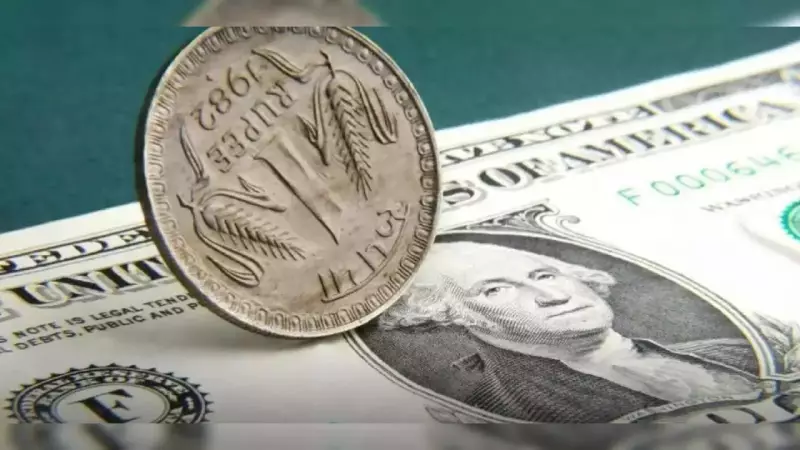
The Indian rupee opened stronger on Monday, extending its recovery from the record lows witnessed earlier this month. The domestic currency appreciated by 22 paise in early trade, quoting at 89.45 against the US dollar.
From Record Lows to Gradual Recovery
This uptick follows a period of significant pressure where the rupee had slid to a series of lifetime lows, even breaching the psychological mark of 91 against the US dollar. The currency's fall was later arrested, a move largely attributed to suspected intervention by the Reserve Bank of India (RBI). The recovery continued on Friday, with the rupee closing 53 paise stronger at 89.67 per dollar.
Key Drivers Behind the Rebound
Forex market analysts point to multiple factors supporting the rupee's rebound. Corporate dollar inflows and a retreat in global crude oil prices have provided much-needed relief. Further bolstering sentiment, Foreign Institutional Investors (FIIs) turned net buyers in equities, purchasing shares worth Rs 1,830.89 crore on Friday, as per exchange data.

In a positive development for the country's external sector, India's foreign exchange reserves saw a healthy increase. The RBI reported that reserves grew by $1.689 billion to $688.949 billion for the week ended December 12. This follows a rise of $1.033 billion in the preceding week.
SBI's Long-Term Optimistic Outlook
Adding to the positive narrative, the State Bank of India (SBI) has projected a strong rebound for the rupee in the latter half of the next financial year. According to its latest research report, the recovery is expected to materialise between October 2026 and March 2027.
The country's largest lender clarified that its outlook is based on historical currency trends and internal analysis. The report emphasised that the current phase of weakness is not structural. It noted that the rupee has undergone several cycles of depreciation and appreciation in the past and is likely to emerge from the present downtrend in the second half of the next fiscal year (FY27).
The combined effect of central bank measures, improving fundamentals, and long-term cyclical trends suggests the Indian rupee may have weathered the worst of its recent storm, setting the stage for a more stable period ahead.






