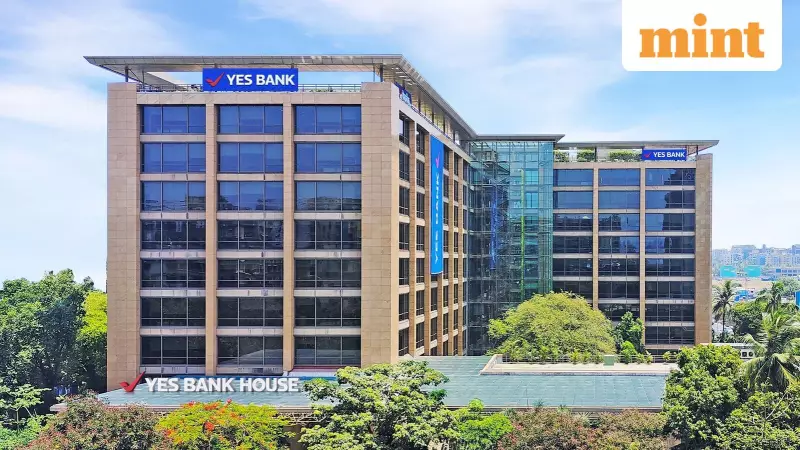
The Supreme Court of India has scheduled the final leg of hearings for a high-stakes case concerning the controversial write-off of Yes Bank's Additional Tier-1 (AT-1) bonds. The apex court announced that proceedings will resume on January 15 and aims to conclude arguments within the third week of January, after which the judgment will be reserved.
The Core of the Legal Battle
At the heart of the dispute is the March 2020 decision to write down approximately ₹8,415 crore worth of AT-1 bonds as part of a Reserve Bank of India-led reconstruction plan for Yes Bank. This move, which came at the peak of the bank's crisis marked by bad loans and liquidity stress, was challenged by bondholders. In January 2023, the Bombay High Court ruled the write-off as invalid, stating that bondholders were unfairly made to absorb losses ahead of equity shareholders.
The Supreme Court is now hearing appeals filed by the RBI, Yes Bank, and others against this high court order. If the top court upholds the Bombay High Court's ruling, Yes Bank could be compelled to reimburse bondholders with 9% annual interest, a decision with significant financial implications for the lender and one that would set a critical precedent for future bank resolution mechanisms in India.

Arguments For and Against the Write-Off
During recent hearings, senior advocate Aryama Sundaram, representing institutional bondholders through Axis Trustee, presented a key defense. He argued that investors who purchased these high-yield instruments, offering coupons of 9% and 9.5%, did so with full awareness of the risks. Sundaram emphasized that the bond terms, Information Memorandum, and RBI Master Directions clearly warned of the possibility of a permanent write-off if specific trigger conditions were met.
He contended that challenging the outcome after a trigger event was not permissible. Furthermore, he stated that the writ petition only targeted the administrator's order of March 14, 2020, and not the broader RBI-approved reconstruction scheme. Reversing the write-off, he argued, would unfairly shift losses onto small depositors and the State Bank of India-led rescue consortium.
On the other side, the Yes Bank administrator has consistently defended the write-off as legally valid and essential to prevent the bank's collapse. The defense cites powers under the Basel-III Master Circular, Clause 57 of the Information Memorandum, and Section 36ACA of the Banking Regulation Act. The administrator asserted that statutory trigger conditions, including a breach of the Common Equity Tier-1 (CET-1) capital threshold and the bank reaching a point of non-viability, had been satisfied.
Broader Context and Implications
The controversy around these bonds intensified after SEBI imposed a ₹2 crore penalty on former Yes Bank CEO Rana Kapoor in 2022 for allegedly mis-selling AT-1 bonds to retail investors as "super FDs." It is estimated that around ₹300 crore of these bonds were held by retail buyers.
The AT-1 bond write-down was a central pillar of the rescue package implemented after the RBI imposed a moratorium on Yes Bank on March 5, 2020. The reconstruction plan saw a consortium of banks, including SBI, inject crucial capital, with SBI's investment alone amounting to ₹10,000 crore.
This case is being closely watched by financial markets and legal experts. The Supreme Court's final verdict will not only determine the fate of thousands of crores for Yes Bank and its bondholders but will also provide much-needed clarity on the hierarchy of losses during bank resolutions and the legal sanctity of complex financial instruments like AT-1 bonds in India.