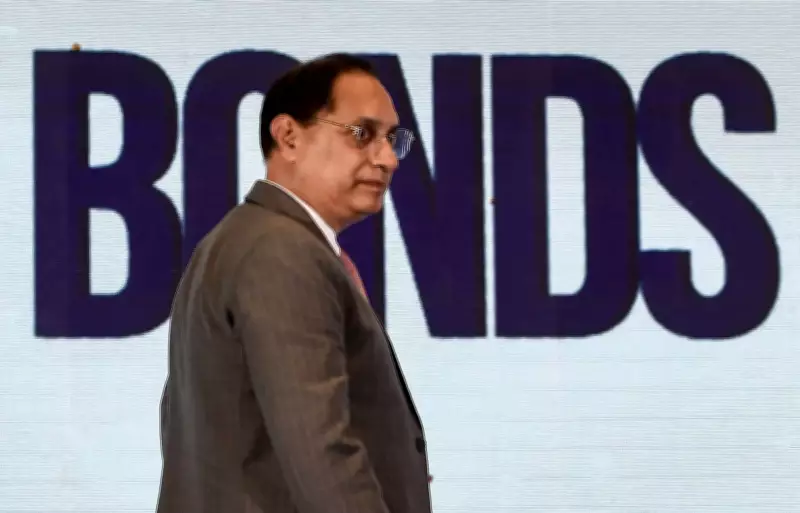
In a revealing address that highlighted significant gaps in financial literacy among Indian households, Securities and Exchange Board of India (Sebi) chairman Tuhin Kanta Pandey expressed his profound disappointment on Wednesday. Speaking at the inaugural session of a program focused on the corporate bond market, Pandey pointed out a startling reality: more Indians are familiar with cryptocurrency than with corporate bonds as an investment avenue.
Survey Reveals Alarming Awareness Disparities
The chairman referenced Sebi's comprehensive investor survey, the results of which were published on January 20. This survey uncovered that awareness of corporate bonds as a viable investment product stands at a mere 10% among Indian households. This figure is not only well below traditional options like fixed deposits, insurance, and small savings but also trails behind the awareness levels for cryptocurrency, which stands at 15%.
Pandey elaborated on the comparative data, noting that futures and options have an awareness rate of 13%, while Real Estate Investment Trusts (Reits) and Infrastructure Investment Trusts (InvITs) share the 10% mark with corporate bonds. In stark contrast, the highest awareness was recorded for fixed and recurring deposits, at an overwhelming 98%. Mutual funds followed at 53%, and stocks and shares at 49%.

Urgent Need for Enhanced Financial Education
Emphasizing the critical need for spreading awareness about corporate bonds, Pandey detailed the numerous benefits that could arise from a more informed investor base. He explained that a well-developed corporate bond market provides corporates with a crucial alternative to bank borrowing, particularly for securing long-term funding. This diversification of risk beyond the banking system can significantly help in reducing the cost of capital for businesses.
For retail investors, Pandey highlighted that corporate bonds offer an excellent opportunity for portfolio diversification beyond equities and bank deposits. He assured that access through regulated products and platforms can enable households to participate in fixed income securities with clear disclosures and robust investor protection mechanisms in place.
Challenges Hindering Bond Market Growth
The Sebi chief did not shy away from outlining the various challenges that impede the development of a robust corporate bond market in India. He pointed out that the current bond market structure is heavily skewed towards highly rated issuers, limiting opportunities for a broader range of companies.
Furthermore, fund raising is predominantly loaded in favor of financial institutions rather than a diverse array of industries. This imbalance restricts fair price discovery across different sectors, making the market less efficient and inclusive.
Shallow Secondary Market and Low Retail Participation
Pandey also addressed the issue of a shallow secondary market for corporate bonds, attributing it to institutions largely adopting a 'buy and hold' approach instead of engaging in active trading. This lack of liquidity hampers market depth and vibrancy.
Perhaps most concerning is the extremely low retail participation in corporate bonds, which is negligible when compared to the equity markets. Pandey stressed that regulation alone cannot build a robust bond market. To better understand the barriers preventing the bond market from matching the equity market's robustness, he urged participants to share their challenges and preferences with the regulator.
Potential Boost from US-India Trade Deal
In a subsequent interaction with reporters, Pandey touched upon the potential positive impact of the US-India trade deal. He suggested that such an agreement could facilitate more investments into India and aid in capital formation.
Pandey explained to PTI that fundamentally, when regulatory overhangs are removed and trade frictions are eliminated, capital formation processes are invariably accelerated. This insight underscores the interconnectedness of regulatory clarity, international trade, and domestic financial market development.