

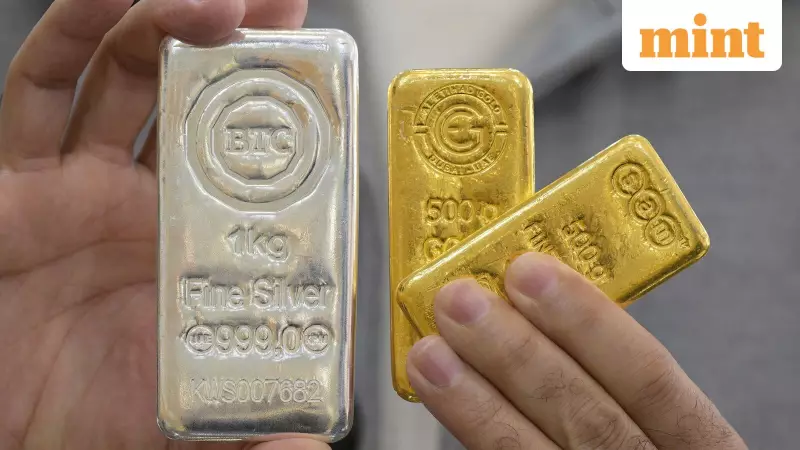
Silver's Meteoric Rise Redefines Precious Metals Landscape
The precious metals market is witnessing a remarkable shift as silver's explosive performance dramatically alters the long-standing relationship with gold. Over the past twelve months, silver prices have skyrocketed by an astonishing 200%, completely overshadowing gold's substantial 80% gain during the same period. This unprecedented surge has compressed the closely monitored gold-silver ratio from pandemic-era highs of 127 to just 50 at the beginning of 2026.
Understanding the Gold-Silver Ratio Dynamics
The gold-silver ratio represents how many ounces of silver are needed to purchase a single ounce of gold. Historically, a higher ratio indicates silver is relatively inexpensive compared to gold, while a lower ratio suggests silver has become more expensive. Currently, the dramatic compression signals a fundamental repricing of silver within the precious metals complex.
"This is not a marginal move — it represents a structural repricing of silver relative to gold," emphasized Harshal Dasani, Business Head at INVAsset PMS. To illustrate the magnitude of change, consider this: in April 2025, selling one kilogram of gold would have fetched approximately 110 kilograms of silver. Today, that same kilogram of gold yields only about 47 kilograms of silver.

Record Highs and Market Implications
Both metals are currently trading at unprecedented levels, with gold crossing $5,100 per ounce and silver hovering around $108. The rapid decline in the ratio carries significant implications for investors and market observers alike.
"Historically, such a rapid decline in the ratio has occurred during late-stage precious metals bull markets, when silver begins to outperform sharply after gold has already established a strong trend," Dasani added, providing historical context to the current market behavior.
Dual Forces Driving Silver Demand
The silver rally is being fueled by multiple converging factors:
- Monetary Hedge: Like gold, silver continues to serve as a traditional safe-haven asset during economic uncertainty
- Industrial Revolution: Silver has become indispensable in solar energy systems, electric vehicles, and grid infrastructure modernization
- Supply Constraints: Physical market conditions remain tight amid growing demand across multiple sectors
This dual demand profile distinguishes silver from gold, which primarily benefits from central bank accumulation and geopolitical hedging. Silver is now transitioning from being a laggard hedge to becoming a leadership asset within the precious metals space.
Analyst Perspectives and Future Projections
Market experts offer varying interpretations of the ratio's plunge. A report from domestic brokerage Motilal Oswal Financial Services notes that the gold-silver ratio has a long-term average near 70, making current levels around 50 historically unsustainable. The brokerage suggests that a reversion toward 65-70 would imply relative outperformance of gold, supporting higher allocations to gold as a risk-managed positioning strategy.
Commodity analysts Navneet Damani and Manav Modi caution that while silver retains strong long-term upside potential, "near-term risk-reward has become more imbalanced" following the dramatic rally. They recommend that during this volatile phase, "a higher allocation to gold can help manage fluctuations while staying invested in precious metals."
Contrasting this view, Dasani of INVAsset PMS maintains that silver outperformance should continue amid supply shortages, potentially driving the ratio down to 40 or even historical lows of 30 seen during past commodity bull cycles.
Investment Considerations in a Changing Landscape
The current precious metals environment presents both opportunities and challenges for investors:

- The compressed ratio suggests silver has already realized significant gains relative to gold
- Historical patterns indicate such low ratios tend to revert toward long-term averages
- Silver's industrial applications provide fundamental support absent in pure monetary metals
- Gold continues to offer stability amid potential volatility in silver markets
As the precious metals cycle evolves, investors must carefully consider their allocation strategies between these two historically correlated but fundamentally distinct assets. The dramatic repricing of silver relative to gold marks a significant chapter in commodity market history, with implications that will likely reverberate through investment portfolios and industrial supply chains alike.





