Amazon Shares Tumble 11% Following Massive $200 Billion Capex Announcement
Amazon's stock experienced a dramatic decline of 11% in extended trading on February 5, resulting in a staggering loss of more than $250 billion in market capitalization. This sharp drop was triggered by the company's revelation of an ambitious $200 billion capital expenditure plan for the year 2026.
Unprecedented Spending Surge Sparks Investor Anxiety
According to a detailed CNBC report, this plunge represented the most significant decline among all megacap technology firms. The announced expenditure plan exceeded Wall Street's projections by a substantial margin of over $50 billion, immediately raising concerns among investors regarding the aggressive pace and enormous scale of Amazon's planned investments.
The company's financial disclosures revealed that Amazon spent $131 billion on property and equipment throughout 2025, marking a dramatic increase from the $38 billion invested during 2024. This data highlights the rapid acceleration of the company's capital allocation strategy in recent years.

CEO Andy Jassy Defends Strategic Investment Approach
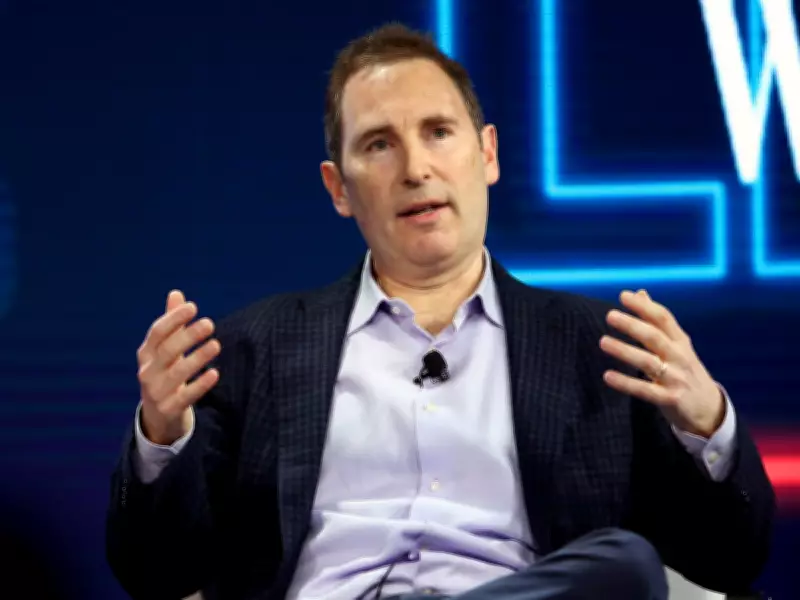
During a comprehensive conference call with financial analysts, Amazon CEO Andy Jassy provided a robust defense of the company's substantial spending initiative. Jassy emphasized that these investments are critically necessary to address the exploding demand for artificial intelligence computing capacity across global markets.
"This isn't some sort of quixotic, top-line grab," Jassy stated firmly. "We have confidence that these investments will yield strong returns on invested capital. We've successfully demonstrated this approach with our core AWS business, and I believe that will very much be true here as well."
Capital Allocation Focused on Cloud Infrastructure Expansion
The Amazon chief executive elaborated that the allocated capital will be strategically directed toward expanding data center infrastructure, developing advanced semiconductor chips, and enhancing networking equipment capabilities. This investment will enable Amazon Web Services (AWS) to scale its operations more rapidly to meet growing market demands.
Jassy highlighted that AWS sales demonstrated impressive growth of 24% to reach $35.6 billion during the most recent quarter, representing the cloud division's fastest expansion in thirteen consecutive quarters. However, he noted that this growth could have been even more substantial if the company had possessed greater available capacity to serve customer needs.
AWS Capacity Expansion and Market Structure Analysis
The cloud computing unit added approximately 4 gigawatts of computing capacity throughout 2025, with expectations to double this power output by 2027. Jassy characterized AWS's expansion strategy as "scrappy," emphasizing that current market demand continues to outpace available supply across the industry.
When questioned about the evolving artificial intelligence market landscape, Jassy described it using a "barbell" structural analogy. He identified AI-native research laboratories on one extreme, traditional enterprise organizations on the opposite end, and a substantial middle segment comprising companies actively experimenting with AI applications.
"That middle part of the barbell very well may end up being the largest and most durable segment," Jassy suggested, pointing toward long-term opportunities for AWS as enterprises increasingly adopt artificial intelligence technologies to enhance productivity and achieve significant cost savings.