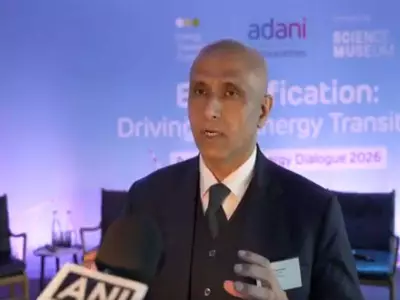
The Insurance Regulatory and Development Authority of India (IRDAI) Chairman Ajay Seth announced that the digital platform Bima Sugam is expected to go live with insurance products by the end of September 2026. Additionally, a consultation paper on distribution reforms will be released by the end of July. These developments mark a significant structural shift in the insurance sector, as outlined by Seth during the Insurance Awareness Day 2026 initiatives organized by the Insurance Awareness Committee (IAC-Life) in Mumbai.
Life Insurance Sector Growth Mirrors National Economy
Seth highlighted that the life insurance sector's top line has increased by 2.5 times over the last decade, closely aligning with the national economy's growth. He stated, "In the last 10 years, the economy of our country has increased two and a half times. The life insurance sector, top line, also increased by 2.5 times. One was 2.5, another was 2.6. No substantive difference." This performance is commendable given the fast pace of economic expansion, but Seth emphasized that the sector has the potential to grow much faster due to rising income levels and a huge unmet need.
Bima Sugam: A Commission-Free Digital Platform
Although the rollout of Bima Sugam is slightly behind schedule, Seth confirmed that the final integration of products by September end is expected to alter the distribution landscape. Crucially, the Bima Sugam model does not depend on a commission structure, marking a departure from traditional insurance distribution. This shift aims to streamline processes and reduce costs, potentially making insurance more accessible.

Distribution Reform Consultation Paper Due by July End
To further streamline the sector, the regulator expects to release a consultation paper on distribution reforms before the end of July. Seth noted, "The life insurance sector is at a crossroads where it has to look for, or rather search for, its value proposition." The reforms are intended to address distribution inefficiencies and expand reach.
Focus on Tier-II, Tier-III Cities and Rural Markets
Seth emphasized that companies must focus on Tier-II and Tier-III cities, as well as rural markets, moving beyond standard urban boundaries. He explained, "Considering that, there are rising income levels and there's a huge unmet need. The sector has the potential to grow much faster than what has been possible so far. And there comes the economics of the sector, how do we improve upon it?" The focus must expand across all income group levels to establish a deeper consumer base, supported by an immediate need to enhance trust for insurance products.
Rising Foreign Interest and New Licenses
The sector is witnessing a significant rise in interest from foreign promoters aiming to secure 100 per cent ownership, following the government's decision to allow 100 per cent Foreign Direct Investment (FDI). Registration trends indicate broader expansion, with the regulator recently granting two new licenses for general insurance, including one approval finalized just yesterday. Seth noted that the regulatory authority continues to see more interest on the general insurance side, driven by rising income levels and significant unmet consumer needs.
General Insurance Growth Outpacing Life Insurance
While general insurance growth is currently faster than life insurance, the regulator sees life insurance achieving much more growth going ahead. The macroeconomic expansion serves as a benchmark for this potential. Seth remarked, "This itself is a commendable task because the economy of our country is going at a fast pace."