

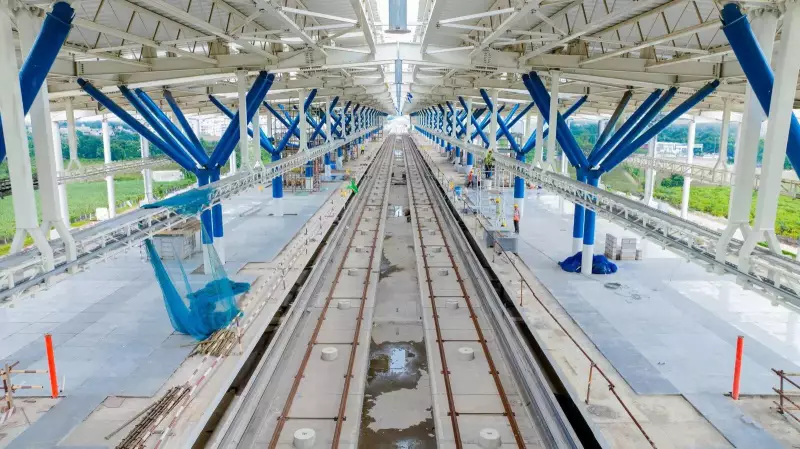
India's landmark Ahmedabad-Mumbai bullet train project has witnessed a staggering cost increase of approximately 83%, with its estimated price tag now reaching a colossal Rs 1.98 lakh crore. This significant escalation is attributed to delays exceeding four years, as confirmed by railway officials.
Revised Timelines and Soaring Costs
The project, which was initially sanctioned at a cost of around Rs 1.1 lakh crore, has been plagued by multiple hurdles. Railway Board CEO and Chairman, Satish Kumar, addressed the cost overrun during a briefing on the government's Pragati initiative. He indicated that while the final sanction for the revised cost is pending, it is expected to be formalized within the next month or two.
The first operational section, connecting Surat and Bilimora in Gujarat, is now scheduled for inauguration in August 2027. The completion of the entire 508-kilometer high-speed corridor linking Ahmedabad and Mumbai is anticipated by December 2029.

Reasons Behind the Delay and Current Progress
Officials cited a combination of factors for the time and cost overruns. Key challenges included protracted land acquisition processes, delays in obtaining various statutory clearances, and the time taken to finalize the specifications and procurement of the rolling stock (the bullet trains themselves).
Despite the setbacks, physical work on the ground continues. As of November 30, the overall physical progress of the project was reported at 55.6%. The financial progress was higher, at 69.6%, with Rs 85,801 crore already expended. A significant portion of the work involves the construction of a long tunnel in Maharashtra's Palghar district, located between the planned Virar and Boisar stations.
Government Push and Project Significance
The project's delays have drawn attention from the highest levels of government. It is learnt that Prime Minister Narendra Modi, during a review of the railway ministry's work last month, directed officials to expedite the project's completion. This underscores the national importance of the high-speed rail corridor, which is set to be India's first and is being implemented by the National High Speed Rail Corporation Limited (NHSRCL).
The Ahmedabad-Mumbai bullet train is envisioned to revolutionize rail travel in India, drastically reducing travel time between the two major economic hubs to just a few hours. However, its journey has become a case study in the complexities of executing mega-infrastructure projects in the country, where land acquisition and regulatory approvals often pose significant challenges.






