

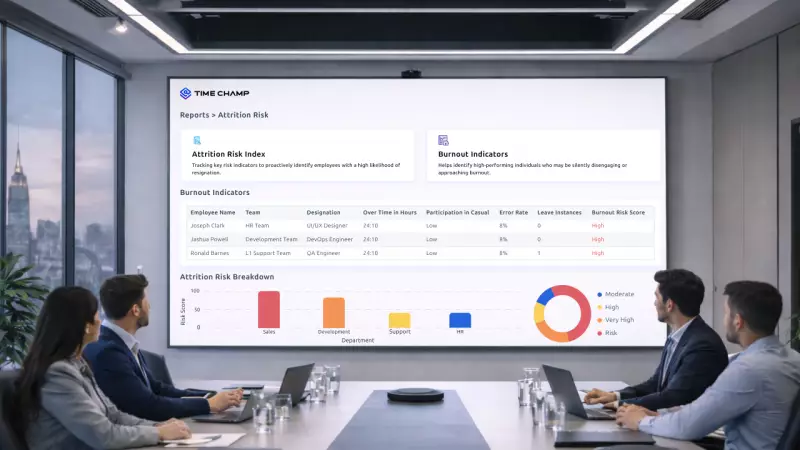
Burnout has moved out of the shadows of confidential HR meetings. It is now a clear and present danger to business health, manifesting as missed deadlines, high staff turnover, disengaged teams, and falling profits. Across India's corporate landscape, a growing number of leaders are recognising the undeniable link between employee wellness and organisational success. However, a fundamental question remains: where does burnout actually start?
The Clarity Gap: Why Traditional Metrics Fail
The core issue is not a lack of concern but a severe lack of clarity. Most companies depend on fragmented and often lagging indicators to gauge their workforce's health. These include attendance records, annual performance appraisals, periodic engagement surveys, and informal manager feedback. The critical flaw is that these signals usually arrive too late—only after productivity has plummeted or a valuable employee has already resigned. By the time burnout becomes obvious on these reports, the financial and operational damage is already done.
This reactive approach is being challenged by a new paradigm: workforce intelligence. Unlike traditional tools that look at isolated events, this approach understands that burnout is a pattern, not a single event. It doesn't strike suddenly but accumulates silently through persistent factors like unbalanced workloads, unrelenting pressure, constant context-switching, and vague priorities. Employees might still seem 'busy,' but their effective energy, concentration, and drive are slowly draining away.

From Guesswork to Evidence: How Intelligence Reveals Work Patterns
Workforce intelligence adopts a fundamentally different method. Instead of examining standalone data points, it analyses work patterns across time, digital tools, and teams. It maps how effort is distributed, identifies where bottlenecks consistently form, pinpoints roles under sustained overload, and assesses how collaboration dynamics influence results.
Srihari Kothapalli, Chief Executive Officer at Time Champ, emphasises that this shift is essential. "Burnout doesn't come from working hard. It comes from working without clarity," he states. He explains that when leaders gain visibility into how work flows, where pressure accumulates, and where capacity is underutilised, they can take proactive steps to rebalance, rather than react after the damage is done.
Well-being as a Performance Accelerator, Not a Brake
Organisations investing in these insights often discover a counterintuitive truth: prioritising well-being does not slow down operations; it speeds them up. With clear visibility, leaders can redistribute workloads before exhaustion cripples a team. Managers can spot early signs of disengagement and adjust timelines, expectations, or support. Teams operating with clear priorities waste less time on firefighting and more on high-impact work.
This operational clarity translates into measurable business benefits. Companies that proactively manage workload balance tend to experience lower attrition rates, faster project delivery cycles, and more consistent output quality. Importantly, employees feel supported rather than spied on, which builds trust and fosters long-term engagement.
"Healthy teams make better decisions," adds Srihari Kothapalli. "They collaborate more effectively, adapt faster to change, and stay aligned with business goals. Workforce intelligence gives leaders the visibility to protect both their people and their performance."
For HR and operations leaders, this means moving beyond assumptions. Questions like why a team misses deadlines, why attrition spikes in a particular department, or why top performers burn out while others are underused can now be answered with evidence, not guesswork.
As businesses in India and globally navigate hybrid work models, distributed teams, and rising performance pressures, building sustainable work systems is no longer optional. Burnout is a systemic problem, not merely an individual one. Workforce intelligence addresses this by aligning human well-being with operational efficiency, enabling the design of work that supports focus, balance, and long-term productivity.

"In the future, competitive advantage will come from how well organisations understand their people," concludes Srihari. "Those who invest in clarity today will build teams that can grow, adapt, and perform without burning out." As the costs of ignoring early warnings become undeniable, workforce intelligence is emerging as the critical capability that directly connects team health to business success.





