

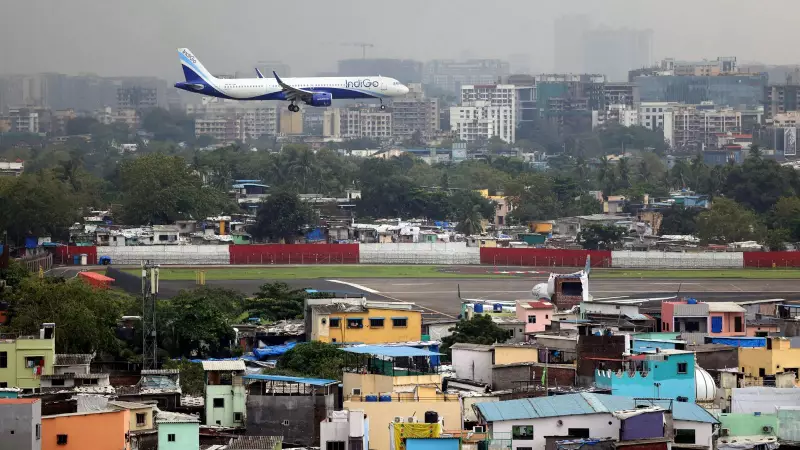
India's competition watchdog has initiated a formal examination into the widespread flight cancellations and operational chaos that plagued IndiGo, the country's largest airline, earlier this month. The Competition Commission of India (CCI) is set to investigate whether the carrier, which commands a staggering 65 per cent share of the domestic passenger market, abused its dominant position during the crisis that left thousands of passengers stranded nationwide.
The Trigger: A System-Wide Operational Meltdown
The probe was triggered by the massive disruption that hit IndiGo's network in the first week of December 2024, bringing a significant part of India's aviation system to a standstill. The situation peaked on December 5, when the airline was forced to cancel over 1,600 of its 2,300-plus daily flights. For days, scores of flights were cancelled daily, causing immense hardship to travellers across airports.
In a release issued on Thursday, the CCI stated it had "taken cognizance of Information filed against IndiGo" regarding the recent disruptions and, based on an initial assessment, decided to proceed further under the provisions of the Competition Act, 2002.

Root Cause and Regulatory Scrutiny
A parallel investigation is already underway by a panel set up by the aviation regulator, the Directorate General of Civil Aviation (DGCA). According to the DGCA, IndiGo admitted to a shortage of pilots relative to the requirements under the new Flight Duty Time Limitation (FDTL) norms. The airline cited "misjudgement and planning gaps" in implementing the second phase of these rules, which took effect on November 1.
The crisis only stabilised after the DGCA granted IndiGo a temporary exemption until February 10 from certain night-duty related changes in the new FDTL rules. The airline's operations have now returned to normal, with it operating over 2,200 daily flights in the past week.
Dominance vs. Abuse: What the CCI Will Examine
Legal and aviation experts clarify that a company's market dominance is not, by itself, anti-competitive. The CCI's probe will focus on whether this dominance was abused in an exclusionary or exploitative manner. Abuse of dominant position can include practices like predatory pricing or denial of market access, which negatively impact competition and consumers.
The Commission will first examine if there appears to be a contravention of competition law. If it finds preliminary evidence of wrongdoing, it will order a detailed investigation. The stakes are high for IndiGo; if found guilty of abusing its dominant position, the CCI can impose a penalty of up to 10% of the company's average turnover for the past three years.
IndiGo's market power is evident in its route network. Of the roughly 1,200 domestic routes flown by Indian airlines, IndiGo operates on over 950. Crucially, nearly 600 (63%) of these are monopoly routes where it faces no competition, and about 200 (21%) are duopoly routes with just one competitor.
A Wake-Up Call on Market Concentration
Experts point out that the IndiGo crisis serves as a stark warning about the perils of high market concentration, a trend visible in several Indian sectors like telecom, cement, and e-commerce. While large, stable companies bring efficiency, problems arise when their market share becomes so overwhelming that it smothers competition, raises entry barriers, and reduces consumer choice.
They argue that IndiGo's monopoly on many routes is not entirely by design but is also a result of the failure of other airlines, like Jet Airways and Go First, to survive and compete effectively. In a customer-facing industry like aviation, the impact of such concentration—systemic risk when a dominant player falters, potential for higher prices, and lower service quality—is immediately visible to the public.
The outcome of the CCI probe will be closely watched, as it could set a significant precedent for how market dominance is assessed in India's rapidly consolidating economy, especially in essential service sectors like aviation.






