

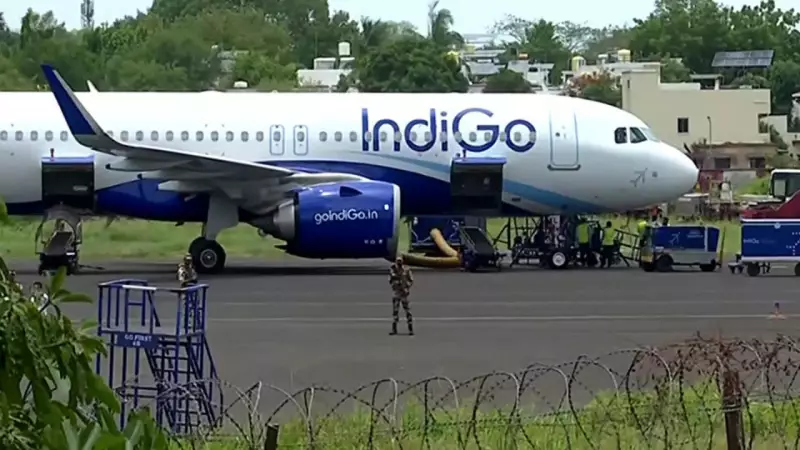
The Competition Commission of India (CCI) has initiated a significant probe into the country's largest airline, IndiGo. The antitrust regulator will examine whether the carrier, which commands over 60% of the domestic market and is the biggest player in international traffic to and from India, abused its dominant position. This action follows widespread flight disruptions that affected lakhs of passengers earlier this month.
What Triggered the CCI Investigation?
The CCI took cognisance of information filed against IndiGo regarding recent flight cancellations across various routes. Based on an initial assessment, the commission has decided to proceed further in the matter. This development was announced on the same day IndiGo claimed to have stabilised its operations, stating it expects to operate over 2,200 flights.
The probe is notable as it potentially marks the first time the CCI is examining an abuse of dominance case in the aviation sector. In the past, the watchdog has investigated complaints of alleged cartelisation by airlines concerning fuel surcharges. The current situation stems from IndiGo cancelling close to 5,000 flights in early December, creating chaos for travellers.

Expert Opinion and Potential Consequences
Shok Chawla, former aviation and finance secretary who also served as CCI chairman, commented on the situation. He noted that IndiGo holds a dominant position in the Indian airline industry. Given the scale of the recent disruptions, the CCI is justified in examining if there is a prima facie case of abuse of that dominance.
If the commission establishes such abuse, the consequences for IndiGo could be severe. Theoretically, the CCI can impose a substantial fine on the airline or mandate it to relinquish certain routes where it is the dominant player. In an extreme measure, which has never been used in India, the regulator could even order the splitting of the company if it is deemed to have created a near-monopoly situation.
IndiGo's Response and Ongoing Scrutiny
IndiGo's CEO, Pieter Elbers, addressed the crisis, stating that the worst is behind the airline. He shared that operations were stabilised on December 9 and the network was restored to 2,200 flights. Elbers attributed the collapse to a compounding effect of several factors and pointed out that similar disruptions have occurred with large airlines in other parts of the world.
However, government sources provided a nuanced picture of the recovery. They indicated that IndiGo's claim of over 2,200 flights includes international operations. The number of domestic flights, which used to exceed 2,000 daily, has reportedly fallen below 1,900, fluctuating between 1,755 and 1,869 in mid-December.
One of the specific complaints lodged with the CCI alleges that IndiGo cancelled flights and then hiked fares, exploiting its market power. This alleged practice contributed to a spike in domestic airfares, prompting the government to cap fares at Rs 18,000 (excluding taxes and airport charges) on December 6 until the situation normalises.
Separately, the Directorate General of Civil Aviation (DGCA) is conducting its own probe into the IndiGo fiasco, with its findings expected by this weekend. The dual investigations by the DGCA and the CCI underscore the serious regulatory scrutiny the airline now faces following one of the most significant operational failures in its history.






