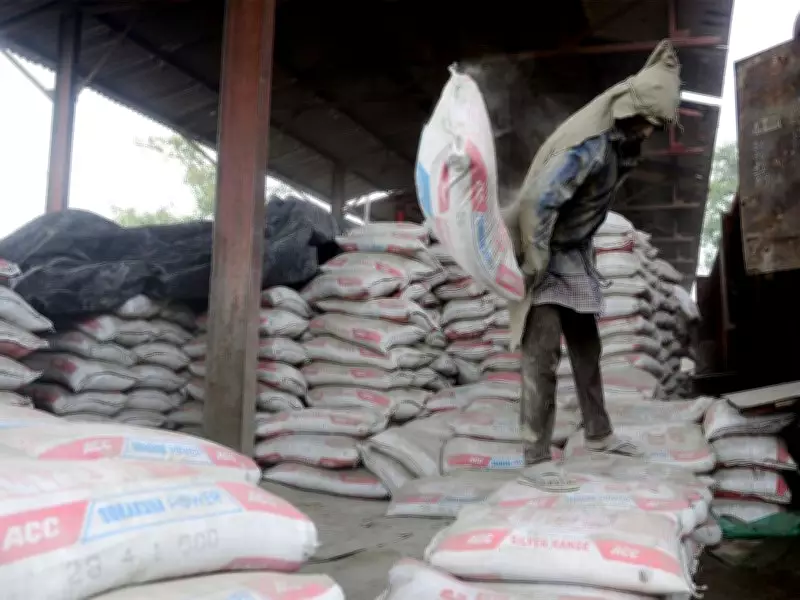
India's cement demand is expected to remain soft in the first quarter of fiscal year 2027, according to a report by Nuvama Institutional Equities. The muted outlook is driven by sluggish housing activity, mixed regional trends, and ongoing labour shortages, though falling crude oil prices provide some relief to the sector.
Government Capex Shows Signs of Improvement
The brokerage noted that government capital expenditure (capex) displayed improvement in April 2026, rising 27% year-on-year. However, broader investment activity remained uneven. Combined capex by the Centre, states, and central public sector enterprises (CPSEs) declined 10% year-on-year in the fourth quarter of FY26, though it grew 4% for the full fiscal year.
Real Estate Volumes Sluggish
Real estate volumes have been sluggish, with launches falling 4% year-on-year in FY26, following an 8% decline in FY25. The report highlighted that housing activity continues to moderate, with pan-India launch volumes plunging 7% year-on-year in Q4FY26 and 4% in FY26 after an 8% drop in FY25.

Regional Trends Mixed
Regionally, cement demand remained strong in the west and recovered gradually in the south. However, demand stayed weak in the east, central, and northern regions due to heatwaves and labour shortages. In West Bengal, prices declined by Rs 15-20 per bag in June 2026, while Maharashtra saw a price surge of Rs 10 per bag. Prices remained broadly stable in other regions.
Input Costs and Outlook
According to Nuvama, surging input costs are expected to start impacting the sector from the latter part of Q1FY27. The report stated, "Going ahead, input cost trends, cement prices, and housing and infra demand would drive stock prices. We remain neutral on the cement space." It further noted that industry volumes should grow in mid-single digits year-on-year in Q1FY27E, on account of global uncertainty and rising input costs.
The report added, "Cement demand is mixed in June 2026 on account of unfavourable weather and labour shortages in select regions."