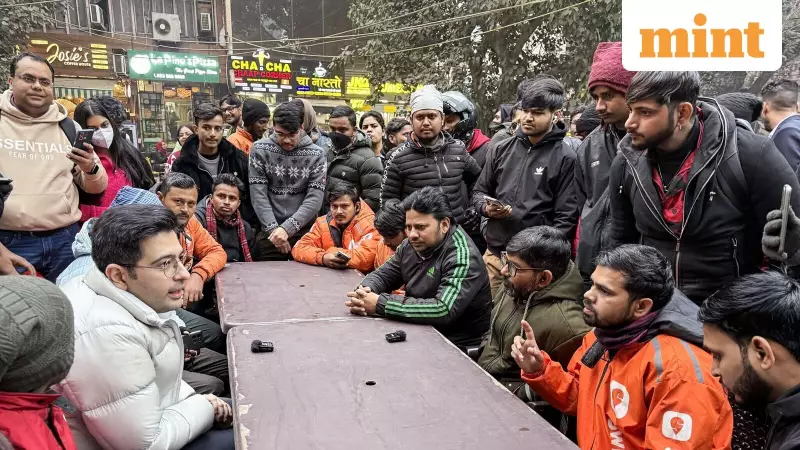
In a stark confrontation highlighting the human cost behind India's booming instant delivery services, Aam Aadmi Party (AAP) Member of Parliament Raghav Chadha has sharply criticized the treatment of app-based delivery workers, terming it "guilt-free exploitation." His comments came after he met with protesting delivery riders from platforms like Zomato, Swiggy, and Blinkit in Delhi's Old Rajinder Nagar on New Year's Eve, December 31.
Solidarity with Striking Riders on New Year's Eve
Chadha's interaction coincided with a symbolic one-day protest by tens of thousands of gig workers across the country. The workers were striking against relentless pressure, including demands for 10-minute deliveries, and advocating for fair pay, dignity, safety, and basic labour protections.
Sharing a video of his conversation on social media, the AAP leader expressed solidarity with the protesters. "It's tragic that millions of delivery riders who helped build instant-commerce companies into what they are today, are now forced to protest just to be heard," Chadha stated. He emphasized that the success of these platforms was not solely due to algorithms but was built on human sweat and labour.

The Core Demands and Corporate Defence
The protesting workers have been demanding an immediate ban on the marketing promise of delivering groceries within a 10-minute window across a 1.8-mile (3 km) radius. They argue that such targets compromise their safety and well-being while their pay remains inadequate.
In response, Zomato CEO Deepinder Goyal took to social media platform X to defend the gig economy model, specifically addressing the 10-minute delivery promise. "Our 10 minute delivery promise is enabled by the density of stores around your homes. It's not enabled by asking delivery partners to drive fast," Goyal asserted. He further claimed that delivery partners do not have a timer on their app indicating the original time promised to the customer.
A Call for Humanity in the Gig Economy
Chadha, who has previously raised the issue in the Rajya Sabha, challenged this defence. He appealed directly to the management of companies like Zepto, Blinkit, Zomato, and Swiggy, stating that gig workers are the backbone of their multi-million-dollar enterprises and must be treated fairly.
"It's time companies start treating riders as human beings, not disposable data points. The gig economy cannot become a guilt-free exploitation economy," the AAP MP insisted. He highlighted the plight of workers who are overworked, underpaid, and denied dignity, social security, and justice. Chadha also alleged that workers who raise concerns face penalties like reduced delivery assignments or being logged out of apps, leading to financial loss.
The standoff underscores a growing national debate on the need for a regulatory framework to protect the rights and welfare of India's vast gig workforce, even as the companies they fuel continue to expand rapidly.