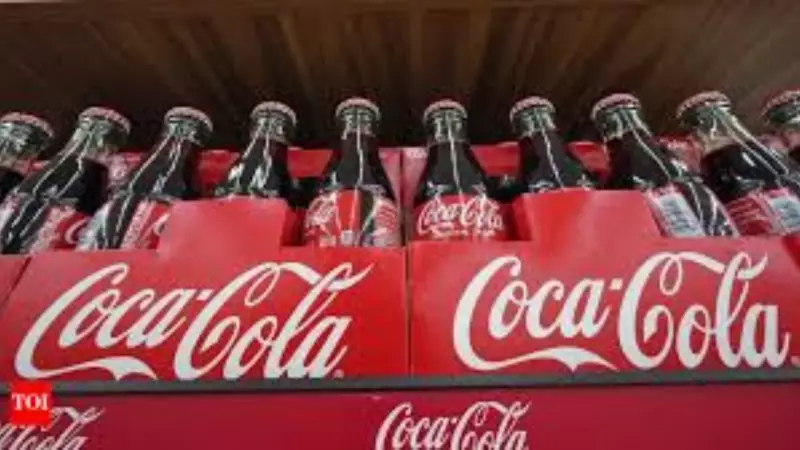
Coca-Cola has taken a significant step toward listing its Indian bottling operations. The beverage giant has engaged investment banks Kotak, HDFC Group, and Citibank to manage a proposed initial public offering for Hindustan Coca-Cola Beverages. People familiar with the development revealed this information to Economic Times.
IPO Details and Timeline
The planned offering aims to raise approximately $1 billion, which translates to around Rs 9,027 crore. Coca-Cola is targeting a summer listing for HCCB. Internal preparations are advancing toward a valuation close to $10 billion.
One source indicated the listing could potentially shift to next year. This would only happen if peak summer demand faces significant disruption from rains, similar to last year's pattern.

Multinational Trend in Indian Markets
If successful, the HCCB IPO would join a growing trend of large market debuts by multinational consumer companies in India. Hyundai Motor India recently set a record with a $3.3 billion offering. LG Electronics followed with a $1.3 billion issue. Both companies listed locally during 2024 and 2025.
Coca-Cola dominates India's substantial soft drinks market, valued at Rs 60,000 crore. The company manufactures and distributes popular brands across the country. These include Coca-Cola, Thums Up, Sprite, Maaza, Kinley, Dasani, Georgia coffee, and Schweppes mixers.
Strategic Background and Partnership
The IPO process gained momentum over a year ago. Coca-Cola sold a 40% stake in Hindustan Coca-Cola Holdings Private Limited to Jubilant Bhartia Group for about Rs 12,500 crore. HCCB operates as a subsidiary of this holding company.
This transaction aligns with Coca-Cola's global asset-light strategy. The company has been reducing direct ownership of capital-intensive bottling operations worldwide. This shift allows greater focus on brand building, innovation, and digitization efforts.
Jubilant FoodWorks, part of the Jubilant Bhartia Group, operates Domino's Pizza, Popeyes, and Dunkin' Donuts in India. The partnership with HCCB aims to unlock long-term synergies between beverages and quick service restaurant chains.
Company Response and Leadership
An HCCB spokesperson responded to queries from Economic Times. "With a realigned leadership team in place, we remain focused on driving operational excellence," the spokesperson stated. The company did not comment directly on IPO plans.
In July last year, HCCB appointed Hemant Rupani as chief executive. Rupani previously served as president for Southeast Asia at Mondelez. He succeeded Juan Pablo Rodriguez in the leadership role.
The spokesperson added further clarification. "We have been passing on the benefits of the new GST-led pricing to ensure better value and more affordable choices to consumers. Any other news is speculative," the representative emphasized.
Business Operations and Financial Performance
Coca-Cola follows a specific business model in India. The company sells concentrate to its bottling partners across the country. HCCB currently operates 15 manufacturing plants. Multiple independent bottlers also operate alongside HCCB, with operations broadly divided between these entities.
According to filings obtained from business intelligence platform Tofler, HCCB reported revenue of Rs 12,751.29 crore in FY25. This figure represents a 9% year-on-year decline.
The company explained this performance was impacted by strategic asset sales. HCCB sold manufacturing plants to existing franchise bottlers across several territories. These included Rajasthan, Bihar, the North East, and parts of West Bengal. The assets were transferred to Moon Beverages, Kandhari Global Beverages, and SLMG Beverages.
For the nine-month period ending September 2025, Coca-Cola disclosed specific financial details. The company reported transaction costs of $7 million related to refranchising. It also recorded a net gain of $102 million from refranchising certain bottling operations in India.
Market Challenges and Industry Outlook
Beverage companies faced significant challenges last year. Unseasonal and persistent rains occurred during peak summer months from April to September. This period typically accounts for nearly half of annual soft drink sales across the industry.

Analysts observe positive signals for the broader food, beverage, and restaurant segment. They suggest the industry could be poised for an upswing. This potential recovery is aided by consolidation trends and a revival in consumer demand. Growth had remained muted for several quarters previously.
Industry consolidation continues to develop. On January 1, Jubilant FoodWorks' competitors announced a significant merger. Devyani International and Sapphire Foods will combine operations. This merger will bring KFC and Pizza Hut brands under Devyani International's management. The combined entity will create a network exceeding 3,000 stores.
Devyani International is owned by RJ Corp. This company serves as one of PepsiCo's largest franchise bottlers in India. JP Morgan analysts provided insights on this development. They suggested the merger could lead to a simpler corporate structure. Meaningful cost savings and faster decision-making processes are also anticipated outcomes.