Lok Sabha Confronts Cotton Import Crisis and Farmer Distress
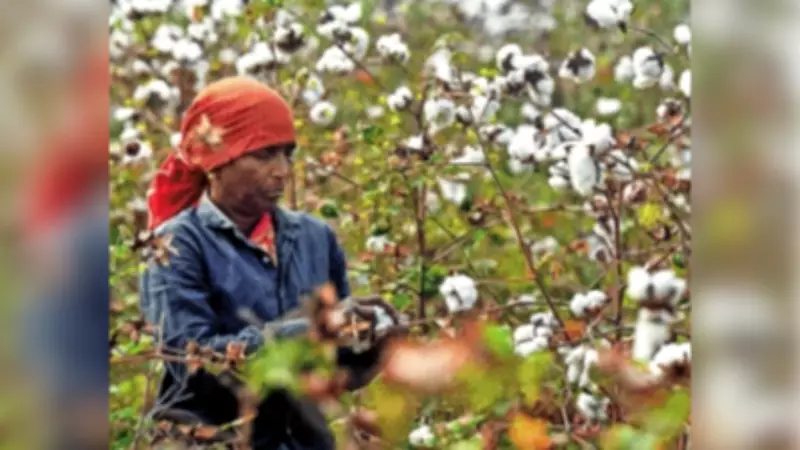
Concerns over escalating cotton imports and deepening distress among domestic growers echoed in the Lok Sabha on Wednesday. Raichur MP Kumar Naik brought to light the mounting challenges faced by cotton farmers, particularly in Karnataka, during the Question Hour session.
MP Naik Highlights Import Surge and Farmer Struggles
Naik pointed out that despite India holding the position as the world's second-largest cotton producer, following China with Brazil closely behind, farmers are grappling with significant uncertainty. He emphasized that although procurement under the minimum support price (MSP) scheme has been expanded over the years, a sharp rise in imports is severely undermining domestic growers.
"In a deeply alarming development, government data reveals that cotton imports from Brazil surged by over 1,000% year-on-year over the last two years," Naik stated. "Similarly, imports from the United States increased by 200% during the same period."

Highlighting the direct impact on farmers, he added: "They are struggling with falling prices, rising input costs, and continued policy uncertainty. If this trend continues, we risk becoming heavily dependent on imports, thereby weakening our farmers and compromising long-term agricultural security."
Minister Singh Outlines Government Response and MSP Details
In response, textiles minister Giriraj Singh assured the House that the Centre remains committed to protecting farmers' interests. He explained that through MSP and based on recommendations from the Commission for Agricultural Cost and Prices (CACP), along with state and Central inputs and production costs, the government ensures farmers receive a minimum of 1.5 times the cost of production for their produce.
Singh provided specific details for the 2025-26 season, noting that MSP was fixed between Rs 7,710 and Rs 8,110 per quintal depending on quality—an increase of Rs 589 per quintal over the previous year. He also mentioned that authorities have opened 571 procurement centres across 149 districts in 11 cotton-growing states, with over 90.5 lakh bales procured so far.
Duty Exemption Policy and Its Consequences
Clarifying the import policy, Singh stated that an 11% duty on cotton was exempted between August and December 2025. "Subsequently, it was reintroduced in January 2026," he said.
However, Naik argued that this temporary duty exemption had adverse consequences, emphasizing that domestic cotton prices crashed amid global tariff pressures. He pointed to Karnataka's performance, noting that the state recorded the highest yield in the south, surpassing the national average. Naik highlighted districts like Kalaburagi, Raichur, and Yadgir as having great potential if backed by strong institutional support.
The debate underscores the ongoing tension between import policies and domestic agricultural sustainability, with calls for more robust measures to safeguard farmer livelihoods and national food security.