

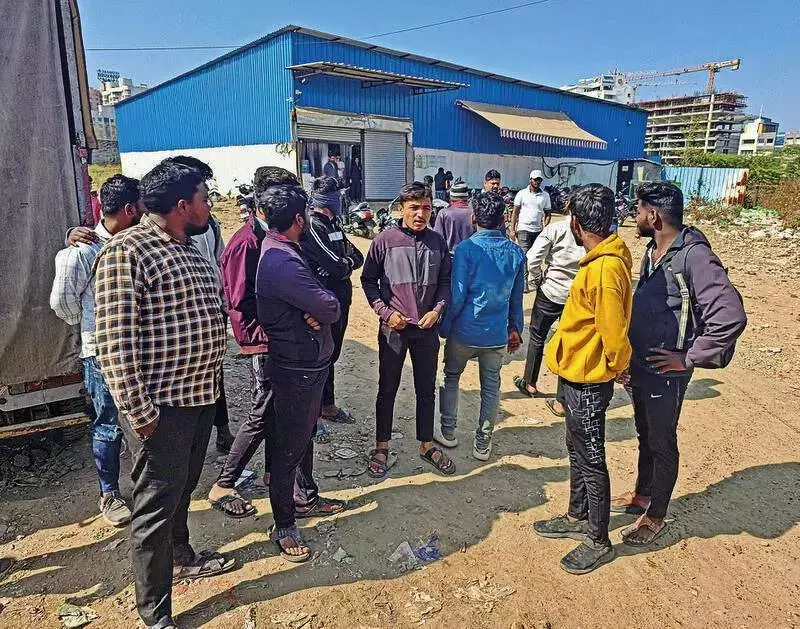
A nationwide strike by app-based delivery workers on New Year's Eve, protesting against low pay and the absence of social security benefits, received a mixed but significant response in Pune. While platforms attempted to counter the action with festive bonuses, the protest led to widespread service delays, order cancellations, and exposed the growing frustration within the gig workforce.
Strike Call and Platform Countermeasures
The strike was called by the Indian Federation of App-Based Transport Workers (IFAT) and the Telangana Gig and Platform Workers Union. Prashant Sawardekar, national president of IFAT, claimed strong participation across seven to eight states, including Maharashtra, Rajasthan, Karnataka, Hyderabad, Chennai, and Odisha. He stated that about 70% of delivery agents participated in the 'app-bandh andolan' by not logging in to work.
In response, companies like Zomato and Swiggy, who declined to comment on the strike, reportedly offered higher pay per order to lure riders back online. Sawardekar highlighted this tactic, noting, "Companies have been enticing delivery workers with earning Rs 90 per delivery when, on other days, they pay Rs 20-25. This proves that the companies can increase the payment but only choose to loosen their purse strings when such pressure is created."

Impact on Pune: Restaurants and Residents Feel the Pinch
With over 5 lakh delivery workers in Maharashtra, Pune's participation was notable. The strike's impact unfolded through the day. While many customers were unaware of the protest, they faced the consequences directly.
Delivery times soared after noon, with estimated arrivals doubling or tripling in many areas. Some locations showed no service at all. Restaurants, especially cloud kitchens, struggled. Auritro Saxena, who runs a cloud kitchen in Pune, described orders being prepared but remaining uncollected, leading to cancellations and losses. He resorted to fulfilling private orders only when customers arranged their own pickup via services like Porter.
Saili Jahagirdar, head of the National Restaurants Association of India's Pune chapter, noted that while the day was smooth, the evening rush highlighted the delivery crunch. Citizens like Samarth Patel from Vimannagar saw orders confirmed and then cancelled without explanation, forcing last-minute personal purchases. Pratiksha Ghatge from Undri received food an hour late, with the rider explaining he had to club many orders due to the rider shortage.
A Divided Front: Solidarity vs. Financial Necessity
The strike revealed the difficult choices workers face. Not all riders could afford to stay off the apps. Some logged in briefly to capitalize on the day's higher payouts. However, others stood firm in solidarity.
Fardeen Shaikh, a rider from Kondhwa, chose not to log in despite the financial temptation. "I felt the pinch because I kept getting notifications on our app showing extra Rs 30 from 4-6pm, Rs 90 from 6-10pm, and Rs 75 from 10pm onwards," he admitted. "But it was more important to stand with everyone. If we don't take a stand on days like this, nothing will change for us in the long run."
Sawardekar emphasized that the labour minister's office had contacted the organization to begin discussions, signaling potential political attention to the workers' core demands for fair pay, safe delivery targets, and job security.






