

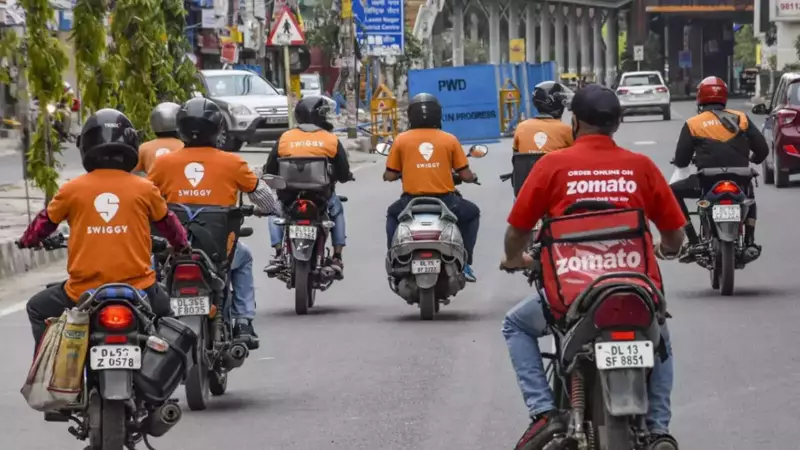
A nationwide strike by app-based delivery workers on New Year's Eve, protesting against low pay and inadequate social security, received a mixed response across India. While many workers participated in the protest, others were tempted by special festive bonuses offered by platforms like Swiggy, Zomato, and Zepto, who were trying to counter potential service delays and manpower shortages.
Platforms Counter Strike with Festive Incentives
Anticipating one of their busiest nights, major food and grocery delivery aggregators significantly increased pay per order to ensure smooth operations. Shaik Salauddin, founder president of the Telangana Gig and Platform Workers Union, revealed that platforms which typically pay between Rs 5 to Rs 10 per delivery were offering incentives ranging from Rs 110 to Rs 150 per order on December 31st. The unions leading the protest, including the Indian Federation of App-Based Transport Workers, urged workers not to be swayed by these temporary measures.
Aggregators also offered to waive penalties for order denials and cancellations. In a letter to delivery partners on December 30, Zomato assured them of no obstructions and encouraged them to log in to "earn up to Rs 3,500." The letter promised on-field assistance for safety and even suggested calling police if faced with interruptions. Union leaders saw this communication as recognition of their growing collective strength.

Workers Cite Unrealistic Targets and Risks
Despite the lucrative offers, a section of workers remained steadfast in their protest. One delivery partner, Siddhesh Patil (name changed), explained that the high incentive targets set by platforms were often impossible to achieve. He cited the example of a promise of an extra Rs 90 per order during the 6-10 pm rush hour and a guaranteed payout of Rs 2,175 for completing 19 orders in six hours.
"On festivals, restaurants are packed and can't process online orders fast enough, so we don't manage to convert many deliveries," Patil said. He noted that on a regular day, he completes about 20 orders between 9 am and 11 pm, but on the previous New Year's Eve, he managed only 15 with great difficulty. He also highlighted the risk of punitive ID blocking by aggregators for those participating in the strike.
Restaurants Adapt and Broader Demands
The strike threat prompted restaurants to find alternative solutions to avoid disruption. Many increased focus on their own delivery channels. Sagar Daryani, co-founder & CEO of Wow! Momo Foods, stated they stepped up promotion of their 'Wow Eats' app and sent mass emails to customers. Some restaurants partnered with third-party logistics providers like Shadowfax and Rapido. Kolkata-based restaurant chain Chowman also pushed orders through its own app to allow its in-house delivery fleet to cover any shortfall.
The core demands of the gig workers extend beyond one-night incentives. They are protesting the pressure created by ultra-fast 10-minute delivery models. Their key demands include:
- An end to arbitrary and unachievable incentive structures.
- A stop to the practice of blocking worker IDs as punishment.
- Removal of unfair penalties.
- Reversal of reductions in per-order payouts.
- Access to formal social security benefits.
While most customers were unaware of the strike, many experienced inordinate delays in their orders on what is traditionally one of the highest-demand nights for delivery services. The event underscores the ongoing tension between the gig economy's flexible model and workers' demands for better wages and job security.






