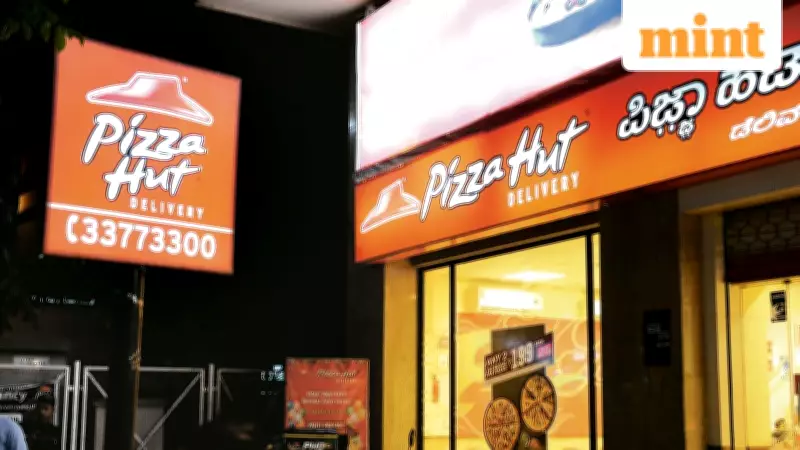
Devyani International's Strategic Pivot: New CEO Charts Course for Pizza Hut Turnaround
In a significant leadership transition, Devyani International Ltd, a prominent quick service restaurant (QSR) operator, has appointed Manish Dawar as its new president and chief executive officer, effective 1 April 2026. This move comes at a critical juncture as the company embarks on a comprehensive reset of its struggling Pizza Hut business, which has been a persistent challenge over recent quarters.
Zero Expansion Strategy: Focusing on Fundamentals
Dawar, who is transitioning from his role as chief financial officer, has outlined a bold strategy for Pizza Hut. He announced that Devyani International will add zero net new Pizza Hut outlets in both calendar years 2025 and 2026. This marks a decisive shift away from aggressive expansion towards fixing the core fundamentals of the business.
The key priorities under this reset include:

- Shutting down loss-making stores to streamline operations
- Upgrading technology infrastructure, an area where Devyani has lagged behind competitors
- Implementing sharper marketing initiatives
- Developing a stronger innovation pipeline
- Creating more targeted online-offline integration strategies
Dawar acknowledged that this clean-up exercise could span a couple of years, emphasizing that the company is taking a measured approach to ensure sustainable recovery.
Leadership Restructuring and Merger Synergies
The leadership changes extend beyond the CEO position. Anupam Kumar, currently executive vice-president of finance, will assume the role of chief financial officer, bringing over two decades of experience from Vedanta and Walker Chandiok & Co. Additionally, Neeraj Tiwari has been appointed as chief technology officer, underscoring the company's commitment to a digital-first approach in the competitive QSR landscape.
These appointments come alongside the ongoing merger with rival Sapphire Foods, announced on 1 January. This consolidation creates a single operator for Yum! Brands in India and addresses previous structural challenges. Dawar noted that Devyani's earlier operating framework, split across Yum! Brands, Sapphire Foods, and Devyani, had hampered decision-making and technology investments, making the company less agile than its peers.
The merger is expected to deliver annual synergies of ₹210-225 crore from the second year, while granting Devyani greater control over technology and supply-chain operations—critical elements for Pizza Hut's revival both in India and globally.
Business Performance and Market Context
Devyani International's operational metrics reveal both challenges and opportunities. For the December quarter of 2025-26, the company reported revenue from operations of ₹1,440.9 crore, representing an 11.3% year-on-year increase. As of 31 December 2025, Devyani operated 2,279 restaurants worldwide, up from 2,039 at the end of March 2025.
The breakdown of store performance highlights divergent trends:
- KFC remains the strongest performer, growing from 696 to 788 stores in India
- Pizza Hut added only nine new locations, bringing its total to 639 outlets
- Franchise brands like Costa Coffee and Tealive saw a slight decline from 220 to 211 locations
- Devyani's own brands, including Vaango, Biryani By Kilo, and Goila Butter Chicken, more than doubled their footprint from 96 to 218 stores
Internationally, Devyani expanded its presence to 402 restaurants across Thailand, Nigeria, and Nepal, up from 375 in March, with most growth occurring in Thailand.
Analyst Insights and Market Reaction
Sandeep Abhange, equity research analyst at LKP Securities, provided context on the current market dynamics. He noted that demand in the December quarter remained uneven, with pressure on discretionary spending delaying a broader consumption recovery. While festive promotions improved trends in November and December, management anticipates a gradual recovery through the fourth quarter rather than a sharp rebound.
Abhange highlighted several key observations:

- KFC continues to deliver positive same-store sales growth and healthy store-level margins
- Pizza Hut India remains in negative same-store sales growth territory, necessitating ongoing store rationalization
- Delivery now accounts for 55-60% of sales, supported by value-led offerings and deeper digital penetration
- Traffic trends are beginning to stabilize, with mature stores showing better throughput
On the expansion front, Abhange noted that Devyani added approximately 250 gross stores over the past twelve months, even as it selectively closed underperforming Pizza Hut outlets. The company is adopting a calibrated growth approach, focusing on tier II and tier III cities where store economics are more favorable, while prioritizing return on invested capital over headline expansion numbers.
Margin recovery showed early signs of improvement in the quarter, aided by easing food cost inflation in key inputs such as poultry, cheese, and edible oils. However, employee costs remain elevated due to wage pressures and staffing requirements at new stores. Store-level EBITDA improved sequentially, with management expecting a gradual margin recovery trajectory.
The market responded positively to these developments, with shares of Devyani International surging over 6% to close at ₹123.30 on BSE. This strong reaction reflects investor confidence in the company's strategic reset and leadership changes as it navigates the challenging QSR landscape.