Scott Adams Warned Us About Bad Bosses—Then We Laughed It Off
Sundeep Khanna | 4 min read | 14 Jan 2026, 10:27 am IST
Scott Adams, the brilliant mind behind the iconic 'Dilbert' comic strip, passed away on Tuesday at 68. For decades, he used his sharp pen to expose the absurdities of corporate life. Yet, the very executives who chuckled at his cartoons largely ignored the serious lessons hidden within the humor.
The Comic That Became a Corporate Mascot
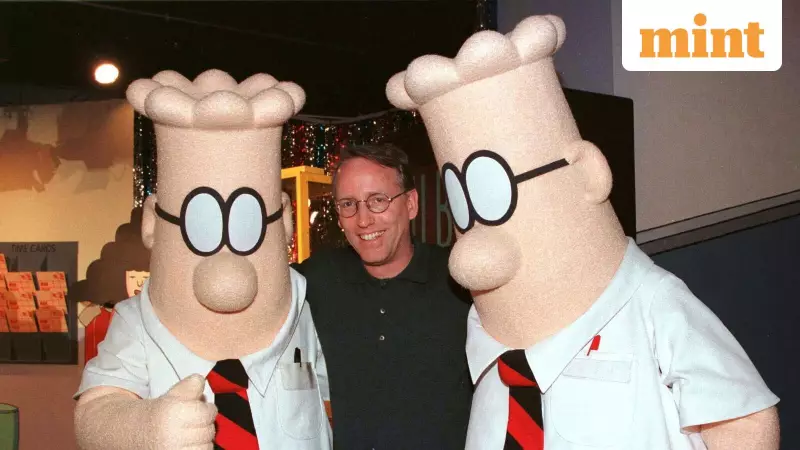
Dilbert—that necktie-wearing, cubicle-dwelling corporate everyman—exploded in popularity during the 1990s. Executives across the globe embraced the character. They displayed Dilbert cartoons in office hallways and used them as icebreakers at company events. However, they missed the core message completely.

The strip delivered a powerful critique of systemic incompetence within institutions. Much like the fools in Shakespeare's plays, Dilbert spoke hard truths under the cover of comedy. The corporate class, unfortunately, preferred to see the comic as a fun mascot rather than holding up a mirror to their own failings.
Skewering the Management Fads of an Era
The 1980s and 1990s witnessed a dramatic rise in corporate jargon and bloated middle management. Fresh business school graduates, armed more with management theory than practical business sense, led companies into becoming complex bureaucratic mazes. Adams, drawing from his own nine-year experience at Pacific Bell, found perfect material for satire.
His artistic style was minimalist and deadpan, reflecting the sterile nature of office environments. Unlike the detailed chaos of Beetle Bailey or the gentle whimsy of Peanuts, Adams' clean lines focused attention squarely on the content. His humor was observant, cynical, and relentless.
Each week, he targeted another workplace lunacy. He famously formulated The Dilbert Principle, a satirical take on the Peter Principle. It stated that companies systematically promote their least competent employees to management—where they can do the least damage. Today, we recognize the emptiness of endless mission statements and pointless change initiatives. When Adams first highlighted these through his characters' speech balloons, it felt almost rebellious.
Adams dissected major management fads with surgical precision. He mocked Total Quality Management (TQM), quipping that its goal was "to find the best way to do things that shouldn't be done at all." He also targeted Business Process Reengineering (BPR), showing how 'streamlining' often meant firing experienced workers and leaving clueless bosses to manage the resulting chaos.
The Language of Corporate Confusion
Adams had a particular disdain for corporate acronyms, calling them the bozo's great ally. One classic exchange from his book illustrates this perfectly:
- Boss: What was your contribution to the project?
- You: Mostly QA. I was also an SME for the BUs.
- Boss: Um… okay. Excellent work.
That hesitant "um" revealed an uncomfortable truth many know but few admit: numerous bosses operate without a clear understanding of what their teams actually do.
A World of Office Archetypes
Adams populated his comic universe with characters that mirrored real office dwellers. Yes, there was stereotyping, as seen in Asok, the brilliant Indian engineer perpetually overworked. However, Adams created a whole menagerie of types.
We met Dogbert, Dilbert's cynical pet who doubled as a world-conquering consultant viewing humans as exploitable "in-duh-viduals." There was Alice, the fiercely competent engineer with flaming hair representing the rage of the undervalued. They were balanced by Wally, the master of appearing busy while doing nothing, and Catbert, the evil HR director who enjoyed employee suffering.
At the center of it all stood the pointy-haired boss. This character wandered the halls, using humiliation and meaningless check-ins as his primary management tools.

A Legacy Overshadowed by Controversy
Before controversial remarks in 2023 tarnished his reputation, Scott Adams was a profoundly influential voice. His book, The Dilbert Principle, spent an impressive 43 weeks on the New York Times Best Seller list. At its peak, Dilbert ran in 2,000 newspapers across 65 countries.
The comic found a surprising home in India following the 1991 economic reforms. As Indian IT hubs began to resemble Silicon Valley cubicle farms, local business publications that carried the strip also earnestly reported on management trends like 'kaizen' and 'delayering.' The irony was palpable.
Adams may have ended his career mired in self-inflicted controversy. Yet, for three decades, he served as a unique explainer of the modern workplace's spiritual decay. He exposed the hollow logic that allows a company to fire talented workers to fund a lavish executive retreat. Boardrooms everywhere would have been far better places had they listened to the warnings behind the laughs.