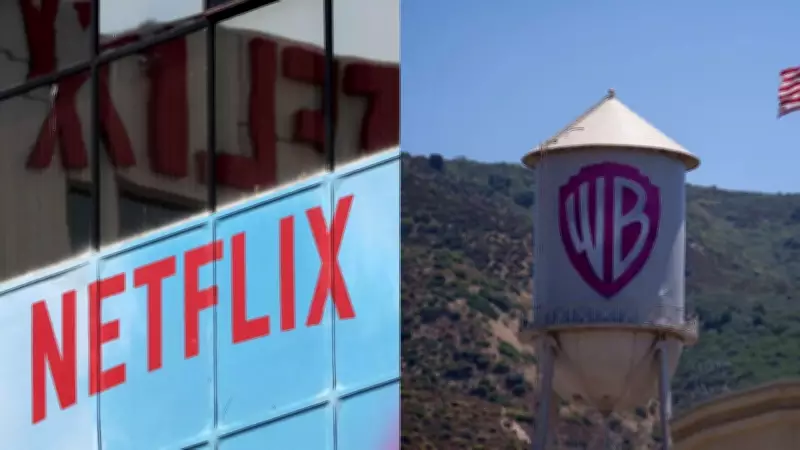
US Justice Department Launches Antitrust Probe Into Netflix's Massive Warner Acquisition
The United States Department of Justice has initiated a formal investigation into whether streaming giant Netflix has engaged in anti-competitive business practices. This scrutiny comes as the DOJ examines Netflix's proposed monumental $72 billion acquisition of Warner Bros. Discovery's studios and its HBO Max streaming service. The federal agency has reportedly issued civil subpoenas to multiple entertainment companies, seeking detailed information about how Netflix competes with its rivals in the rapidly evolving streaming landscape.
Examining Market Dominance and Potential Monopoly Concerns
According to documents viewed by The Wall Street Journal, the Justice Department is specifically investigating whether Netflix's planned Warner acquisition could substantially strengthen its market position or potentially create a future monopoly. US antitrust laws provide government agencies with broad authority to challenge mergers that could reduce competition or create monopolistic conditions in any industry.
In one subpoena sent to another entertainment company, the DOJ explicitly asked the recipient to "describe any other exclusionary conduct on the part of Netflix that would reasonably appear capable of entrenching market or monopoly power." This line of questioning suggests regulators are looking beyond the immediate merger to examine Netflix's broader business practices and competitive strategies.

The Competing Bids for Warner Bros. Assets
The investigation unfolds against the backdrop of competing acquisition offers for Warner Bros. assets. In December 2025, Netflix agreed to pay $27.75 per share in cash, totaling $72 billion, to acquire Warner Bros. and its extensive content library. Simultaneously, Paramount Global made a hostile $77.9 billion all-cash bid for all of Warner Bros., including its valuable cable networks unit that houses CNN, TNT, Food Network, and other prominent channels.
The Justice Department is reviewing both proposed acquisitions, though Warner Bros. management has urged shareholders to reject Paramount's offer. In its subpoenas, the agency has questioned how either deal might impact competition in the entertainment industry, particularly regarding creative talent acquisition and contract variations across different studios.
Legal Mechanisms to Block the Merger
Antitrust regulators possess significant legal tools to potentially block the Netflix-Warner merger if they determine it would harm competition. By investigating whether Netflix has unfairly disadvantaged rivals, the DOJ could develop additional legal arguments against the Warner acquisition. This scrutiny also provides the department with valuable insights into Netflix's overall business operations and competitive tactics.
Steven Sunshine, legal counsel for Netflix, stated that the company believes the DOJ is conducting a standard review of its proposal to purchase Warner's studio and streaming assets. "We have not been given any notice or seen any other sign that the DOJ is conducting a separate monopolization investigation," Sunshine clarified.
A Netflix spokeswoman further explained: "We are constructively engaging with the Department of Justice as part of the standard review of our proposed acquisition of Warner Bros. We remain focused on the value Netflix and Warner Bros. can create together."
Market Share Calculations and Competitive Arguments
Industry analysts note that if the Netflix-Warner deal proceeds, the combined entity would control approximately 30% of the US subscription streaming marketplace. However, Netflix has disputed this statistic as misleading, noting that 80% of HBO Max subscribers already maintain Netflix subscriptions. The company argues it competes in a broader video entertainment market that includes YouTube and various free streaming platforms available on television.
According to Justice Department guidelines, mergers between direct competitors are generally presumed illegal when the combined company would command more than 30% market share. However, US law typically defines monopolies as entities controlling 60% or more of a given market.

Netflix has presented alternative metrics, suggesting that a combination with Warner's HBO Max would account for only 10% of total viewing time in American television households. The streaming service contends that it doesn't directly compete with Warner Bros. and that their deal should be classified as a vertical merger, since Netflix primarily distributes content while Warner supplies movies and television programming.
Regulatory Timelines and International Scrutiny
The DOJ's investigation remains in its preliminary stages, with merger reviews typically requiring up to one year, though sometimes proceeding more rapidly. Regulators conduct numerous antitrust investigations that don't always result in formal legal action against proposed deals.
Both Netflix and Paramount will likely face additional antitrust reviews in Europe and the United Kingdom. International regulators frequently examine whether to block mergers when the acquiring company already holds substantial market power in specific regions.
Executive Perspectives and Political Context
Warner Bros. and Netflix executives have expressed confidence in obtaining regulatory approval for their proposed deal. Recently, Ted Sarandos, co-CEO of Netflix, testified before the Senate Judiciary Committee that consumers would benefit from lower pricing through a bundled offering of Netflix and HBO Max services.
In a recent interview with NBC News, US President Donald Trump addressed the Netflix-Warner Bros. deal, stating: "I've decided I shouldn't be involved. The Justice Department will handle it." This comment suggests the White House intends to maintain distance from the regulatory process, allowing the DOJ to conduct its investigation independently.
As the entertainment industry continues its dramatic transformation toward streaming dominance, this investigation represents a critical test of how antitrust regulations will apply to digital media conglomerates in the twenty-first century. The outcome could establish important precedents for future media mergers and acquisitions in the rapidly consolidating streaming marketplace.