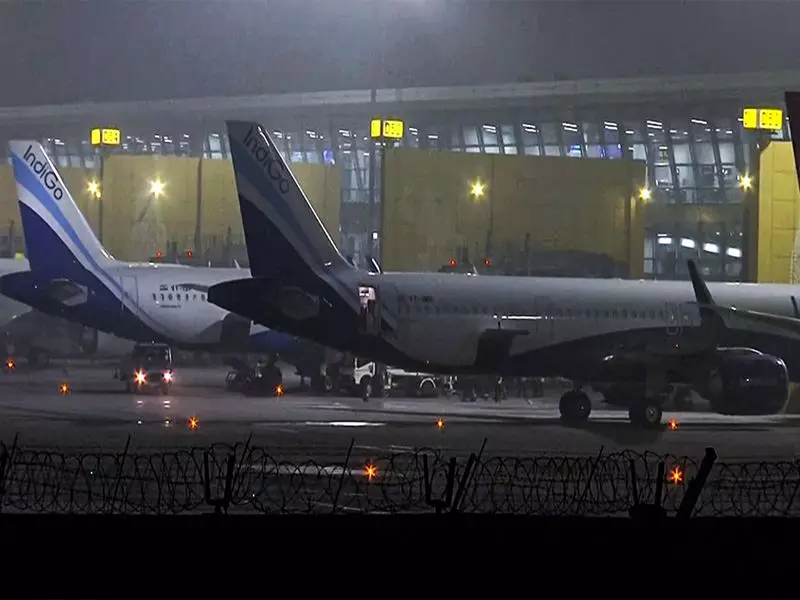
In a significant revision, credit rating agency ICRA has sharply downgraded its growth forecast for India's domestic air passenger traffic for the upcoming financial year. The agency now projects a meager 0.3% year-on-year growth for FY2026, a drastic reduction from its earlier estimate of 4.6% made in November 2023.
Key Factors Behind the Downgrade
The primary reasons cited for this substantial downward revision are ongoing industry-wide challenges. Groundings of aircraft due to Pratt & Whitney engine issues and supply chain disruptions are severely constraining capacity. These groundings have led to a significant number of planes being out of service, directly impacting the number of available seats and flights in the market.
Furthermore, ICRA notes that the domestic aviation industry's capacity, measured in Available Seat Kilometers (ASK), is expected to grow by only 6-7% in FY2025. This is a notable slowdown compared to the estimated 9-10% growth in FY2024. The constrained supply of aircraft is the main bottleneck preventing airlines from expanding their operations to meet passenger demand.

Current Performance and Near-Term Outlook
Despite the bleak forecast for FY26, the current financial year (FY2024) showed robust recovery. Domestic air passenger traffic is estimated to have reached approximately 154 million passengers, surpassing the pre-COVID levels of FY2020, which stood at around 141 million. For the ongoing FY2025, ICRA maintains a more optimistic growth projection of 8-11%, expecting traffic to reach between 166 to 170 million passengers.
The agency highlights that the domestic aviation industry's capacity, measured in Available Seat Kilometers (ASK), is expected to grow by only 6-7% in FY2025. This is a notable slowdown compared to the estimated 9-10% growth in FY2024. The constrained supply of aircraft is the main bottleneck preventing airlines from expanding their operations to meet passenger demand.
Financial Strain and Industry Resilience
The report underscores the financial pressure on airlines due to these operational headwinds. High aircraft rental costs and the need for additional maintenance for grounded planes are squeezing profitability. The grounding of aircraft has forced carriers to lease planes at elevated market rates, increasing their operational expenses significantly.
However, ICRA points to a silver lining: sustained strong passenger demand. Healthy passenger load factors (PLFs)—the percentage of seats filled—have been a consistent feature. For FY2024, the average PLF was strong at around 85-87%. This robust demand provides some revenue stability to airlines even in a constrained capacity environment. The stability in aviation turbine fuel (ATF) prices in recent months also offers minor relief on the cost front.
In conclusion, while the Indian aviation sector continues to witness solid demand from travelers, its growth trajectory for FY2026 is now expected to be almost flat. The industry's ability to navigate supply-side challenges, including engine issues and securing new aircraft deliveries, will be critical in determining its recovery path beyond the current constraints.