

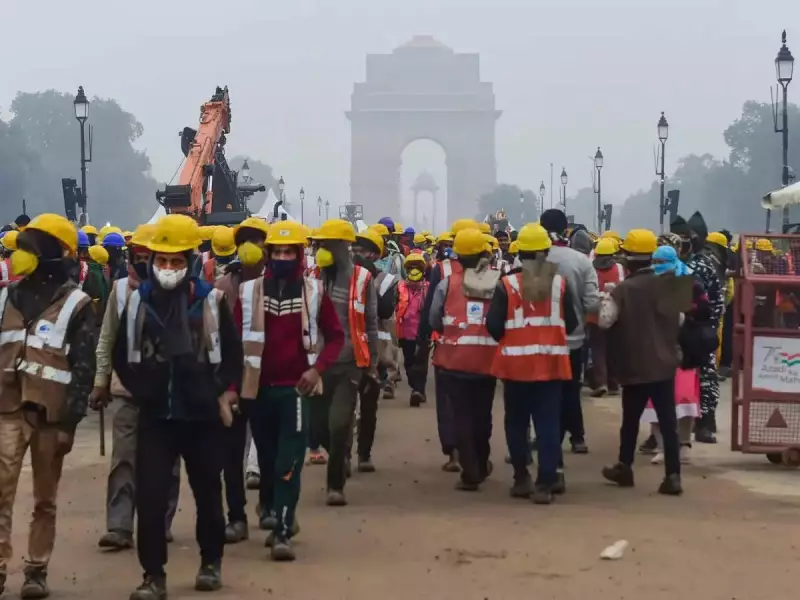
The Indian government has taken a significant step towards implementing its landmark labour reforms. A month after notifying four consolidated labour codes, the Centre on Wednesday released the draft rules for their execution, inviting public comments for the next 30 to 45 days.
New Formula for Calculating Minimum Wages
The draft rules lay out a comprehensive and needs-based formula for determining minimum daily wages. The calculation will be anchored on the requirements of a standard working-class family, defined as comprising the worker, a spouse, and two children.
The formula includes several key components:

- A daily nutritional intake of 2,700 calories per person.
- Annual clothing needs of 66 metres for the entire family.
- House rent expenditure set at 10% of combined food and clothing costs.
- 20% of wages allocated for fuel, electricity, and other essential utilities.
- An additional 25% of the total wage to cover education, healthcare, recreation, and unforeseen contingencies.
An official explained to the Times of India that this methodology follows the principles established by the Reptakos Brett Supreme Court judgment, which emphasized the socio-economic dimensions of wage structures. The official indicated that this revised calculation is expected to lead to an upward revision of minimum wages once the new codes take effect.
Key Provisions on Work Hours and Social Security
Beyond wages, the draft rules introduce several other critical changes. The codes will cap the weekly working hours at 48. Specific details regarding daily work hours, mandatory rest intervals, and spread-over time will be notified separately by the authorities.
A major focus of the new framework is extending social security to workers in the modern economy. The rules provide for the composition of a National Social Security Board specifically tasked with the welfare of gig and platform workers. This board will include lawmakers, representatives from state governments, and nominees from both worker and employer organisations, along with Central government appointees.
Clarifications on Wages and Gratuity
The Labour Ministry has also provided crucial clarifications on the definition of 'wages' under the new regime. If the sum of all remuneration components—excluding basic pay, dearness allowance, and retaining allowance—exceeds 50% of the total remuneration, the excess amount will be reclassified as part of the wage. Notably, payments like performance-linked incentives, Employee Stock Ownership Plans (ESOPs), variable pay, reimbursement-based allowances, and leave encashment are excluded from this calculation.
On the front of employee benefits, the government has clarified that the gratuity provisions will apply prospectively from November 21, 2025, the date the labour codes are slated to come into force. In a significant reform, fixed-term employees will become eligible for gratuity after completing just one year of continuous service. This is a substantial reduction from the five-year service requirement previously mandated for permanent workers.
The ministry has stated that the old rules will remain operational during the transition period until the final notification of the new rules is issued. Concurrently, state governments are also required to prepare and release their draft rules under the four new labour codes to ensure nationwide harmonisation.






