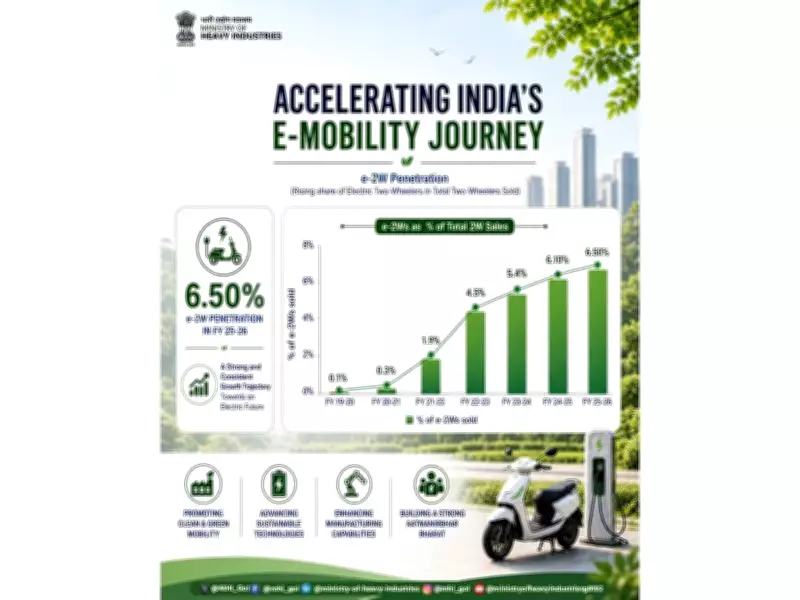
The penetration of electric two-wheelers in India has reached 6.5% in the fiscal year 2025-26 (FY26), marking a significant milestone in the country's e-mobility journey. This growth is attributed to a combination of government initiatives, expanding charging infrastructure, and increasing consumer awareness about the benefits of electric vehicles.
Government Policies Driving Adoption
The Indian government has implemented several measures to boost electric vehicle adoption, including the Faster Adoption and Manufacturing of Electric Vehicles (FAME) scheme, production-linked incentives (PLI) for advanced chemistry cell batteries, and state-level EV policies. These initiatives have reduced the upfront cost of electric two-wheelers, making them more accessible to the masses.
Consumer Demand and Market Trends
Rising fuel prices and environmental concerns are prompting more consumers to switch to electric two-wheelers. Major manufacturers have expanded their product portfolios, offering models with improved range, performance, and affordability. The availability of financing options and battery-swapping networks is also easing range anxiety.

- Urban adoption: Metropolitan cities lead in EV two-wheeler sales due to better charging infrastructure and shorter commuting distances.
- Rural growth: Government subsidies and awareness campaigns are gradually driving adoption in semi-urban and rural areas.
- Fleet operators: Delivery services and ride-hailing platforms are increasingly incorporating electric two-wheelers to reduce operational costs.
Challenges and the Road Ahead
Despite the progress, challenges remain, including the need for widespread charging infrastructure, battery recycling mechanisms, and affordable insurance. Industry experts believe that continued policy support and technological advancements will help achieve the target of 80% electric two-wheeler sales by 2030.
The e-mobility momentum is expected to strengthen further with the entry of new players, falling battery prices, and enhanced consumer confidence. As India accelerates towards its net-zero goals, the electric two-wheeler segment is poised to play a pivotal role in the country's sustainable transportation future.