

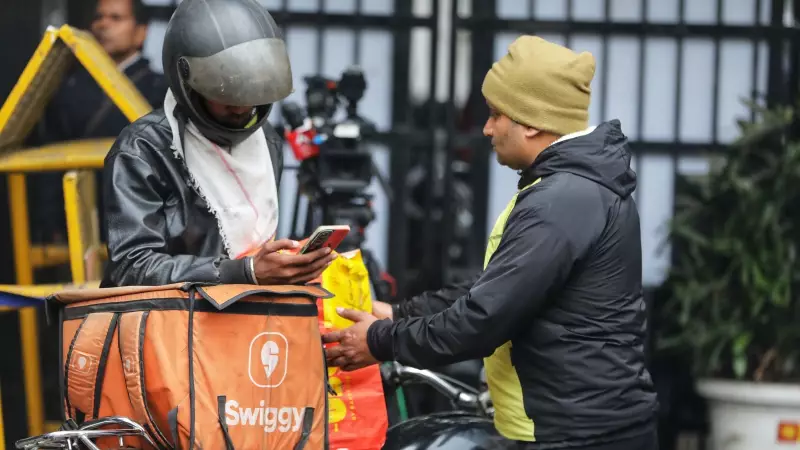
A planned strike by workers associated with quick commerce and food delivery platforms resulted in minimal visible disruption across the National Capital Region (NCR) on Wednesday, December 31st. While unions claimed significant participation and operational impact, ground reports and company incentives painted a different picture, with most services running smoothly for residents.
Union Claims vs. Ground Reality
Unions representing gig workers had called for the strike to highlight their demands. Nitesh Kumar Das, Organizing Secretary of the Gig Workers Association (GigWA), stated they observed a 20-30% disruption in operations within Delhi-NCR. He emphasized that the more significant outcome was a rise in awareness and collective participation among the workforce.
Echoing this from a southern perspective, Shaik Salauddin, President of the Telangana Gig and Platform Workers Union (TGPWU), claimed that by 7:30 PM, about 60% of operations faced disruption with nearly 2 lakh workers participating nationwide. He anticipated numbers would rise during the dinner peak order period.

Services Largely Unaffected, Incentives Play Key Role
Contrary to union assertions, residents across NCR reported receiving their food and quick commerce orders, from platforms like Swiggy Instamart, Zomato, and Blinkit, largely on time. The muted impact was attributed to strong incentives offered by the companies, especially on New Year's Eve, a high-demand period.
A Swiggy delivery partner in Gurgaon's Sector 52 revealed that the company deployed bouncers at key locations to prevent coercion and ensure workers could report for duty. He also expressed skepticism about the strike's effectiveness based on past experiences.
Financial incentives proved to be a major deterrent to widespread strike participation. One Swiggy rider showed an incentive of Rs 4,700 for delivering 70 orders. He specified that the incentive for deliveries between 6 PM and 10 PM was Rs 120 per order, which was Rs 20 higher than the previous New Year's Eve. A Zomato rider outlined similar incentive structures for late-night deliveries.
"This is New Year's eve, when I get to earn more. What will I achieve by going on a strike now," questioned a Zomato rider outside Ardee Mall, where a large gathering of delivery partners indicated business as usual.
Industry Reports Minimal Business Disruption
The restaurant industry also noted limited fallout. Pranav Rungta, Vice-President of the National Restaurants Association of India (NRAI), confirmed there was minimal effect on businesses in Delhi-NCR. He added that Swiggy informed NRAI that 99% of its workers had reported for duty, with no drop in orders until lunchtime.
The day's events highlighted the complex dynamics within India's gig economy. While worker unions are striving to build collective bargaining power, the practical realities of daily earnings, especially during lucrative peak periods, and strategic counter-measures by platforms significantly influenced the strike's overall impact.






