

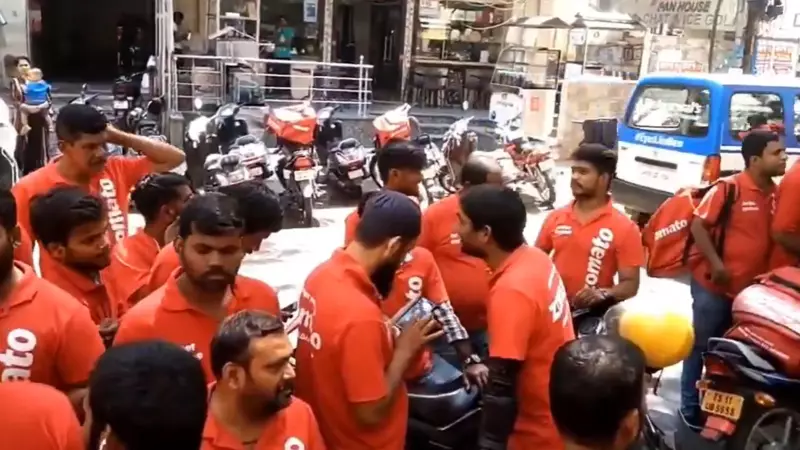
Zomato founder and CEO Deepinder Goyal has sparked a significant backlash from gig workers and unions following his defence of Blinkit's 10-minute delivery model. The controversy erupted after a nationwide strike by delivery partners on New Year's Eve, December 31, 2025.
CEO's Defence Meets Worker Reality
In a post on social media platform X on January 1, 2026, Goyal addressed the strike and the criticism around delivery speed. He argued that the 10-minute delivery promise is enabled by "the density of stores around homes" and sophisticated system design, not by pressuring riders to drive fast. Goyal detailed that after an order is placed, it is picked and packed within 2.5 minutes, and the rider then drives an average of under 2 kilometres in about 8 minutes, averaging 15 km/h.
He emphasized that delivery partners do not have a timer on their app indicating the original promised time. Despite what he called "rumours of strikes," Goyal noted that Zomato and Blinkit recorded their "highest-ever" delivery volumes on New Year's Eve.

Workers Highlight Core Issue: Shrinking Payouts
However, delivery partners who spoke to The Indian Express presented a starkly different picture. Their primary grievance is not the speed of delivery but a severe decline in earnings per order over the years.
Ashok, a delivery worker in his early fifties who participated in the strikes, revealed the drastic pay cut. "When it was Grofers, we used to get around ₹50 per order. Then it became ₹25. Now, in many cases, it is around ₹12," he said. This steep decline compels workers to take on more orders and work longer hours to meet their daily earning targets.
Sharvan, another Blinkit-associated delivery partner, stated he typically works 12–13-hour shifts, delivering 35–40 orders to earn about ₹500–₹600. He explained the limited impact of the strike, noting that while riders protested, the pickers inside dark stores were forced to work to avoid having their IDs blocked by the company.
Unions Decry 'Economic Desperation' Over Choice
The Telangana Gig and Platform Workers Union (TGPWU) responded forcefully to Goyal's remarks. In a series of posts on X, the union stated that the high delivery volumes on New Year's Eve should be seen as a sign of "desperation," not worker satisfaction.
The union argued that many delivery partners continue working because they cannot afford to log out, trapped by declining per-order earnings and the need to work long 10–14 hour shifts to meet minimum income levels through incentives. They highlighted the absence of paid leave, social security, and alleged "algorithmic blocking without due process." Their central critique was that "choice without security is not a choice."
In subsequent posts, Goyal reiterated that platform work is a short-term, transitional occupation and that all partners are covered by medical and life insurance. He stated he supports peaceful protest but condemned preventing others from working, alleging some protesters were not genuine delivery partners.
Regulatory Context and Future Implications
This clash occurs against the backdrop of the Centre's steps to formally recognise gig and platform workers under new labour codes. The Code on Social Security mandates aggregators to contribute 1–2 per cent of their turnover to a social security fund for welfare schemes, including accident insurance and health benefits for these workers.
The dispute underscores a growing tension in India's gig economy: the drive for hyper-efficient consumer services versus the economic precarity of the workforce that enables it. While company leadership points to system design and insurance, workers and their unions emphasize that shrinking payouts and lack of basic security are the real metrics that define their daily lives.






