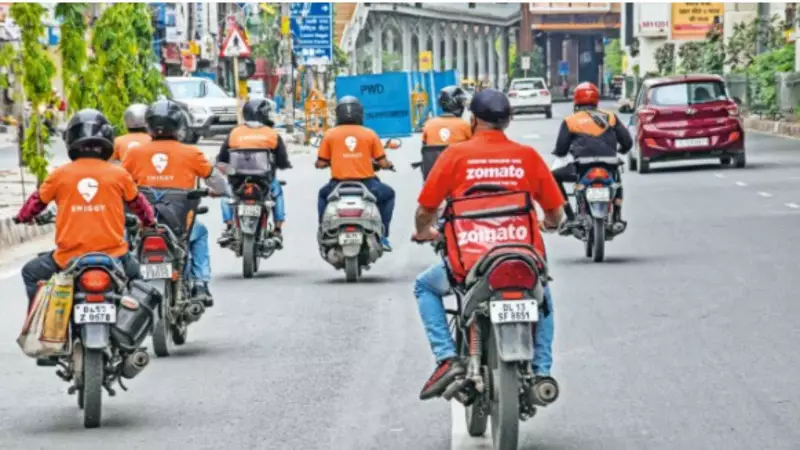
On New Year's Eve, a significant protest unfolded across multiple Indian cities as platform workers, including those from major delivery apps, went on strike. Their goal was to spotlight the increasingly harsh working conditions they endure, particularly the intense pressure to meet unrealistically short delivery deadlines.
The Human Price of Hyper-Convenience
The strike forces a critical examination of a modern expectation: the demand for near-instantaneous delivery of groceries and other goods. Unreasonable demands, like completing deliveries within 10 minutes, have become normalized. This express model places enormous strain on workers, compelling them to rush through traffic, which jeopardizes their own safety and that of other commuters. Platforms often defend these tight timeframes by citing networks of local 'dark stores' that reduce travel distance. However, workers argue that irrespective of the distance, the extreme time pressure creates unnecessary risk.
A crucial question arises: do we genuinely need groceries or other non-essential items with the same urgency as an emergency service? When consumers begin to treat such convenience as a fundamental right, the burden falls squarely on the delivery personnel. The writer Gayatri Nair, who teaches at IIIT Delhi, points out that someone pays the price for this convenience, and it is invariably the platform worker.

How Express Delivery Became the Norm
This model of immediate gratification is a relatively recent development in India's platform economy. Initially, customers booked delivery slots well in advance. The shift began when a single grocery delivery platform introduced ultra-fast delivery as a competitive tactic to outpace rivals. This strategy, described as an unfortunate 'development,' was soon adopted widely across the sector, extending beyond groceries to services like domestic work.
Platforms may point to high usage as proof of consumer demand, but the widespread consumer support for the recent strike suggests otherwise. It indicates that many customers are not opposed to longer, more reasonable delivery windows. Few apps offer an option to opt out of express delivery, a sign that the service is being pushed onto consumers rather than being a genuine response to market needs.
Innovation in Control, Not Technology
An analysis of these trends suggests that the platform business model in India advances not through technological breakthroughs but through intensified control over labor. Most platform companies register as technology firms, yet their consumer-facing practices have seen little significant tech innovation. The so-called 'innovations' have primarily been in squeezing time and cost, both extracted by increasing pressure on the workforce.
Low costs and quick deliveries are not the fruit of improved productivity, but of enforcing stricter time margins and steadily lowering worker earnings. When workers demand better pay or conditions, they are easily replaced from a vast labor pool, highlighting the sector's reliance on a low-cost, disposable workforce. This has led to long hours and poor pay becoming the standard, prompting repeated strikes and even necessitating state intervention to discuss basic social security for gig workers.
A New Alliance: Workers and Consumers
A notable aspect of recent collective actions is the evolving relationship between platform workers and consumers. Instead of a friction-filled dynamic, workers are using social media and direct outreach to educate customers about their realities—shrinking incomes, exhausting hours, and the dangers of the 'quick delivery' mandate.
This outreach demonstrates that worker welfare and consumer satisfaction are not always a zero-sum game. It opens a path for Indian platforms to reform their practices in a way that respects both parties. A meaningful first step, as suggested, would be to eliminate the coercive express delivery model. The New Year's Eve strike is not just a protest; it's a call to re-evaluate the true cost of our digital convenience.