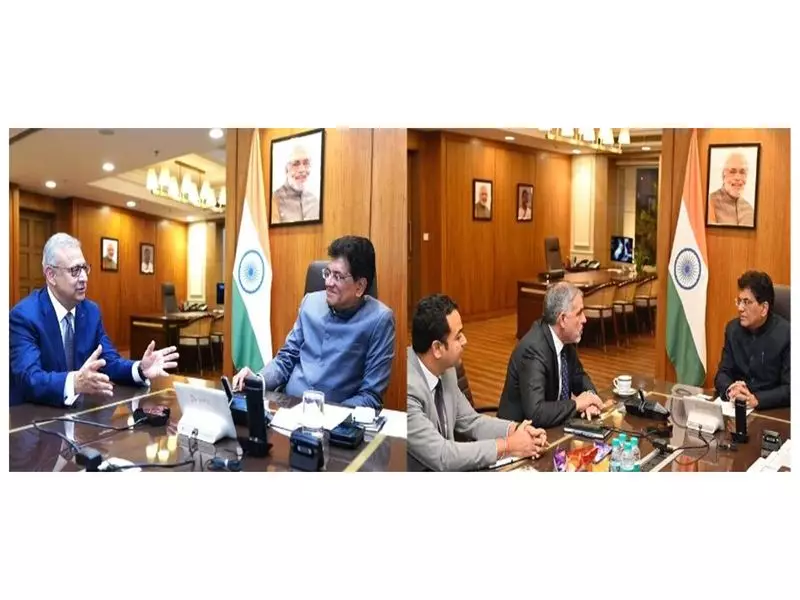
Commerce and Industry Minister Piyush Goyal, during his visit to the World Economic Forum (WEF) in Davos, Switzerland, conducted a series of high-stakes meetings aimed at significantly strengthening India's position in three critical future-oriented sectors: semiconductors, medical technology, and carbon capture. The discussions, held on January 17 and 18, 2024, focused on attracting investments, forging technology partnerships, and accelerating the country's capabilities in these strategic areas.
Driving India's Semiconductor Ambitions Forward
In a major push for the government's India Semiconductor Mission, Minister Goyal met with top executives from global semiconductor giants. A pivotal discussion was held with Mr. Keyvan Esfarjani, Executive Vice President and Chief Global Operations Officer of Intel Corporation. The meeting explored the vast potential for Intel to expand its footprint in India, aligning with the nation's ambitious plans to become a global hub for semiconductor design, manufacturing, and talent development.
Further solidifying this thrust, the Minister engaged with Mr. Hock Tan, President and CEO of Broadcom Inc.. Their conversation centered on Broadcom's existing substantial engagements in India and the promising avenues for further deepening their collaboration, particularly in the realm of chip design and advanced research and development.

Forging Partnerships in MedTech and Carbon Capture
Beyond electronics, Goyal's agenda included the vital healthcare sector. He held a detailed meeting with Mr. Geoff Martha, Chairman and CEO of Medtronic, a world leader in medical technology. The dialogue emphasized Medtronic's growing investments in India and focused on strategies to enhance the local manufacturing of high-end medical devices. This aligns with India's goals to improve healthcare accessibility and reduce import dependency through initiatives like the Production Linked Incentive (PLI) scheme for medical devices.
In a move addressing climate and clean energy, the Minister sat down with representatives from Carbon Clean, a leader in point-source carbon capture technology. The discussions revolved around the company's innovative solutions and their potential application in India's industrial sector to aid in the reduction of carbon emissions, supporting the country's net-zero commitments.
Strategic Outcomes and the Road Ahead
These curated meetings in Davos underscore the Indian government's proactive and targeted approach to engaging with global industry leaders. The focus on semiconductor manufacturing, MedTech innovation, and carbon capture technology reflects a clear strategic vision to position India at the forefront of the industries that will define the next decade of economic growth and technological sovereignty.
The interactions are expected to translate into concrete investment proposals, technology transfer agreements, and enhanced R&D collaborations. By directly addressing the heads of these multinational corporations, Minister Goyal has effectively pitched India as a stable, skilled, and investment-friendly destination ready for complex, high-value manufacturing and innovation. The outcomes from these talks are likely to feed directly into ongoing policy frameworks and mission-mode projects, accelerating India's journey towards self-reliance and global leadership in these key sectors.