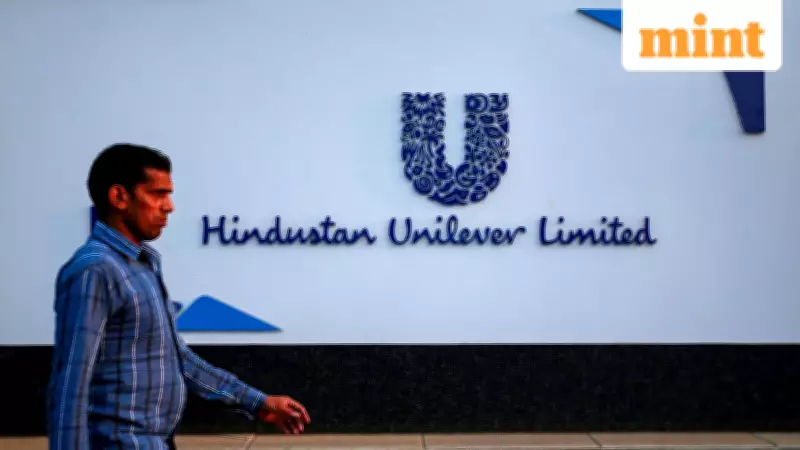
HUL Q3 Earnings Preview: A Barometer for India's Consumption Trends
Investors are keenly watching Hindustan Unilever's third-quarter earnings, set to be announced on Thursday, to gauge the true picture of consumption in India. This report comes after significant structural and regulatory changes, including recent GST rate reforms and the demerger of its ice-cream business. The results are expected to provide critical insights into how the middle class is reacting to rising prices and economic shifts.
Financial Expectations and Key Changes
According to Bloomberg estimates based on 19 analysts, HUL is projected to post a profit after tax of ₹2,597 crore and revenue of ₹16,156 crore for the quarter ended December. This compares to a net profit of ₹2,694 crore and revenue of ₹16,034 crore in the previous September quarter. The company, often seen as a proxy for Indian consumption, underwent major transformations in 2025.
- The demerger of Kwality Wall’s India Ltd. became effective on 1 December.
- Historic GST rate reforms were implemented on 22 September, shifting about 40% of HUL’s product portfolio to a 5% GST rate.
- Management changes included Priya Nair as CEO from 1 August, Niranjan Gupta as CFO from 1 November, and Vandana Suri as executive director of home care from 1 January.
Impact of External Factors
Investors will seek updates on whether disruptions from prolonged monsoon conditions have settled and if GST rate cuts have boosted consumption as anticipated. Analysts at ICICI Securities noted that consumers are increasingly upgrading to premium brands, which could benefit HUL due to its strong presence in that segment. Additionally, an extended winter in north India, linked to La Niña, is expected to enhance the performance of HUL’s winter portfolio, with brands like Ponds and Vaseline likely seeing gains.

Market Dynamics and Challenges
Stakeholders are also monitoring the progress of economic recovery, particularly in rural and urban markets. While HUL reported stronger rural growth post-pandemic, management indicated no major fluctuations in these segments in the September quarter. Urban inflation rose to 2.03% in December from 1.40% in November, highlighting pricing pressures.
However, HUL faces challenges from younger consumer startups, which are attracting urban and younger customers. The company is rebranding iconic products like “Glow & Lovely” to compete, but faces increasing competition from specialists like Nykaa with brands such as Dot & Key. On a positive note, lower raw material prices for items like crude-based commodities and tea could lead to stable or improved margins, as noted by Nomura analysts.
Stock Performance and Analyst Sentiment
HUL shares were trading at ₹2,455 on the NSE, with a gain of about 6.2% over the past year. Of 37 analysts tracking the stock, 26 maintain a ‘buy’ rating, reflecting cautious optimism ahead of the earnings release. This report will not only reveal financial metrics but also serve as a key indicator of broader consumption trends in India’s evolving economic landscape.