

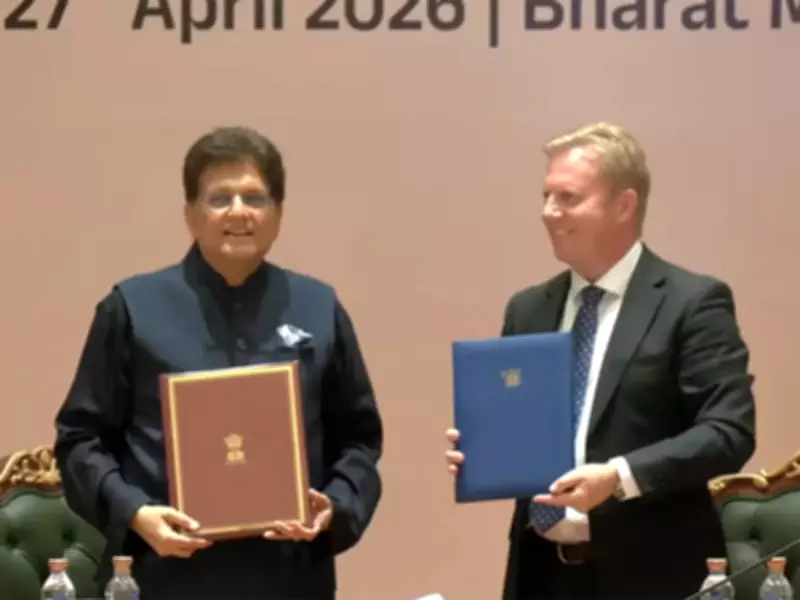
New Delhi: India and New Zealand on Monday signed a bilateral trade agreement, described as a "once-in-a-generation" opportunity. The deal is expected to be implemented by the end of the year and will provide 100% duty-free access for goods shipped from the country, along with easier visa rules for students and skilled professionals, and freer access for yoga professionals, AYUSH practitioners, and musicians.
New Zealand's Investment Commitment
New Zealand has committed to invest $20 billion over the next 15 years. Trade Minister Todd McClay identified infrastructure among sectors where some of the investment will be made, with the government facilitating the flows. With the agreement in place, both sides aim to double bilateral trade in goods and services to $5 billion in five years.
McClay expressed confidence in the deal's approval despite concerns from his government's coalition partner, New Zealand First. The opposition New Zealand Labour Party has backed the agreement. "We have a majority in Parliament to pass this agreement. All trade agreements that have been presented to Parliament have enjoyed a super majority of the two largest parties... we have had bipartisanship," McClay said.

Key Features of the Agreement
The deal was finalized within nine months of negotiations restarting. India has managed to keep its sensitive farm products and dairy outside the ambit of the treaty. Prime Minister Narendra Modi stated, "The FTA catalyses new opportunities for our farmers, artisans, youth entrepreneurs, women and MSMEs, unlocking pathways for global market access and enterprise across sectors, from agriculture and manufacturing to technology, education and services." Commerce and Industry Minister Piyush Goyal noted that this is India's ninth agreement in recent years, with the UK and Oman deals to be operationalized in the coming weeks, even as the trade pact with the EU awaits approval.
Goyal emphasized, "At the heart of the agreement is the empowerment for exports, agricultural productivity, student mobility, skills, investment and services." He added that India can hope to garner a bigger share across product segments from footwear to automobiles.
Duty-Free Access and Tariff Concessions
The trade agreement, for which negotiations were concluded in December, will provide duty-free access for India's exports including textiles, apparel, leather, footwear, gems and jewellery, engineering goods, and processed foods. New Zealand has peak tariffs of up to 10% in segments such as ceramics, carpets, automobiles, and auto components. On its part, India will lower tariffs on 70% of tariff lines, covering 95% of bilateral trade value, while keeping nearly 30% of products outside the pact.
Opportunities for Professionals and Services
While the treaty opens doors for Indian professionals, Goyal invited Global Capability Centers from New Zealand to take advantage of skilled manpower in India and lower their costs. India has offered concessions in sectors such as banking by permitting New Zealand to open more branches in the country. McClay noted that New Zealand companies intend to use the treaty provisions to import goods to India and re-export after value addition. Goyal clarified that some goods, particularly those related to agriculture or dairy, will not be allowed for domestic sale and can only be used for export, in line with India's foreign trade policy.






