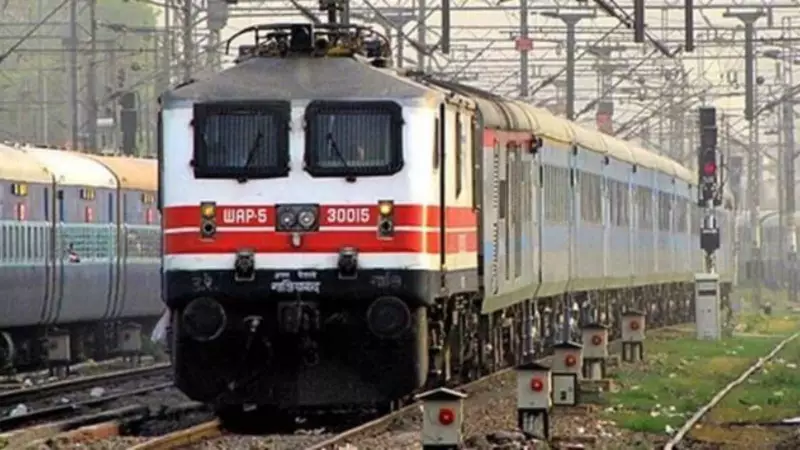
In a move that will impact millions of long-distance travellers, the Ministry of Railways has announced a fresh increase in passenger fares across several classes, effective from December 26. This marks the second such hike within a span of six months.
Details of the Fare Revision
The ministry, in an official statement, outlined the new fare structure. The revision introduces a per-kilometer increase for most long-distance train categories. For AC classes and non-AC Mail/Express trains (sleeper class and second class), the fare will rise by two paisa per kilometer. For second class in Ordinary category trains travelling more than 215 km, the increase is one paisa per km.
Importantly, the hike provides some relief for short-distance and suburban commuters. There will be no increase in fares for journeys up to 215 km in the ordinary class. Furthermore, suburban train fares and the prices of monthly season tickets (MSTs) have been left untouched.
A senior ministry official projected that this rationalisation would yield significant additional revenue. The Railways expects to earn about Rs 600 crore from this revision for the remainder of the 2025-26 financial year.
Impact on Passengers: A Concrete Example
To illustrate the direct impact on a passenger's wallet, consider a journey from New Delhi to Prayagraj, covering approximately 650 kilometers. Following the new rates, a traveller in either an AC class or a sleeper class will have to pay Rs 13 more for a ticket. The official cited the expansion of the railway network and increased operational costs, including manpower, as key drivers behind the need for periodic fare adjustments.
Context of Recent Fare Revisions
This December hike comes closely on the heels of the last revision, which was implemented in July 2025. At that time, fares were increased by two paisa/km for AC classes, one paisa/km for non-AC Mail/Express, and half a paisa/km for second class for distances exceeding 500 km.
The July increase itself ended a nearly five-year gap since the previous hike in January 2020. The 2020 revision saw a four paisa/km rise for AC classes and two paisa/km for non-AC Mail/Express, while keeping suburban fares stable.
The ministry's approach appears to be in line with recent parliamentary recommendations. In December 2024, a parliamentary standing committee urged the Railways to review revenues from AC classes and align them more closely with operational costs to reduce losses in the passenger segment. The committee emphasized that while general class travel must remain affordable, the financially stronger AC segment should bear a fairer share of the cost burden.
The Railways has long stated that it heavily subsidises passenger services. Data indicates that suburban services recover only about 30% of their costs, non-AC travel recovers 39%, and AC travel generates a marginal surplus of just 3.5%. With freight contributing nearly 65% of total revenue, these periodic passenger fare revisions are seen as a step towards improving the financial health of the national transporter.