

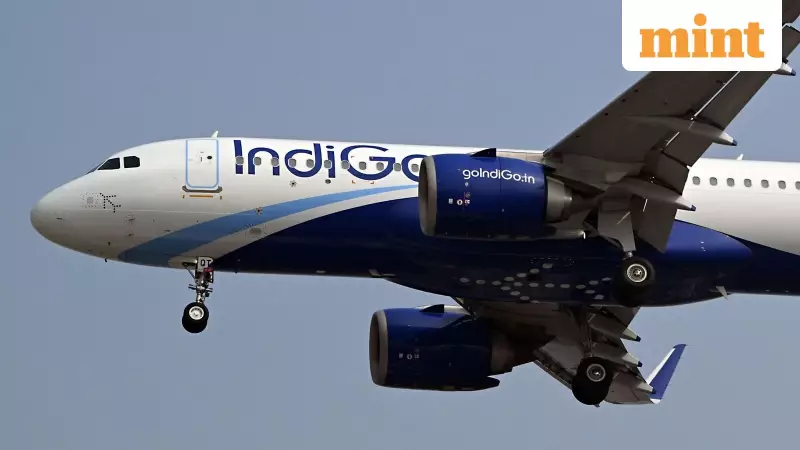
India's aviation sector is grappling with significant turbulence as its largest airline, IndiGo, confronts massive operational disruptions. The carrier has been forced to delay or cancel over 500 flights, creating a travel nightmare for thousands of passengers nationwide. This chaos stems from the recent implementation of updated Flight Duty Time Limitations (FDTL) norms for crew rostering, compounded by several other factors.
Behind the Operational Meltdown: A Multi-Factor Crisis
IndiGo has formally cited a confluence of reasons for the ongoing travel chaos to aviation regulators. The primary trigger is the rollout of the new FDTL rules, which govern pilot and cabin crew duty hours. However, the airline also pointed to minor technology glitches, winter schedule adjustments, adverse weather conditions, and general congestion within the aviation system as contributing factors. The situation has escalated to a point where the government has ordered a high-level probe into the persistent disruptions, even as airfares on other airlines have shot up due to increased demand.
Financial Turbulence: Soaring Losses Despite Revenue Growth
The operational crisis hits at a time when the airline's financials are under strain. For the July-September quarter (Q2) of the 2025-26 financial year, IndiGo's net loss widened dramatically. The consolidated statements reveal a net loss of ₹2,582 crore, a staggering 161% increase from the ₹987 crore loss recorded in the same quarter the previous fiscal year.

This deepening loss occurred even as the airline's revenue from operations grew by 9.3% year-on-year to ₹18,555 crore. A major factor behind the dismal bottom line was a more than tenfold surge in foreign exchange costs, which ballooned to ₹2,892 crore from just ₹240 crore a year ago. This massive expense inflation eroded the benefits of higher revenue, leading to the widened deficit. The airline's CEO has stated that the flight situation is expected to normalize by December 15.
Market Dominance and Shareholder Returns
Despite current challenges, IndiGo's dominance in the Indian skies remains formidable. As of September 2025, the carrier commanded a 63% market share in the domestic aviation market, according to Statista. The Tata Group's airlines—Air India and Air India Express—collectively held a 19.9% share. Earlier data from IATA for 2024 showed IndiGo leading with a 53.4% share of seat capacity.
Investor faith in the airline has been strong over the long term. IndiGo's market capitalisation has soared by 215% over the past five years to ₹2.076 trillion. The stock has delivered over 200% returns to investors in that period. However, the recent crisis has impacted its short-term performance, with the stock shedding 5.72% in the last month and trading nearly 9% lower amid the cancellations. On December 6, the share price closed at ₹5,371.30 on the BSE.
The Low-Cost Engine: How IndiGo Keeps Fares Competitive
IndiGo's business model is built on the principles of a low-cost carrier (LCC), relentlessly minimizing operating expenses to offer competitive fares and drive profits. This involves strategic choices like not serving hot meals onboard, which saves on the cost of food heaters, fuel, and weight. Unlike full-service carriers like Air India, which bundle meals into ticket prices, IndiGo charges separately for most ancillary services.
The airline also achieves significant cost savings through fleet commonality, operating an all-Airbus fleet. This eliminates the need for separate pilot training programs for different aircraft types like Boeing. Furthermore, IndiGo predominantly uses a leasing model for its aircraft, providing operational flexibility without the heavy capital expenditure and depreciation risks associated with owning assets.
As the high-level inquiry progresses and the airline works to stabilize operations, the coming weeks will be critical. They will test not only IndiGo's crisis management but also the resilience of its much-admired low-cost structure in the face of unprecedented operational and financial headwinds.






