

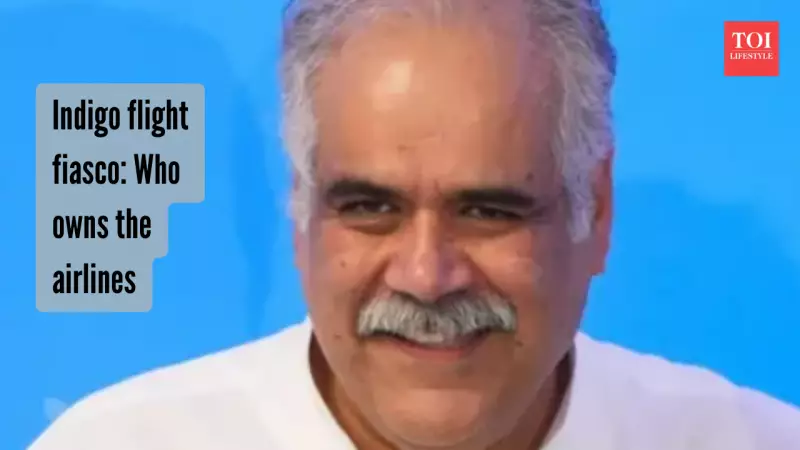
India's aviation sector was thrown into disarray in December 2025 as the country's largest carrier, IndiGo Airlines, was forced to cancel over 400 flights in a single day. This unprecedented operational crisis left thousands of passengers stranded and triggered intense scrutiny of the airline's management and planning capabilities.
The Man Behind India's Aviation Giant: Rahul Bhatia
The spotlight quickly turned to the low-profile billionaire who co-founded and owns the airline. Rahul Bhatia, the principal owner through InterGlobe Enterprises, is the strategic force behind IndiGo's rise. An engineering graduate from Canada's University of Waterloo, Bhatia comes from a family with deep roots in the travel business. His methodical and technology-driven approach has been instrumental in building IndiGo into a behemoth, serving 137 destinations with India's largest domestic network.
Bhatia's financial success is a direct reflection of the airline's performance. His net worth, primarily derived from his stake in InterGlobe Aviation (IndiGo's parent company), is estimated to be between $8.1 billion and $10.9 billion as of late 2025. This marks a near-tripling from his 2023 valuation of $3.5 billion, underscoring IndiGo's robust market position. Forbes lists his joint wealth with his father, Kapil Bhatia, at the higher end of that range. Beyond aviation, Bhatia has diversified into hospitality with ownership of three hotels in Gurugram. His contributions have been recognized with prestigious awards from Ernst & Young, cementing his status as a transformative leader in Indian aviation.

What Caused the December 2025 Flight Crisis?
The immediate trigger for the massive cancellations was the implementation of new Flight Duty Time Limitation (FDTL) rules by Indian regulators. Designed to enhance safety and reduce pilot fatigue, these regulations imposed stricter mandatory rest periods and curbed night flying hours. IndiGo, with its vast fleet and complex crew scheduling, struggled to adapt its rosters to comply with the new norms, leading to acute pilot shortages.
The situation became so severe that the Directorate General of Civil Aviation (DGCA) had to step in. The regulator provided temporary relief by easing certain operational norms to help the airline stabilize its services. While the episode exposed significant gaps in the airline's contingency planning, it also highlighted the industry's and regulator's unwavering commitment to passenger safety over operational convenience.
Leadership and the Path Forward
This crisis has put Rahul Bhatia's leadership and strategic vision to the test. Known for his focus on operational efficiency and scale, the event underscores the delicate balance required in aviation between growth, regulation, and resilience. Bhatia's challenge now is to steer IndiGo through this operational hiccup while reinforcing systems to prevent a recurrence.
The incident serves as a stark reminder of the complexities in managing a large-scale airline in a dynamic regulatory environment. For passengers, it was a day of frustration; for the industry, it was a case study in risk management. As IndiGo works to restore its schedule fully, the focus remains on how Bhatia and his team will navigate future regulatory shifts and maintain their dominant position in India's competitive skies.






