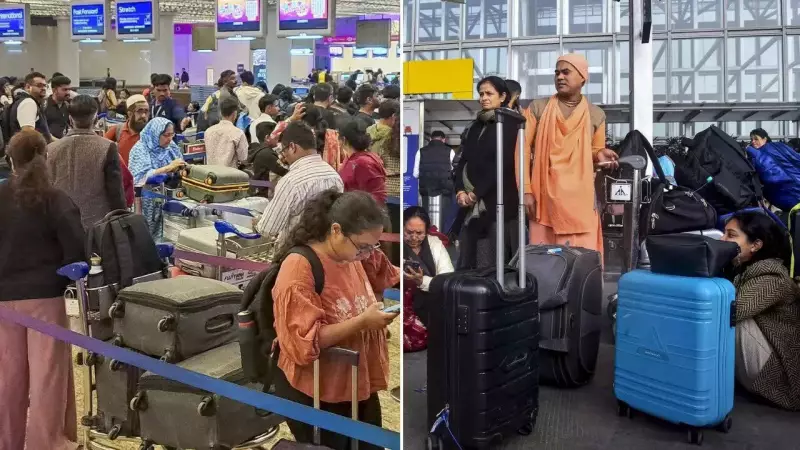
India's aviation sector is reeling under a severe operational crisis as its largest carrier, IndiGo, faces a fourth consecutive day of massive flight disruptions. The airline, grappling with acute pilot shortages under newly implemented duty-time regulations, cancelled or delayed over 500 flights on Friday alone, leaving thousands of passengers stranded across the country.
Chaos at Airports and Soaring Airfares
The ripple effect of the cancellations created chaotic scenes at major airports, including Delhi, Chennai, Bengaluru, Hyderabad, and Goa. Passengers reported waiting for 12 to 24 hours, with many organising protests due to a lack of communication, misplaced baggage, and insufficient assistance. In a drastic move, IndiGo suspended all departures from Delhi Airport until 11:59 pm on Friday.
The airline's On-Time Performance (OTP) collapsed to a mere 19.7%, down from 35% the previous day. This large-scale disruption triggered a sharp spike in last-minute domestic airfares as passengers scrambled for alternatives. Data from travel portals showed record-high prices:

- Delhi to Bengaluru: Cheapest fare crossed ₹40,000, with some options exceeding ₹80,000.
- Delhi to Mumbai: Minimum fare touched ₹36,107.
- Delhi to Chennai: Fares surged to between ₹62,000 and ₹82,000.
Root Cause: New Pilot Duty Rules and Planning Failure
The core of the crisis stems from the stricter Flight Duty Time Limitations (FDTL) rules mandated by the Directorate General of Civil Aviation (DGCA), which came into full effect on November 1. The new norms, aimed at curbing pilot fatigue, include:
- 48 hours of mandatory weekly rest for pilots.
- A limit of just two night landings per week (between 12 am and 6 am), reduced from six.
- Extended definitions for night duty.
These changes drastically reduced crew availability, hitting IndiGo hardest due to its extensive network of late-night operations. The airline revealed a significant shortfall, with only 2,357 captains and 2,194 first officers available for its A320 fleet in December, numbers insufficient under the new regime.
Pilot unions have squarely blamed IndiGo's planning. The Federation of Indian Pilots (FIP) accused the airline of enforcing a hiring freeze and pay freeze despite prior knowledge of the rule changes, while other carriers prepared adequately.
Regulatory Intervention and Passenger Relief Measures
In response, the DGCA granted IndiGo a temporary exemption until February 10, 2026, relaxing specific night-duty provisions for its A320 fleet "in public interest." The regulator mandated fortnightly progress reports and a compliance roadmap within 30 days.
The Ministry of Civil Aviation has stepped in, directing airlines to stabilise schedules and ensure passenger welfare. Its orders include:
- Providing automatic full refunds for cancellations.
- Arranging hotel accommodation and ground transport for stranded travellers.
- Ensuring lounge access and priority support for senior citizens.
- Offering refreshments during extended delays.
IndiGo, in a detailed public apology, announced several support measures. It confirmed automatic refunds to original payment modes and a full waiver on cancellation/reschedule fees for bookings made between December 5 and 15, 2025. The airline stated it arranged thousands of hotel rooms, provided food at airports, and increased contact centre capacity.
The airline predicts that December 5 will see the highest number of cancellations, as it reboots its systems. While IndiGo assures that operations will stabilise within 48 hours, full compliance with FDTL norms and long-term normalcy is projected only by the February 2026 deadline. For now, passengers are advised to check their flight status on the IndiGo website or app before heading to the airport, as disruptions are expected to continue in the near term.