

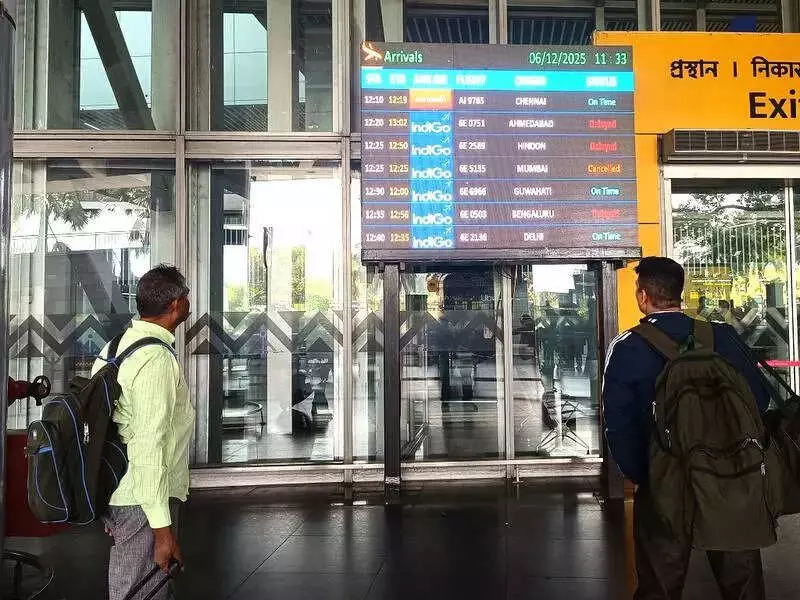
Pilots at IndiGo Airlines have raised serious allegations, suggesting that the recent chaos involving thousands of delayed and cancelled flights was a deliberately engineered crisis. They claim the turmoil was orchestrated to pressure the government into suspending newly implemented flight duty time limitation (FDTL) norms, which are designed to combat pilot fatigue and enhance passenger safety.
The Mathematical Mismatch: A 5% Shortage vs. Widespread Disruption
The core of the pilots' argument lies in a simple calculation. IndiGo, which operates approximately 2,200 flights daily, has a total pilot strength of 4,551, comprising 2,357 captains and 2,194 first officers. The revised FDTL norms created a deficit of 124 pilots, which translates to a shortfall of just 5%. Logically, this should have impacted only 5-7% of flights, or a maximum of 110-150 flights per day.
Veteran pilots are therefore baffled by the scale of the disruption, which saw several hundred flights delayed and cancelled daily. "Then why were several hundred flights delayed and cancelled each day?" a seasoned pilot questioned. Others have pointed out the paradox of IndiGo being allocated hundreds of additional slots in the winter schedule despite the known pilot shortage.

Safety vs. Profit: Pilots Accuse Airline of Recklessness
The pilots assert that the crisis, which brought significant parts of India's air travel network to its knees, was a designed sabotage against crucial safety regulations. Sam Thomas, President of the Airlines Pilots' Association of India, emphasized that FDTL norms exist for passenger safety, not pilot comfort.
"It is to ensure pilots are not fatigued when they have to make decisions that could impact the lives of 180 or more passengers in the aircraft and their families," Thomas stated. He accused the airline of putting profits before safety by forcing a rollback of the revised norms that were announced two years ago.
Alleged Methods of Manufacturing Chaos
Sources within IndiGo and pilot accounts suggest that standard operating procedures (SOPs), meticulously followed for years to ensure on-time performance, were deliberately altered to trigger delays. So, how was this chaos allegedly manufactured?
Pilots report multiple instances where captains and first officers ready at dispatch were instructed not to proceed to their aircraft. More subtly, the system for calling reserve pilots was disrupted. Typically, standby pilots are called 5-6 hours before departure, or those on days off are requested in advance. Suddenly, these calls began coming merely 1-2 hours before departure, making it nearly impossible for crew to report on time.
Operational tactics on the ground also reportedly changed. A pilot cited an example from Kolkata, where aircraft that are usually parked in contiguous remote bays for efficient servicing were suddenly parked far apart. With a 10 kmph speed limit in the apron area, this increased the time needed for passenger disembarkation, baggage handling, refueling, and boarding, thereby compounding delays.
Calls for Investigation and Accountability
With an official inquiry now underway, the aviation ministry faces the critical task of determining whether IndiGo miscalculated, mismanaged, or deliberately escalated the crisis. A growing number of pilots are demanding a forensic investigation into the events of the past five days. They insist that those responsible for any deliberate design to undermine safety norms must be identified and prosecuted.
The allegations put forth by the pilot community paint a troubling picture of a potential conflict between operational profitability and non-negotiable flight safety standards, with the traveling public caught in the middle.






