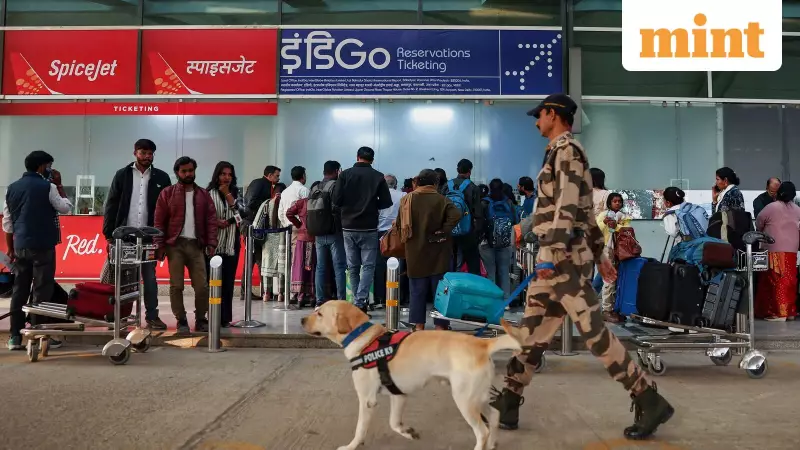
India's largest airline, IndiGo, has embarked on an urgent mission to recruit more than 900 pilots. This massive hiring drive comes in response to new regulatory limits on night flights and aims to prevent a repeat of the operational chaos that led to thousands of flight cancellations in recent weeks.
The Hiring Blueprint and Regulatory Pressure
In a detailed submission to the Directorate General of Civil Aviation (DGCA), InterGlobe Aviation Ltd, which operates IndiGo, outlined a two-phase recruitment plan. The airline intends to bring on board 158 pilots by the critical deadline of 10 February 2025. Following this, a more extensive hiring wave will see the addition of 742 more pilots by December 2025, bringing the total to over 900.
The breakdown of the immediate plan is precise: 25 captains and 35 first officers by end-December 2024, another 28 captains and 35 first officers in January 2025, and finally 15 captains and 20 first officers by 10 February 2025. This will increase the airline's pilot strength from 4,551 in December to a combined tally of 2,425 captains and 2,284 first officers by the February deadline.

This urgency stems from a new DGCA rule, effective from 1 November, which restricts pilots to operating only two consecutive flights between midnight and 6 am. While other airlines must comply immediately, IndiGo has been granted an extension until 10 February. This rule fundamentally alters crew scheduling, requiring more pilots to cover the same number of night operations.
Why Meeting the Target is a Daunting Challenge
Despite the clear plan, aviation analysts and experts are sounding alarms about the feasibility of such rapid scaling. The primary obstacle is the industry-standard notice period of six months for co-pilots and a full year for captains, making immediate poaching from competitors nearly impossible.
Gagan Dixit, Senior Vice President at Elara Securities, highlighted this bottleneck, estimating that IndiGo may actually need to hire at least 1,000 pilots to fully comply with Flight Duty Time Limitation (FDTL) norms by February. Mark D Martin, CEO of Martin Consulting, echoed these concerns, stating that getting pilots on board by the February deadline is "not an easy task." He also noted that hiring foreign pilots, a potential stopgap, requires a minimum of three months for regulatory clearances.
The crisis follows an operational meltdown where IndiGo cancelled over 3,600 flights in 35 days starting 1 November, prompting the aviation ministry to temporarily roll back another contentious pilot rest policy on 5 December.
Structural Issues and a Strained Fleet
The pilot shortage is exacerbated by underlying structural issues within IndiGo's operations. The airline's fleet of 417 aircraft includes nearly 40 grounded A320s due to Pratt & Whitney engine issues. Its effective flying fleet of A320s stands at around 325.
These aircraft are being utilized at an exceptionally high rate of about 14 hours per day, compared to an industry standard of 8.5 hours. This "sweating" of assets drastically increases crew requirements. As CS Randawa, President of the Federation of Indian Pilots, explained, flying beyond 8-9 hours daily significantly escalates the number of pilots needed per aircraft.
Analysis reveals the depth of the gap. Calculations by Martin Consulting show that with IndiGo's current utilization, the airline needs approximately 5,525 pilots. Its December submission showed only 4,551, indicating a shortfall of 974 pilots. Furthermore, a Mint analysis found IndiGo has just 2.5 pilots per departure, far lower than competitors like Air India (5.4) or Akasa (5.4).
An InCred Equities report added that in FY24, IndiGo pilots flew 571 hours each on average, significantly more than the industry average of 453 hours (excluding IndiGo). This tight scheduling underscores the systemic pressure. The financial implication is also substantial, as pilot salaries constitute 60% of IndiGo's employee costs; a 20% raise could increase total employee costs by 12%.

As IndiGo scrambles to stabilize its operations and reset its schedule—a process that involved cancelling 300-400 flights daily from 5 to 8 December—the race to onboard hundreds of qualified pilots in a tight market remains its most formidable challenge. The coming months will be a critical test for the carrier that dominates Indian skies.