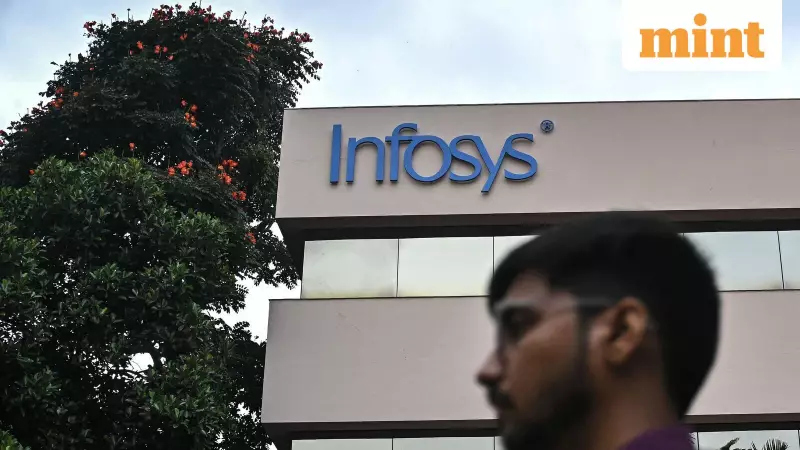
Indian IT behemoth Infosys Ltd is confronting a significant financial setback, with the potential loss of more than $150 million in annual revenue from one of its top three clients, German automotive leader Daimler. The risk stems from disagreements over execution and billing delays, prompting Daimler to scout for a new vendor for a key segment of a massive $3.2 billion deal.
The Stakes: A Mega-Deal Under Scrutiny
The roots of the current situation trace back to December 2020, when Infosys inked a landmark $3.2 billion, eight-year IT transformation agreement with Daimler. This comprehensive pact covered services across six business divisions: network services, cybersecurity, SAP software, data centres, after-sales call services, and workplace solutions. The workplace solutions arm, which involves procuring and providing hardware like iPhone cases, laptops, and fingerprint readers, along with Microsoft 365 subscriptions, is the largest segment and now the most vulnerable.
Despite Daimler's split into Mercedes-Benz Group and Daimler Trucks in December 2021, both entities continued their IT services engagement with Infosys. However, the relationship has hit a rough patch. According to sources familiar with the private discussions, the renewal of the workplace solutions segment, due last year, has stalled. Daimler has issued a request for proposal (RFP), but terms have not been mutually agreed upon.

Execution Delays and Mounting Dues
The core of the disagreement lies in execution and billing delays. As of 12 January 2026, Daimler, including its Mercedes and Daimler Trucks units, reportedly owes Infosys outstanding dues of nearly $47 million dating back to 2021. This friction has put the future of a substantial revenue stream in jeopardy.
For Infosys, which concluded the fiscal year ending March 2025 (FY25) with $19.28 billion in revenue, the Daimler account contributes approximately $400 million annually. The threatened workplace solutions portion constitutes over a third of that, or about $150 million, which equates to 0.7% of Infosys's total business. Losing this would force the Bengaluru-based company to backfill a significant sum in a challenging macroeconomic environment marked by squeezed client spending.
"It is unlikely that Infosys will see meaningful incremental revenue from Daimler in the near term," stated Phil Fersht, CEO of HFS Research. He added that even with renewals, pricing pressure often offsets expansion, shifting focus to retaining strategic relevance.
Broader Implications and Historical Context
This development casts a shadow on what Infosys internally called the 'twice as fast program'. The Daimler deal was instrumental in doubling Infosys's revenue from the manufacturing sector to $3 billion in FY25 from $1.3 billion in FY20. However, financials reveal underlying strain. Revenue from Infosys Automotive and Mobility GmbH, a subsidiary created for this project, declined by 8.5% to $418 million in FY25 after years of rapid growth and has remained unprofitable for four consecutive years.
Analysts from JM Financial noted that this decline signals the Daimler account may have reached peak maturity. Meanwhile, not all parts of the mega-deal are crumbling. The cybersecurity and data centre services have been renewed until 2029, while segments like SAP and network services await full renewal.
This is not an isolated incident in the Indian IT sector. Companies like Tata Consultancy Services and HCL Technologies have previously seen multi-billion dollar contracts terminated early as clients moved to in-source technology needs. In a competitive twist, another top Indian IT services provider has already placed a bid for the disputed Infosys-Daimler contract segment.

As Infosys prepares to announce its Q3 results, the company's guidance of 2-3% constant-currency revenue growth for FY26 may face added pressure. With queries left unanswered by Infosys and Daimler declining to comment on supplier relationships, the industry watches closely to see if one of the dozen mega-deals secured under CEO Salil Parekh will see a substantial reduction in scope.