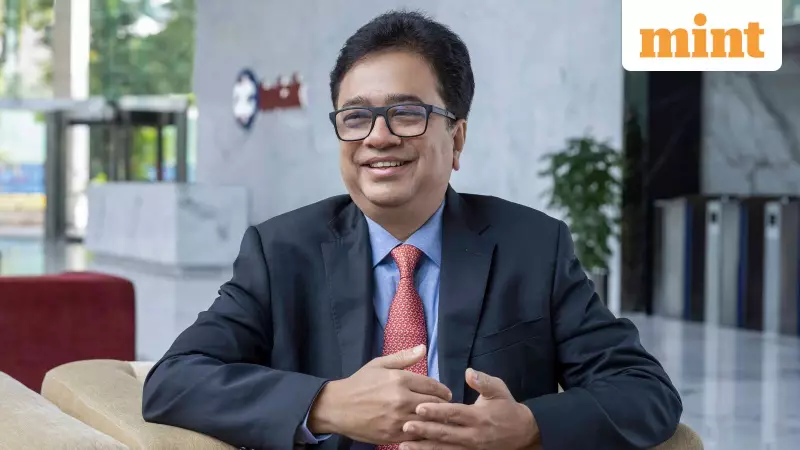
India's mergers and acquisitions (M&A) landscape is witnessing a powerful dual engine of growth, with domestic corporate groups reclaiming their dominance while Japanese investors make a decisive, long-term entry into the market. According to Sourav Mallik, Managing Director and Deputy Chief Executive of Kotak Investment Banking, the deal activity in calendar 2026 is poised to surpass the levels seen in 2025, fueled by robust business confidence and ample capital.
Domestic Giants and Private Equity Drive the Deal Wave
Rising deal activity clearly indicates that Indian acquirers are firmly back in control, Mallik stated in an interview. He pointed to significant transactions such as JSW Paints acquiring AkzoNobel, the Torrent Group taking over J.B. Chemicals & Pharmaceuticals, and Bajaj Finance's buyout of Allianz as evidence of this trend. These moves underscore how growth-hungry Indian business houses are making substantial strategic acquisitions.
"We have seen that capital from global investors is headed towards India, and domestic capital continues to flow unabated. Domestic groups are getting stronger and stronger and becoming very active in M&A. They will continue growing via M&A," Mallik explained. He anticipates that both M&A activity and volumes in 2026 will exceed those of the previous year.

The deal-making environment is broad-based. While large conglomerates are particularly active, mid-sized businesses are also presenting significant opportunities, either as acquirers or as targets. This momentum is driven by strong business confidence, healthier balance sheets, and the ready availability of both debt and equity capital.
Private equity (PE) firms, referred to as "sponsors" in investment banking circles, have become a major force. They are not only driving private capital deals but also preparing their portfolio companies for public listings. PE groups are actively acquiring listed companies and taking their private firms public, contributing significantly to the overall deal volume. Mallik noted that sponsors now show increased comfort with listed entities, often becoming sole promoters and proactively taking control of them.
Global Rebalancing and the Japanese Anchor
Global corporations are also accelerating their deal-making pace in India. The year 2025 saw a mix of inbound and outbound activity, with some global players entering the market and others partially or fully exiting to capitalize on high valuations and deep liquidity. Examples include Emirates NBD's $3 billion controlling stake purchase in RBL Bank and Schneider Electric's $6.4 billion buyout of Temasek Holdings from their joint venture.
According to data from Venture Intelligence, India recorded 99 inbound transactions worth $28.9 billion and 135 outbound deals worth $16 billion in 2025. Mallik expects this trend of global companies rebalancing their portfolios and optimizing the capital structure of their Indian subsidiaries to continue, further fueling M&A and Equity Capital Markets (ECM) activity.
However, the most striking development is the heightened interest from Japanese multinationals. In 2025 alone, three mega-deals saw giants like Mitsubishi UFJ Financial Group, Sumitomo Mitsui Banking Corporation, and Mizuho Financial Group collectively invest over $7.2 billion into Indian entities like Shriram Finance, Yes Bank, and the Avendus Group.
"They are here to stay and are long-term investors. They've been looking at India for a really, really long period of time. The covid-19 pandemic put a temporary pause in many of their thinking and planning. But we are seeing them make some big bets," Mallik emphasized. He added that the mandate for Japanese companies from their investors and boards is clear: to go global and establish a global footprint. "It's taken them some time, and they've arrived in full force."

Kotak's Leadership and Future Outlook
Kotak Mahindra Group's investment banking arm solidified its position in 2025, leading domestic banks in investment banking fees and ranking fourth overall. It generated $77.4 million in revenues from equity, debt, and M&A transactions. Its key deals included advising on KKR's $1.4 billion sale of JB Chemicals to Torrent Pharma, Bain Capital's $1.1 billion investment in Manappuram Finance, and Carlyle's $400 million stake purchase in Roop Automotive.
The motivations behind M&A in India are diverse. Groups are seeking to enter new business segments, divest non-core assets, or deepen their market share in existing areas. In some cases, first-generation entrepreneurs are looking for an exit due to a lack of succession planning. Conversely, groups like the Adani Group, Aditya Birla Group, JSW Group, Torrent Group, and Nirma Group have seen the next generation step up, often leading to more aggressive M&A strategies.
In summary, the Indian M&A arena is being shaped by a confluence of powerful factors: resurgent domestic acquirers, active private equity sponsors, global corporate strategies, and the decisive, long-term commitment of Japanese investors, setting the stage for a record-breaking 2026.