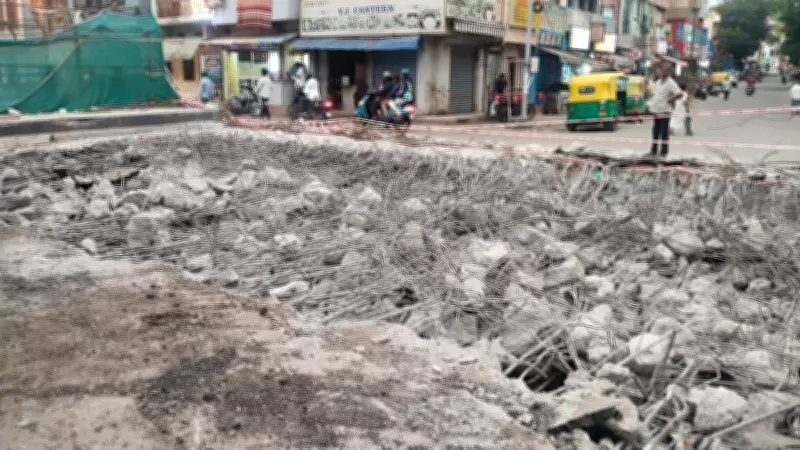
The closure of Kamaraj Road in Bengaluru for the construction of the Namma Metro Phase 2 has dealt a severe blow to local businesses, with shopkeepers reporting substantial losses in revenue. The road, a key commercial hub in the city, was shut down earlier this month, leading to a drastic reduction in footfall and sales.
Impact on Local Businesses
Shopkeepers along Kamaraj Road have expressed frustration over the sudden closure, stating that their daily earnings have plummeted by up to 70%. Many establishments, including clothing stores, electronics shops, and eateries, have been forced to reduce staff or operate at a loss. Some small businesses fear they may have to shut down permanently if the closure extends beyond the projected timeline.
Customer Access Hampers Trade
The road closure has made it difficult for customers to reach the shops, as alternative routes are congested and parking is scarce. Regular buyers who relied on the convenience of Kamaraj Road are now avoiding the area, opting for other markets. Shopkeepers have urged the authorities to provide alternative access or temporary relief measures to mitigate the economic impact.

Metro Project Necessity vs. Livelihoods
While the metro expansion is essential for improving public transportation in Bengaluru, the disruption to businesses has raised concerns about the lack of compensation or support for affected traders. The Bangalore Metro Rail Corporation Limited (BMRCL) has stated that the closure is temporary and necessary for the project's progress, but shopkeepers argue that the timeline is uncertain and their livelihoods are at stake.
Call for Compensation
Local trade associations have appealed to the government and BMRCL to provide financial compensation or tax relief to affected businesses. They have also requested the construction of temporary access roads to allow customers to reach the shops. Without such measures, many fear that the closure could lead to permanent closures and job losses.
The situation underscores the challenges of balancing urban development with the needs of small businesses, which form the backbone of the local economy.