

Lenskart's Viral Grooming Policy Ignites Social Media Firestorm Over Religious Expression
A significant controversy has erupted surrounding eyewear retailer Lenskart, capturing widespread attention across social media platforms and sparking intense debates about workplace regulations and religious freedom. The dispute originated from a document that rapidly went viral, raising serious questions about permissible attire and religious symbols for the company's employees.
What Sparked the Lenskart Controversy?
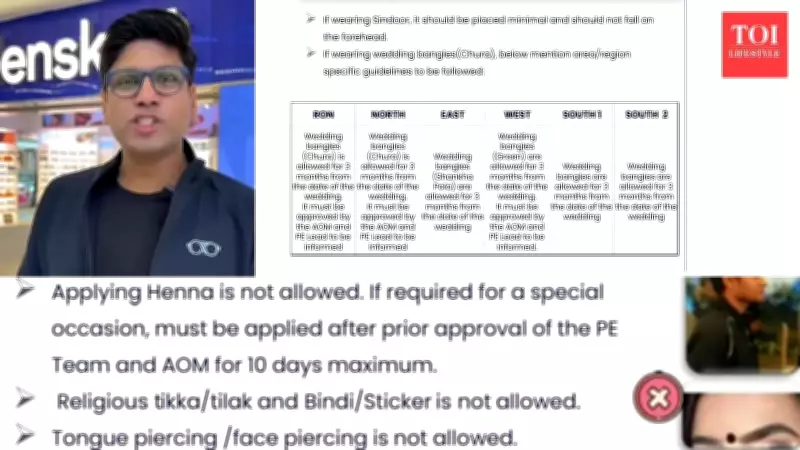
The discussion ignited after a document, purported to be Lenskart's official staff grooming and uniform guidelines, began circulating extensively online. According to the widely shared material, employees were permitted to wear black hijabs during their shifts, with black turbans also reportedly allowed under the policy.
However, the same document allegedly imposed restrictions on other religious symbols. It specifically stated, "Religious tikka/tilak and Bindi/Sticker is not allowed." Furthermore, the guidelines addressed chooda (chura) or wedding bangles traditionally worn by North Indian Hindu women, specifying that these could only be worn for three months following the wedding date. The document read, "Wedding bangles (Chura) is allowed for 3 months from the date of the wedding. It must be approved by the AOM and PE Lead to be informed."

This apparent disparity in what was permitted versus what was restricted triggered immediate questions and substantial criticism from social media users, who questioned the fairness and consistency of the approach.
Why This Issue Gained Immediate Traction
The controversy quickly gained momentum due to its direct connection to religious identity and cultural practices. Numerous users emphasized the common, everyday use of bindi and tilak in Indian society, making the document's restrictions particularly concerning. The issue rapidly evolved into a broader discussion about equity in workplace guidelines and corporate policies regarding religious expression.
Peyush Bansal's Official Response
As the conversation intensified, Lenskart founder Peyush Bansal addressed the growing controversy directly on the social media platform X. "Hi, all. I've been seeing an inaccurate policy document going viral about Lenskart," he stated in his post.
Bansal clarified that the circulated document does not reflect the company's current policy, describing it as outdated and inaccurate. "Our policy has no restrictions on any form of religious expression, including bindi and tilak, and we continue to review our guidelines regularly," he asserted.
The founder acknowledged the confusion generated by the situation, adding, "Our grooming policy has evolved over the years and outdated versions do not represent who we are today. We apologize for the confusion and concern this situation has caused."
Continued User Skepticism and Demands
Despite this official clarification, many social media users remained unconvinced and continued to raise pointed questions. Several individuals claimed the viral document was actually recent, dating to February 2026, and demanded that the company publicly release its current policy for transparency.
One user challenged, "Okay, then you should make public a copy of your company's current policy. Because what we have seen is completely opposite to what you are saying." Another commented skeptically, "It's February month policy dude....to whom are you making a fool? Public or yourself?"
User Shefali Vaidya offered particularly detailed criticism, stating, "Sorry, this explanation makes NO sense. Please point out why is the document I have shared 'inaccurate'. It is from February 2026. And if it does not reflect your 'current guidelines' as you say, please share the current guidelines. Also, even if it is an old document as you say, why was religious asymmetry okay then?"
This developing story is based on screenshots of a document circulating online attributed to Lenskart's grooming policy, along with the company's official response. Details may evolve as additional information emerges.






