

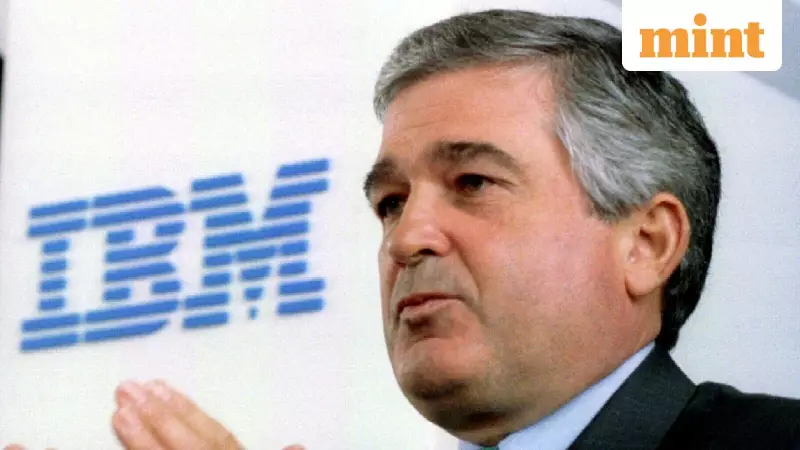
The technology world is mourning the loss of one of its most transformative figures. Louis Vincent Gerstner Jr., the former chairman and CEO of International Business Machines Corp (IBM), passed away on 27 December 2025 at his home in Jupiter, Florida. He was 83 years old. Gerstner is widely credited with executing the most significant corporate turnaround in tech history, pulling IBM back from the brink of bankruptcy and reshaping it for the modern digital age.
From Outsider to Saviour: Taking the Helm at a Crumbling Giant
Born in Mineola, New York, Gerstner was a Dartmouth College engineering graduate who later earned an MBA from Harvard Business School. His career path was unconventional for an IBM chief. After rising through the ranks at McKinsey and American Express, and leading RJR Nabisco, he made history in 1993 by becoming the first outsider ever to be appointed as IBM's chair and CEO.
The company he inherited was in deep crisis. Once the undisputed king of mainframe computing, IBM was losing billions of dollars and rapidly ceding market share to more agile competitors. Many investors and analysts were loudly advocating for the breakup of the sprawling corporation into smaller, independent units. The technological landscape was shifting beneath its feet, and IBM's inward-looking, product-centric culture was seen as a relic of the past.

The Pivot That Saved an Icon: Unity, Services, and Customer Focus
Defying the prevailing wisdom, Gerstner's first and perhaps most crucial decision was to keep IBM together. He famously dismissed calls for a grand vision statement, quipping that "The last thing IBM needs is a vision at this time." His immediate focus was survival through execution.
He implemented drastic cost-cutting measures, which included the painful reduction of about 100,000 jobs, to stabilize the company's finances. More importantly, he initiated a profound cultural shift. Gerstner tore down the internal barriers between IBM's fiefdoms and instilled a relentless, company-wide focus on understanding and serving customer needs.
His masterstroke was pivoting IBM's business model towards integrated technology services and solutions. While rivals chased hardware commoditization, Gerstner bet that corporate clients would value a partner who could manage complex, multi-vendor IT systems. Under his leadership, IBM Global Services was built into a global powerhouse, offering higher margins and creating durable client relationships through its consultative approach.
A Legacy of Leadership for the AI Age
The results of Gerstner's nine-year tenure were staggering. IBM returned to robust profitability, its stock price increased sixfold, and it regained its reputation as an innovative force. He stepped down as CEO in 2002, leaving behind a cohesive and future-ready company.
His influence extended far beyond his tenure. Arvind Krishna, IBM's current CEO, hailed him as a transformational figure. Gerstner's memoir, "Who Says Elephants Can't Dance?", remains a seminal text on leadership and change management. After IBM, he served as chairman of the Carlyle Group and was deeply involved in philanthropic efforts, particularly in education.
In an era defined by the disruptive rise of artificial intelligence, Gerstner's life's work offers a powerful playbook. His story is a testament to the power of clear-eyed strategy, organizational unity, and a steadfast commitment to the customer—principles as vital today as they were during IBM's darkest hour.






