

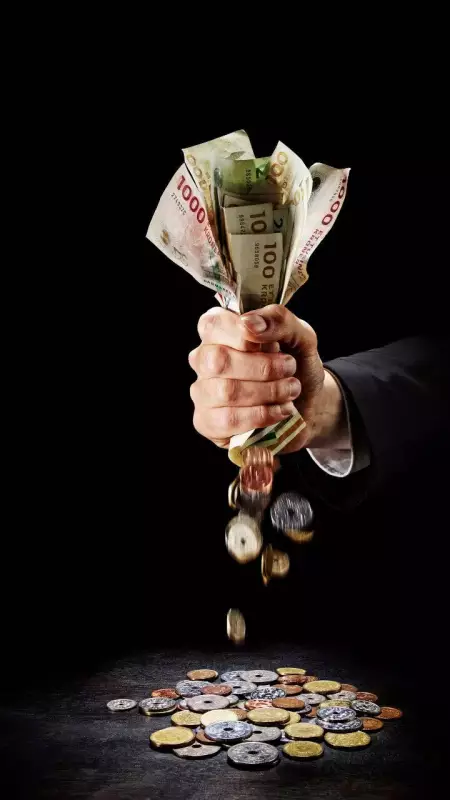
The landscape of global wealth in 2025 continues to be dominated by powerful family dynasties whose fortunes span generations and continents. These are not just individuals with vast riches, but entire clans whose collective net worth often surpasses the GDP of many nations. Their wealth is built on sprawling business empires in retail, industry, fashion, and media, showcasing a fascinating blend of legacy, innovation, and sheer financial scale.
The Unshakeable Titans of Retail and Industry
Topping the list once again is the Walton family, the heirs to the Walmart empire. With an estimated combined wealth of a staggering $267 billion, their fortune stems from the world's largest retailer, a testament to the vision of founder Sam Walton. The family's holdings ensure they remain the undisputed leaders in the ranking of the world's richest families.
In second place, with a net worth of $224 billion, is the Mars family. Known for iconic confectionery brands like M&M's, Snickers, and Milky Way, this notoriously private family has sweetened its fortune through decades of global candy and pet care dominance.

The third spot is held by the Mittal family, led by Lakshmi Mittal. With a wealth of $161 billion, their fortune is forged in steel. ArcelorMittal, the world's largest steelmaking company, is the cornerstone of their industrial might, highlighting how traditional industries continue to generate colossal wealth.
Dynasties of Luxury, Media, and Diversified Conglomerates
The top five is rounded out by two European powerhouses. The Hermès family, guardians of the iconic French luxury brand, sits in fourth place with $151 billion. Their story is one of unwavering focus on craftsmanship and exclusivity, proving that heritage luxury holds immense value.
Following closely is the Wertheimer family with $135 billion. As the owners of Chanel, they have masterfully cultivated an aura of timeless elegance, making the brand a synonym for high fashion and perfume, and the family a permanent fixture among the global elite.
The list continues with other formidable names. The Thomson family ($118 billion) controls a media and information empire rooted in Thomson Reuters. The Al Saud family ($112 billion), the royal house of Saudi Arabia, derives its wealth from the kingdom's vast petroleum resources. India's Ambani family ($110 billion), led by Mukesh Ambani, represents the rise of new global economic powers with interests in petrochemicals, telecom, and retail through Reliance Industries.
The Cargill-MacMillan family ($108 billion) owns the majority of Cargill Inc., one of the world's largest privately held corporations dealing in agricultural commodities. Finally, the Boehringer-Von Baumbach families ($102 billion) complete the top ten, their wealth anchored in the pharmaceutical giant Boehringer Ingelheim.
What Their Enduring Wealth Reveals
The composition of this elite list reveals several key trends about enduring wealth. Diversification across generations is a common thread, with many families moving beyond their original business to invest in technology, finance, and other sectors. A strong focus on keeping businesses private or tightly controlled allows these families to strategize for the long term without quarterly market pressures.
Furthermore, the list underscores the sectors that create multi-generational fortunes: consumer staples (retail, food), luxury goods, natural resources, and pharmaceuticals. These are industries with perennial demand, allowing family empires to thrive through economic cycles. The presence of both old-world European luxury families and newer industrial powers from the US and Asia also highlights the globalized nature of modern wealth.

In conclusion, the world's ten richest families in 2025 are more than just repositories of money. They are institutions, managing vast economic ecosystems that employ millions and influence global markets. Their continued dominance shows that in an age of disruptive startups, the combined power of legacy, scale, and strategic evolution remains an incredibly potent force in the global economy.





