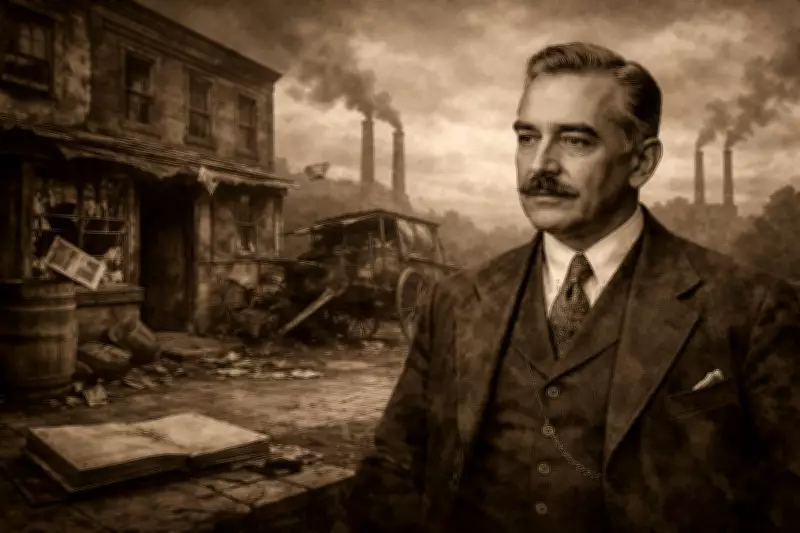
The Apprentice Who Refused to Quit
Milton S. Hershey's path to becoming a confectionery titan was paved with disappointment and financial ruin. His career began humbly through apprenticeship and small-scale operations. After completing his training as a confectioner in Lancaster, Hershey ventured into entrepreneurship by opening his first candy store in Philadelphia in 1876. Despite six years of relentless effort, this initial business ended in bankruptcy, a devastating blow that would have discouraged most aspiring entrepreneurs.
Learning Through Repeated Setbacks
Rather than abandoning his dreams, Hershey demonstrated remarkable resilience. He tried again in multiple cities, working in Denver and Chicago, and later attempting ventures in New York City. Each new endeavor met with similar failure, leaving him financially depleted but increasingly knowledgeable about the confectionery trade. These early collapses served as an unconventional education, teaching him crucial lessons about customer preferences, production scaling, and common business pitfalls to avoid.
The Caramel Breakthrough
Hershey's fortunes began to change in the mid-1880s when he returned to Lancaster with renewed focus. He founded a caramel business that incorporated fresh milk into the recipe, a simple yet revolutionary innovation that produced a richer, more consistent product. This attention to quality differentiation proved transformative. By emphasizing product consistency, implementing mechanized cooking processes, and expanding distribution networks, his Lancaster Caramel Company experienced rapid growth throughout the 1890s. The man once dismissed for repeated failures had become a profitable manufacturer.

The Strategic Pivot to Chocolate
At the turn of the century, Hershey executed a strategic maneuver that few entrepreneurs achieve successfully. In 1900, he sold his thriving caramel business for approximately $1 million, an enormous sum for the era. Rather than retiring on this wealth, he redirected both capital and attention toward chocolate production, a market he had studied intently after observing European chocolate-making machinery at the 1893 Chicago World's Exposition.
The Hershey Chocolate Company, initially established as a subsidiary of his caramel firm, became his concentrated investment in democratizing milk chocolate. His vision was ambitious: to transform chocolate from an expensive luxury for the wealthy into an affordable, accessible treat for ordinary Americans.
Building More Than a Business
Hershey's investment extended beyond mere industrial production. He constructed a massive factory in Derry Township and systematically developed housing, amenities, and infrastructure for workers, creating the nucleus of what would become the company town that still bears his name. This physical manifestation of his vision represented a holistic approach to enterprise.
Perhaps more remarkably, Hershey institutionalized an unprecedented form of corporate philanthropy. In 1909, he and his wife established a school for orphaned boys, and later transferred substantial portions of his wealth into a trust to support this institution. This integration of commercial success with social responsibility transformed his legacy from merely a brand into a comprehensive experiment in community-building tied to American industrial achievement.
The Practical Lessons of Failure
Hershey's journey from bankruptcy to empire offers more than inspirational platitudes about perseverance. His failures provided practical, logistical education about standardization, borrowing strategies, automation timing, and mass production consistency. These experiences fundamentally altered his risk tolerance, making him intensely pragmatic in his business approach. He became disciplined about reinvesting profits and acquiring machinery that reduced dependence on specialized artisans, decisions that ultimately made chocolate affordable and transformed a regional manufacturer into a national powerhouse.

Enduring Legacy Beyond Confectionery
The Hershey narrative transcends simple grit mythology. It embodies strategic iteration, calculated specialization, and the rare entrepreneurial courage to sell initial success to fund transformative next ventures. The man who experienced multiple bankruptcies ultimately attached his name to factories, parks, schools, and placed an inexpensive, beloved product on millions of American shelves.
This central contradiction—using failure as a tactical roadmap rather than a final verdict—enabled the transformation of small-scale candy-making into one of the world's most recognizable food empires. Hershey's story continues to resonate because it demonstrates how practical learning from setbacks, combined with visionary adaptation, can create enduring impact far beyond commercial success alone.