

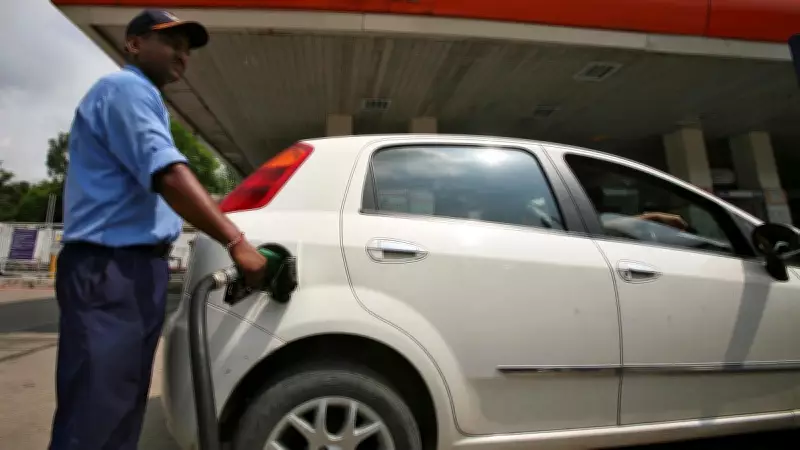
The Indian government has confirmed that state-owned oil marketing companies are currently incurring significant losses on the sale of petrol and diesel. According to Sujata Sharma, Joint Secretary in the Ministry of Petroleum and Natural Gas (MoPNG), companies are losing approximately Rs 20 per litre on petrol and Rs 100 per litre on diesel. Despite these losses, the government has stated that there are no immediate plans to increase retail fuel prices.
Government's Stance on Fuel Pricing
In a recent statement, Sharma emphasized that the government is closely monitoring the situation but has decided against passing on the burden to consumers. The losses are attributed to the gap between international crude oil prices and domestic retail prices, which have been kept stable to shield consumers from global volatility.
Export Tax to Boost Domestic Supply
To address the losses and ensure adequate domestic availability, the government has imposed a tax on fuel exports. This measure is intended to motivate refiners to prioritize the domestic market over exports. By making exports less profitable, the government aims to increase local supply and stabilize prices without direct intervention in retail pricing.

The decision comes amid rising global crude prices, which have squeezed margins for oil companies. However, the government remains committed to protecting consumers from sharp price hikes, especially in an election year.
Impact on Oil Marketing Companies
State-owned oil firms such as Indian Oil Corporation (IOC), Bharat Petroleum (BPCL), and Hindustan Petroleum (HPCL) have been bearing the brunt of the price disparity. While they are losing money on every litre sold, the government's export tax may partially offset these losses by ensuring higher domestic sales volumes.
Industry experts suggest that if global crude prices remain elevated, the government may need to consider a calibrated price revision or increase subsidies to oil companies. However, for now, the official stance remains unchanged: no immediate price hike is on the cards.
Consumer Relief Amid Global Crisis
For Indian consumers, this means continued relief at the pump, even as other countries face soaring fuel costs. The government's approach reflects a delicate balance between fiscal prudence and political sensitivity, with fuel prices being a key factor in household budgets.
The export tax is expected to be reviewed periodically based on market conditions. Meanwhile, oil companies are likely to continue absorbing losses in the short term, with the hope of a correction in international prices or government compensation in the future.






