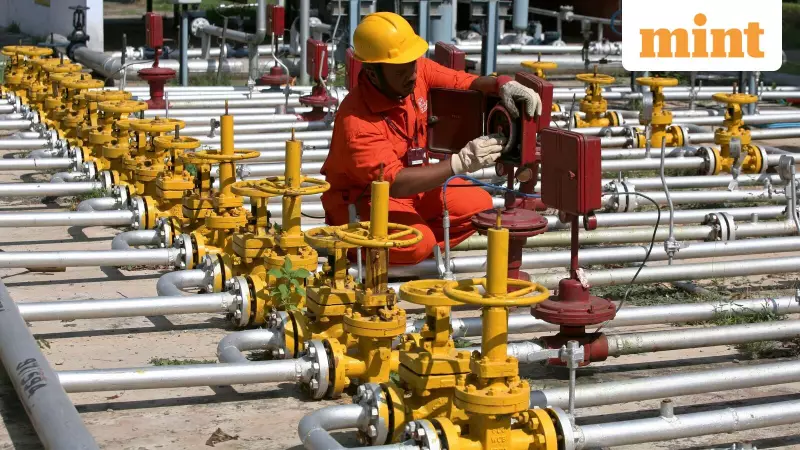
ONGC Reaches Out to Global Energy Giants for Western Offshore Production Enhancement
In a significant move to revitalize its western offshore operations, India's state-run Oil and Natural Gas Corporation (ONGC) has approached approximately 10 international energy leaders to participate in its tender for technical services provider (TSP) roles. This strategic initiative aims to boost production in key offshore fields at a time when India's domestic oil and gas output has largely remained stagnant.
Global Partnerships Sought for Production Revival
Pankaj Kumar, director of production at ONGC, revealed during the sidelines of India Energy Week that the corporation has personally communicated with chief executives of major exploration and production operators worldwide. The distinguished list includes UK-based Shell and bp plc, French energy major TotalEnergies, along with American petroleum giants ExxonMobil and Chevron Corporation.
"We are now in the market for another TSP covering the Western Offshore, excluding Mumbai High field. The tender has been floated, and we have personally communicated with the CEOs of 10 major E&P operators," Kumar stated, emphasizing the corporation's proactive approach to securing international expertise.

Strategic Focus on Key Western Offshore Fields
The technical services provider initiative specifically targets crucial western offshore assets including:
- Bassein field
- Heera field
- Neelam field
- Panna-Mukta fields
This development follows ONGC's existing partnership with bp plc, which currently serves as TSP for the Mumbai High field - India's largest offshore oil field. The bp collaboration, established last year, aims to substantially increase production with ambitious targets of 44% growth in oil output and 89% enhancement in gas production over the next decade.
Production Performance and Recovery Initiatives
Recent production data reveals a mixed performance for ONGC. During fiscal year 2025, the corporation reported a modest 0.9% increase in standalone crude oil production, reaching 18.558 million tonnes. However, natural gas production experienced a slight decline to 19.654 billion cubic meters.
The corporation has demonstrated some positive momentum in recent quarters, with Q2 FY26 crude oil production registering 4.630 million tonnes - representing a 1.2% growth compared to the corresponding period in FY25. Gas production declines have also been substantially reduced from 0.35% in Q1 FY26 to just 0.04% in Q2 FY26.
Comprehensive Cost Optimization Strategy
Parallel to production enhancement efforts, ONGC has implemented rigorous cost-reduction measures targeting significant savings of ₹9,300 crore by fiscal year 2027. These initiatives account for approximately 15% of the planned operational and capital expenditure of ₹62,000 crore during this period.
The corporation's multi-pronged cost optimization approach includes:
- Offshore resource optimization
- Enhanced drilling efficiency
- Logistics route optimization
- Inventory reduction strategies
- Improved fuel efficiency measures
In response to subdued global oil prices and projections of crude trading around $60 per barrel in upcoming fiscal years, ONGC has established a dedicated cost council to oversee these efficiency initiatives.
Future Development Plans and Investments
ONGC's board has approved an ambitious development scheme targeting production of 12 million tonnes of oil and 13.5 billion cubic meters of gas in the coming years. The Mumbai High field redevelopment represents a cornerstone of this strategy, with phase two planning 100 new wells during FY28 and FY29.
The corporation has already committed $400 million in capital expenditure for the initial phase of Mumbai High redevelopment, which involves dividing the field into six operational hubs for optimized management and accelerated development.

As queries to the international energy companies remained unanswered at press time, industry observers await formal responses regarding participation in ONGC's technical services provider tender. This initiative represents a crucial component of India's broader strategy to enhance domestic hydrocarbon production and reduce import dependence through international collaboration and technological exchange.