

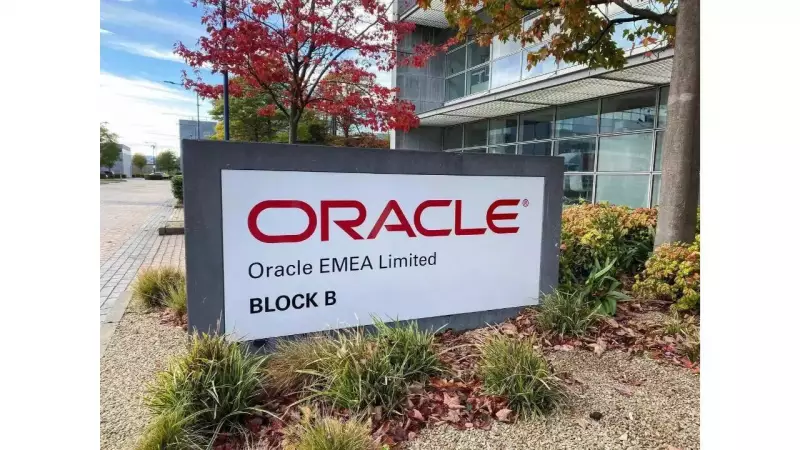
In a significant shift at the highest level of corporate governance, technology giant Oracle Corporation has announced the immediate retirement of two of its most experienced and longest-serving board members. This move marks the end of an era for the company's leadership, coming at a time when its financial performance is under intense investor scrutiny.
End of an Era: Veteran Directors Step Down
The software behemoth formally notified the US Securities and Exchange Commission (SEC) about the departures. George H. Conrades, aged 86, retired on January 5, 2026, concluding an 18-year tenure as an Oracle director. He was followed shortly by Naomi O. Seligman, aged 87, who retired on January 7, 2026, after two decades of service on the board.
Oracle was quick to clarify the context of these retirements in its regulatory filing. The company explicitly stated that neither departure resulted from any dispute or disagreement concerning Oracle's operations, policies, or practices. This clarification is standard but crucial to prevent market speculation about internal discord at the top.

Leadership Landscape and Mounting Financial Pressure
Following these exits, the spotlight turns to the remaining leadership. Larry Ellison, the 81-year-old co-founder, Chief Technology Officer, and Executive Chairman, continues his influential role on the board. His enduring presence provides a thread of continuity amidst the change.
However, this board transition unfolds against a backdrop of severe financial headwinds for Oracle. The company's shares suffered a dramatic 30% fall in the last quarter, positioning it for its poorest performance since the dot-com crash of 2001. This steep decline has rattled investors and analysts alike.
The $300 Billion OpenAI Commitment: A Double-Edged Sword?
A major factor contributing to market anxiety is Oracle's landmark cloud infrastructure deal with ChatGPT-maker OpenAI, announced in September 2025. While the commitment is valued at a staggering $300 billion, representing a huge vote of confidence in Oracle's cloud capabilities, it also brings substantial risk.
Financial analysts are questioning the cost and implications for Oracle's balance sheet. The core concern is that if OpenAI, facing fierce competition, fails to raise sufficient capital or generate expected revenues, Oracle could be left bearing significant financial obligations. Analysts at D.A. Davidson highlighted this risk, noting, "Considering Oracle is already barely hanging on to an investment-grade rating, we would be concerned about Oracle's ability to live up to these obligations."
The retirement of two seasoned directors and the sharp stock decline paint a picture of a company at a critical juncture. Oracle must now navigate the generational shift in its boardroom while simultaneously proving to the market that its bet on AI, through the massive OpenAI partnership, is sustainable and will ultimately drive future growth.






