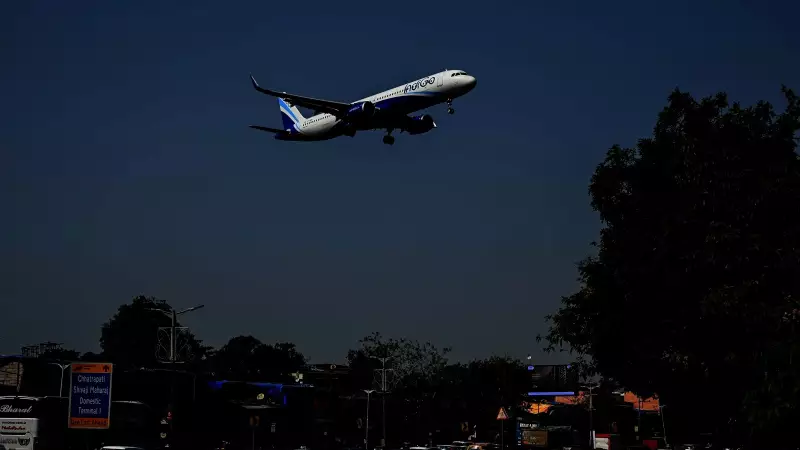
The recent operational collapse of IndiGo, which led to the cancellation of over 1,000 flights on December 5, 2025, has sparked a fierce debate on the health of India's aviation sector. Former Union Minister and Maharashtra Chief Minister Prithviraj Chavan has penned a sharp critique, drawing parallels with the US Southwest Airlines crisis and calling for drastic regulatory and structural reforms.
A Crisis Foretold: Ignored Warnings and Regulatory Lapses
The roots of the December meltdown, according to Chavan's analysis, trace back to January 2024. It was then that the Directorate General of Civil Aviation (DGCA) first proposed new Flight Duty Time Limitations (FDTL) rules designed to ensure adequate pilot rest and enhance passenger safety. Chavan alleges that IndiGo, commanding a 65% share of the domestic market, ignored this notification.
Using its significant market and political influence, the airline reportedly took no concrete steps to recruit or train new pilots or adjust its schedules to meet the impending safety norms. Pilot complaints were sidelined, and the regulator, instead of enforcing the rules, repeatedly relaxed regulations specifically for IndiGo. This continued until court orders forced the DGCA's hand, leading to a staggered implementation of the FDTL rules from July 1 and November 1, 2025—nearly two years after their initial proposal.

Monopoly, Market Consolidation, and the Shadow of Regulatory Capture
The article paints a picture of a sector dangerously concentrated. In 2004, India had 4 crore annual air passengers served by eight airlines. By 2025, passenger traffic soared to 40 crore, but the market is dominated by just two major players: IndiGo and the Tata-owned Air India group. This, Chavan argues, is a classic case of regulatory capture, where the regulator ends up safeguarding private profits over public interest.
He raises pointed questions about potential conflicts of interest, including a Rs 58 crore electoral bond donation made by IndiGo's parent company, InterGlobe Aviation, mainly to the BJP. "Did these donations enable IndiGo to ignore the DGCA's FDTL safety norms, postpone hiring new pilots to maximise profits, and risk passenger safety?" the article asks, demanding a Joint Parliamentary Committee (JPC) probe into the matter.
The piece also highlights the Adani Group's acquisition of a majority stake in the Flight Simulation Technique Centre (FSTC) on November 25, 2025, giving it significant control over pilot training. The IndiGo collapse followed just five days later, on December 1, though a direct connection is posed as a question rather than a stated fact.
The Southwest Precedent and a Blueprint for Action
Chavan draws a direct comparison to the Southwest Airlines crisis in the United States in December 2022, where outdated systems turned a winter storm into a catastrophe involving 16,000 cancelled flights. The US Department of Transportation responded with a record $140 million fine and mandated over $600 million in passenger reimbursements.
Following this precedent, the article proposes a multi-point action plan:

- Immediate accountability: Removal of the Civil Aviation Minister, Secretary, and the DGCA leadership for delaying safety rules. It also calls for the termination of IndiGo's CEO, Pieter Elbers.
- Financial penalties: Imposing fines of up to 10% of IndiGo's average turnover under the Competition Act to create a passenger compensation fund.
- Slot redistribution: Taking away some of IndiGo's prized airport slots and allocating them to other airlines.
- Structural remedy: The most radical suggestion is using the Competition Act to break up IndiGo into two completely independent airlines, creating three equally sized competitors with roughly 33% market share each, akin to actions under US anti-trust laws.
- Regulatory overhaul: Scrapping the DGCA, formed by an executive order, and replacing it with a new, autonomous Civil Aviation Authority (CAA) established by an Act of Parliament, similar to the US Federal Aviation Administration (FAA).
The article concludes by challenging the government's stance against a permanent airfare cap, arguing that in a near-monopoly situation, price regulation is essential to protect consumers from being fleeced, especially during crises. The IndiGo meltdown, in this view, is not merely an operational failure but a symptom of deep-seated structural flaws demanding urgent and comprehensive correction.