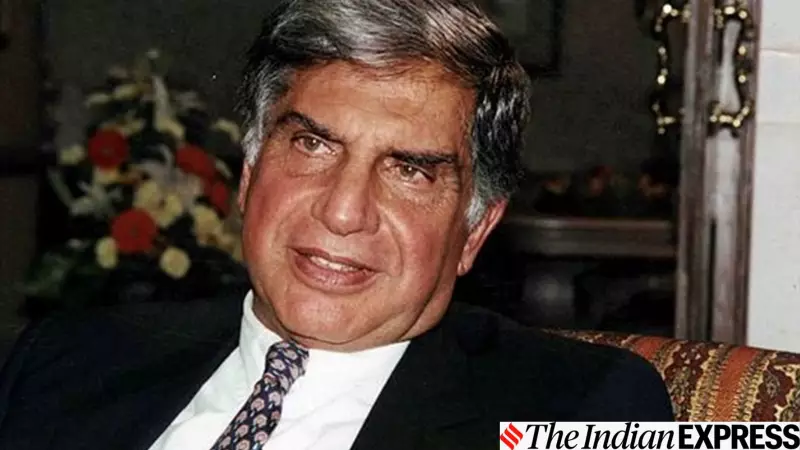
As India marks what would have been Ratan Tata's 88th birthday on December 28, the nation reflects on the enduring legacy of the quiet titan who reshaped one of its largest conglomerates while steadfastly upholding its core values of trust and compassion. The former Chairman of Tata Sons, who passed away on October 9, 2024, stood apart in an era of flamboyant tycoons through his understated, principled, and deeply humane leadership. His impact extends far beyond corporate balance sheets, permeating the very conscience of Indian industry.
The Architect of a Global Empire
Ratan Tata's vision and strategic clarity propelled the Tata Group onto the world stage. After assuming full control, he spearheaded the globalization of Indian business in the early 2000s. The journey began with Tata Tea's landmark acquisition of Tetley in 2000. This was followed by an aggressive acquisition spree encompassing nearly three dozen companies.
The most defining moves were the mega-deals: Tata Steel's takeover of the Anglo-Dutch steelmaker Corus and Tata Motors' purchase of the iconic British brands Jaguar and Land Rover from Ford Motors. While the Corus integration faced challenges, JLR eventually became a profitable success story for Tata Motors, transforming the company's global footprint.

On the domestic front, Tata consolidated the group's holdings. He notably increased Tata Sons' stake in Tata Steel to 33.19%, securing control. Under his stewardship, Tata Motors evolved from a commercial vehicle specialist into a passenger car manufacturer. He was instrumental in the 2004 listing of TCS, which grew to become the second most valuable company on Indian bourses. In a poignant full-circle moment, he later backed the group's acquisition of Air India in 2022.
The Man Behind the Legend: Personal Glimpses
Ratan Tata's personal life and character were as distinctive as his professional achievements. A lifelong bachelor, he once pondered a possible link to his parents' divorce, noting all his siblings remained unmarried. Yet, his capacity for love was evident in his deep affection for those around him.
His school days at Mumbai's Cathedral and John Connon School were marked by isolation and bullying due to his parents' separation, leaving him with few childhood friends. This perhaps forged the resilient, self-contained leader he became.
Two passions defined his personal sphere: dogs and pranks. A devoted dog lover, he ensured strays were cared for at Bombay House, the Tata headquarters, even providing them a dedicated room post-renovation. Contrary to his media-shy image, he was a known prankster among colleagues, famously kicking away shoes of dozing board members during long meetings.
Triumphs, Trials, and Unwavering Principles
Tata's career was a mix of bold successes and learning experiences. He described the creation of the Tata Nano as among his "happiest and most fulfilling" achievements, proving a one-lakh car was possible. However, he later acknowledged its marketing failure, stating the revolutionary car was not sold differently as it required.
His humanity shone during crises. During the 26/11 terrorist attack on the Taj Mahal Palace Hotel, he stood horrified on the footpath, watching the century-old landmark burn with tears in his eyes.
As Chairman from 1991, he fiercely battled satraps within Bombay House who treated group companies as personal fiefdoms, decisively consolidating authority. His successor search was guided solely by talent and values, dismissing considerations of religion or community, even opening the door to foreign candidates.
This principled stance was evident on October 24, 2016, when he personally met Cyrus Mistry to request his resignation before the board's formal dismissal. Born on December 28, 1937, and joining the group in 1962, Ratan Tata—a Cornell architecture graduate and Harvard AMP alumnus—leaves a legacy where profit never overshadowed purpose, reshaping not just a business empire, but the soul of Indian capitalism.